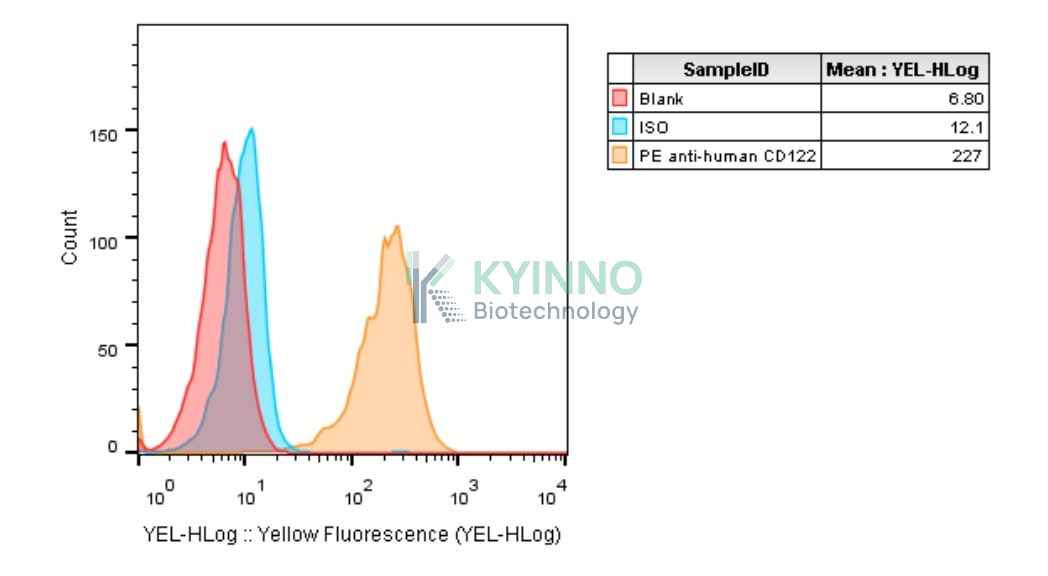
Interleukin-2 (IL-2) has emerged as the quintessential immunoregulatory cytokine with dual roles in both promotion of host defense and immune tolerance. The interleukin 2 receptor, which is involved in T cell-mediated immune responses, is present in 3 forms with respect to the ability to bind interleukin 2. The high-affinity IL-2R consists of three polypeptide chains: alpha (IL-2Rα, CD25), beta (IL-2Rβ, CD122), and gamma (IL-2Rγ, γc, CD132). IL-2Rβ and IL2Rγare required for downstream signal transduction by IL-2, and when expressed in the absence of IL-2Rα form the intermediate-affinity IL-2R which binds to IL-2 with ~100-fold lower affinity than the high affinity trimeric receptor. immune cells, like monocytes and B-cells, and nonimmune cells, like endothelial cells, may express different compositions of the IL-2R complex. A variety of drugs and triple antibodies against this target are in clinical stage.