KC-4218

293T-ITPRIPL1-Flag Cell Line

×
Please enable JavaScript in your browser to complete this form.
42804
Home » 293T-ITPRIPL1-Flag Cell Line

Background of 293T-ITPRIPL1-Flag Cell Line

ITPRIPL1 (Inositol 1,4,5-Trisphosphate Receptor-Interacting Protein-Like 1), a single-transmembrane protein, functions as an inhibitory ligand of CD3ε, a critical component of the T cell receptor (TCR) complex. Recent studies reveal that ITPRIPL1 binds to the extracellular domain of CD3ε on T cells, suppressing calcium influx and ZAP70 phosphorylation during the initial "signal one" phase of T cell activation, thereby impairing T cell function and promoting tumor immune evasion. ITPRIPL1 is overexpressed in multiple carcinomas and inhibits T cell activity within the tumor microenvironment. Preclinical studies demonstrate that neutralizing antibodies targeting ITPRIPL1 effectively block its interaction with CD3ε, restoring T cell activation, enhancing tumor infiltration of T cells, and significantly suppressing tumor growth in mouse models. Notably, therapeutic antibodies against canine ITPRIPL1 have shown clinical efficacy in treating naturally occurring tumors in veterinary settings. These findings establish ITPRIPL1 (also termed CD3L1, CD3ε ligand 1) as a pivotal immune checkpoint molecule and a promising therapeutic target for solid tumors.

Specifications

Catalog NumberKC-4218
Cell Line Name293T-ITPRIPL1-Flag Cell Line
Host Cell Line293T
DescriptionStable 293T clone expressing exogenous human ITPRIPL1 gene and Flag tag
QuantityTwo vials of frozen cells (≥2-106/vial)
StabilityStable in culture over a minimum of 10 passages
ApplicationDrug screening and biological assays
Freezing Medium70% DMEM + 20% FBS + 10% DMSO
Propagation MediumDMEM + 10% FBS + 1μg/mL Puromycin
Selection MarkerPuromycin
MorphologyEpithelial
SubcultureSplit saturated culture 1:4-1:8 every 2-3 days; seed out at about 1-3 × 10⁵ cells/mL
Incubation37 °C with 5% CO2
StorageLiquid nitrogen immediately upon receiving
Doubling TimeApproximately 30 hours
Mycoplasma StatusNegative
In Vivo ValidationNA

Cell Line Generation

293T-ITPRIPL1-Flag cell line was generated using a lentiviral vector expressing the human ITPRIPL1 and Flag tag sequence.

Characterization

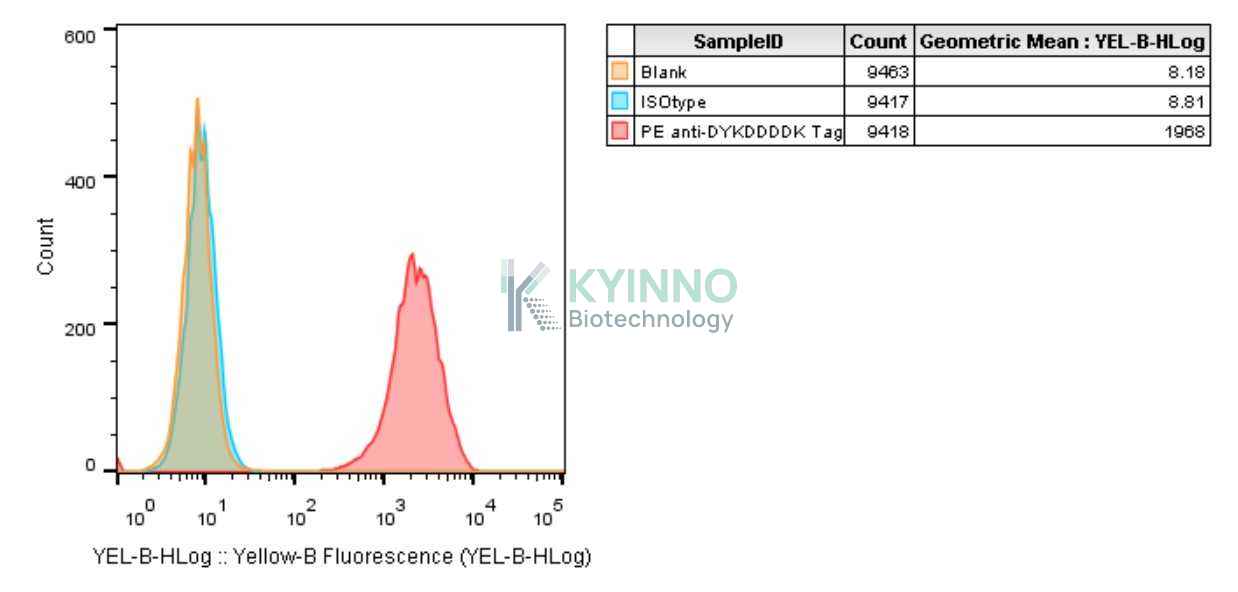
Figure 1: Characterization of Flag tag overexpression in the 293T-ITPRIPL1-Flag stable clone using FACS.

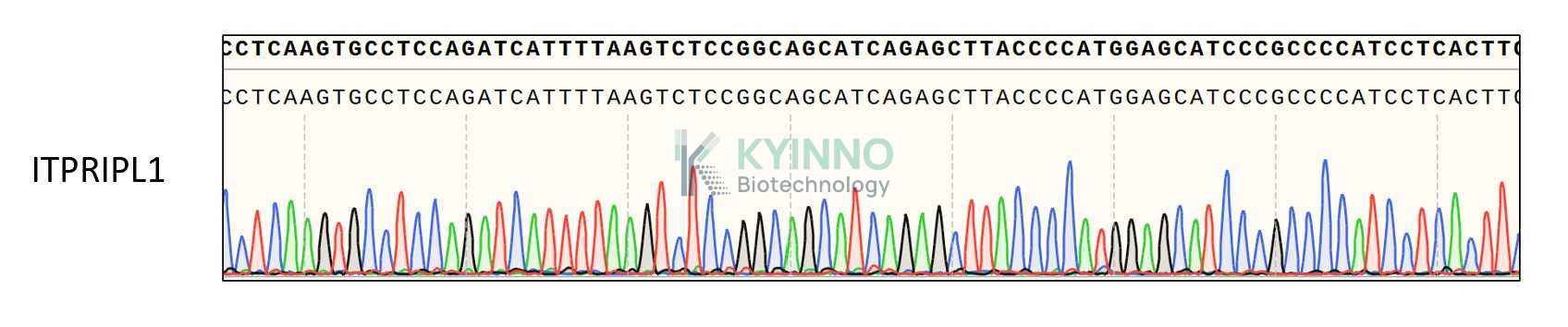
Figure 2: Characterization of human ITPRIPL1 in the 293T-ITPRIPL1-Flag stable clone using PCR sequencing.

Cell Resuscitation

1. Prewarm culture medium (DMEM supplemented with 10% FBS and 1μg/mL puromycin)in a 37°C water bath. 2. Thaw the frozen vial in a 37°C water bath for 1-2 minutes. 3. Transfer the vial into biosafety cabinet, and wipe the surface with 70% ethanol. 4. Unscrew the top of the vial and transfer the cell suspension gently into a sterile centrifuge tube containing 9.0mL complete culture medium. 5. Spin at ~ 125 × g for 5-7 minutes at room temperature, and discard the supernatant without disturbing the pellet. 6. Resuspend cell pellet with the appropriate volume of complete medium and transfer the cell suspension into a T25 culture flask. 7. Incubate the flask at 37°C, 5% CO2 incubator. 8. Split saturated culture 1:4-1:8 every 2-3 days; seed out at about 1-3 × 10⁵ cells/mL.

Cell Freezing

1. Prepare the freezing medium (70% DMEM + 20% FBS + 10% DMSO) fresh immediately before use. 2. Keep the freezing medium on ice and label cryovials. 3. Transfer cells to a sterile, conical centrifuge tube, and count the cells. 4. Centrifuge the cells at 250×g for 5 minutes at room temperature and carefully aspirate off the medium. 5. Resuspend the cells at a density of at least 3×10⁶ cells/mL in chilled freezing medium. 6. Aliquot 1 mL of the cell suspension into each cryovial. 7. Freeze cells in the CoolCell freezing container overnight in a -80°C freezer. 8. Transfer vials to liquid nitrogen for long-term storage.

References

1. Deng S, Zhang Y, Wang H, Liang W, Xie L, Li N, Fang Y, Wang Y, Liu J, Chi H, Sun Y, Ye R, Shan L, Shi J, Shen Z, Wang Y, Wang S, Brosseau JP, Wang F, Liu G, Quan Y, Xu J. ITPRIPL1 binds CD3ε to impede T cell activation and enable tumor immune evasion. Cell. 2024 Apr 25;187(9):2305-2323.e33. doi: 10.1016/j.cell.2024.03.019. Epub 2024 Apr 12. PMID: 38614099. 2. Deng S, Shi J, Sun Y, Quan Y, Shen Z, Wang Y, Li H, Xu J. Development of a monoclonal antibody to ITPRIPL1 for immunohistochemical diagnosis of non-small cell lung cancers: accuracy and correlation with CD8+ T cell infiltration. Front Cell Dev Biol. 2023 Dec 19;11:1297211. doi: 10.3389/fcell.2023.1297211. PMID: 38188019; PMCID: PMC10770237.

Please enable JavaScript in your browser to complete this form.