KC-3718

293T-LHCGR cell line

×
Please enable JavaScript in your browser to complete this form.
34656
Home » 细胞系 » 293T-LHCGR cell line

Background of 293T-LHCGR cell line

The LHCGR gene encodes receptors for luteinizing hormone and chorionic gonadotropin. This receptor belongs to the G protein-coupled receptor 1 family, and its activity is mediated by a G protein that activates adenylate cyclase. Mutations in this gene lead to secondary sexual developmental disorders in men, including familial male precocious puberty, also known as testicular toxism, hypogonadotropin-induced hypogonadism, stromal cell adenoma with precocious puberty, and male pseudohermaphroditism with stromal cell hypoplasia.

Specifications

Catalog NumberKC-3718
Cell Line Name293T-LHCGR cell line
Host Cell Line293T
DescriptionStable HEK293T clone expressing exogenous LHCGR gene
QuantityTwo vials of frozen cells (≥2-106/vial)
StabilityStable in culture over a minimum of 10 passages
ApplicationDrug screening and biological assays
Freezing Medium70% DMEM + 20% FBS + 10% DMSO
Propagation MediumDMEM + 10% FBS + 1μg/mL Puromycin
Selection MarkerPuromycin
MorphologyEpithelial
SubcultureSplit saturated culture 1:4-1:8 every 2-3 days; seed out at about 1-3 × 10⁵ cells/mL
Incubation37 °C with 5% CO2
StorageLiquid nitrogen immediately upon receiving
Doubling TimeApproximately 30 hours
Mycoplasma StatusNegative
In Vivo ValidationNA

Cell Line Generation

293T LHCGR cell line was generated using lentiviral vector expressing LHCGR sequence

Characterization

Figure 1: Characterization of human LHCGR overexpression in the CHO-K1 human LHCGR stable clone using PCR sequence

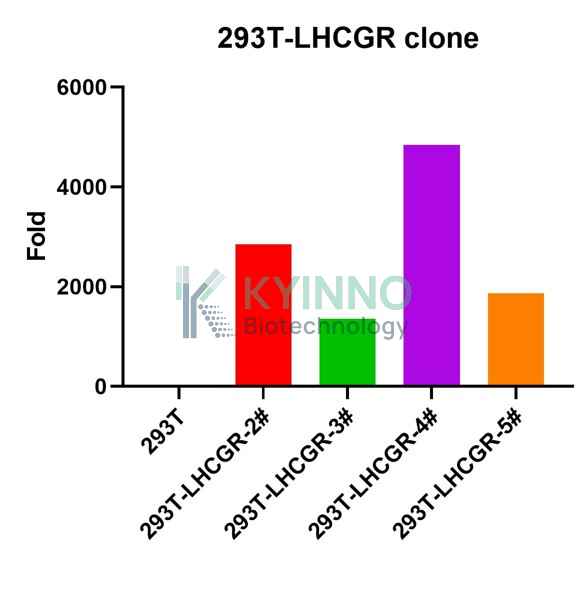
Figure 2: Characterization of human LHCGR overexpression in the CHO-K1 human LHCGR stable clone using qPCR.

Cell Resuscitation

1. Prewarm culture medium (DMEM supplemented with 10% FBS and 1ug/ml puromycin) in a 37°C water bath. 2. Thaw the frozen vial in a 37°C water bath for 1-2 minutes. 3. Transfer the vial into biosafety cabinet, and wipe the surface with 70% ethanol. 4. Unscrew the top of the vial and transfer the cell suspension gently into a sterile centrifuge tube containing 9.0mL complete culture medium. 5. Spin at ~ 125 x g for 5~7 minutes at room temperature, and discard the supernatant without disturbing the pellet. 6. Resuspend cell pellet with the appropriate volume of complete medium and transfer the cell suspension into a T25 culture flask. 7. Incubate the flask at 37°C, 5% CO2 incubator. 8. Split saturated culture 1:4 ~ 1:5 every 2~3 days; seed out at about 1-3 x 10⁵ cells/ml.

Cell Freezing

1. Prepare the freezing medium (70% DMEM + 20% FBS + 10% DMSO) fresh immediately before use. 2. Keep the freezing medium on ice and label cryovials. 3. Transfer cells to a sterile, conical centrifuge tube, and count the cells. 4. Centrifuge the cells at 250 x g for 5 minutes at room temperature and carefully aspirate off the medium. 5. Resuspend the cells at a density of at least 3 x10⁶cells/ml in chilled freezing medium. 6. Aliquot 1 ml of the cell suspension into each cryovial. 7. Freeze cells in the CoolCell freezing container overnight in a −80°C freezer. 8. Transfer vials to liquid nitrogen for long-term storage.

References

1. Xia K, Wang F, Lai X, Dong L, Luo P, Zhang S, Yang C, Chen H, Ma Y, Huang W, Ou W, Li Y, Feng X, Yang B, Liu C, Lei Z, Tu X, Ke Q, Mao FF, Deng C, Xiang AP. AAV-mediated gene therapy produces fertile offspring in the Lhcgr-deficient mouse model of Leydig cell failure. Cell Rep Med. 2022 Nov 15;3(11):100792. doi: 10.1016/j.xcrm.2022.100792. Epub 2022 Oct 20. PMID: 36270285; PMCID: PMC9729833. 2.Chambers AE, Banerjee S. Natural antisense LHCGR could make sense of hypogonadism, male-limited precocious puberty and pre-eclampsia. Mol Cell Endocrinol. 2005 Sep 28;241(1-2):1-9. doi: 10.1016/j.mce.2005.06.007. PMID: 16087288. 3.Geng T, Sun Y, Cheng L, Cao Y, Zhang M, Hong Z, Ma L, Zhang Y. Downregulation of LHCGR Attenuates COX-2 Expression and Induces Luteinized Unruptured Follicle Syndrome in Endometriosis. Front Endocrinol (Lausanne). 2022 May 4;13:853563. doi: 10.3389/fendo.2022.853563. PMID: 35600595; PMCID: PMC9114297.

Please enable JavaScript in your browser to complete this form.