KC-4058

293T-mouse-CD2-Cell-Line

×
Please enable JavaScript in your browser to complete this form.
40574
Home » 293T-mouse-CD2-Cell-Line

Background of 293T-mouse-CD2-Cell-Line

CD2 (CD2 Molecule) is a Protein Coding gene.The protein encoded by this gene is a surface antigen found on all peripheral blood T-cells.The encoded protein interacts with LFA3 (CD58) on antigen presenting cells to optimize immune recognition.CD2 interacts with lymphocyte function-associated antigen CD58 (LFA-3) and CD48/BCM1 to mediate adhesion between T-cells and other cell types. Diseases associated with CD2 include Mastocytosis, Cutaneous and Mastocytosis.

Specifications

Catalog NumberKC-4058
Cell Line Name293T-mouse-CD2-Cell-Line
Host Cell Line293T
DescriptionStable 293T clone expressing exogenous mouse CD2 gene.
QuantityTwo vials of frozen cells (≥2-106/vial)
StabilityStable in culture over a minimum of 10 passages
ApplicationDrug screening and biological assays
Freezing Medium70% DMEM + 20% FBS + 10% DMSO
Propagation MediumDMEM + 10% FBS + 1μg/mL Puromycin
Selection MarkerPuromycin
MorphologyEpithelial
SubcultureSplit saturated culture 1:4-1:8 every 2-3 days; seed out at about 1-3 × 10⁵ cells/mL
Incubation37 °C with 5% CO2
StorageLiquid nitrogen immediately upon receiving
Doubling TimeApproximately 30 hours
Mycoplasma StatusNegative
In Vivo ValidationNA

Cell Line Generation

293T mouse-CD2 cell line was generated using a lentiviral vector expressing the mouse-CD2 sequence.

Characterization

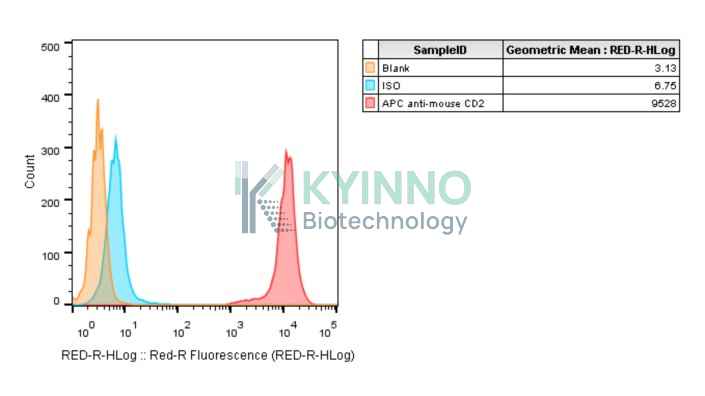
Figure 1: Characterization of endogenous mouse CD2 expression in 293T cells using FACS.

Cell Resuscitation

  1. Prewarm culture medium (DMEM supplemented with 10% FBS and 1μg/mL puromycin)in a 37°C water bath.
  2. Thaw the frozen vial in a 37°C water bath for 1-2 minutes.
  3. Transfer the vial into biosafety cabinet, and wipe the surface with 70% ethanol.
  4. Unscrew the top of the vial and transfer the cell suspension gently into a sterile centrifuge tube containing 9.0mL complete culture medium.
  5. Spin at ~ 125 × g for 5-7 minutes at room temperature, and discard the supernatant without disturbing the pellet.
  6. Resuspend cell pellet with the appropriate volume of complete medium and transfer the cell suspension into a T25 culture flask.
  7. Incubate the flask at 37°C, 5% CO2 incubator.
  8. Split saturated culture 1:4-1:8 every 2-3 days; seed out at about 1-3 × 10⁵ cells/mL.

Cell Freezing

  1. Prepare the freezing medium (70% DMEM + 20% FBS + 10% DMSO) fresh immediately before use.
  2. Keep the freezing medium on ice and label cryovials.
  3. Transfer cells to a sterile, conical centrifuge tube, and count the cells.
  4. Centrifuge the cells at 250×g for 5 minutes at room temperature and carefully aspirate off the medium.
  5. Resuspend the cells at a density of at least 3×10⁶ cells/mL in chilled freezing medium.
  6. Aliquot 1 mL of the cell suspension into each cryovial.
  7. Freeze cells in the CoolCell freezing container overnight in a -80°C freezer.
  8. Transfer vials to liquid nitrogen for long-term storage

References

  1. Kato K, Koyanagi M, Okada H, Takanashi T, Wong YW, Williams AF, Okumura K, Yagita H. CD48 is a counter-receptor for mouse CD2 and is involved in T cell activation. J Exp Med. 1992 Nov 1;176(5):1241-9. doi: 10.1084/jem.176.5.1241. PMID: 1383383; PMCID: PMC2119417.
  2. Rutschmann R, Karjalainen K. Mouse LFA-3 studied with chimeric soluble CD2 shows preferential expression on lymphoid cells. Eur J Immunol. 1991 Jun;21(6):1379-84. doi: 10.1002/eji.1830210608. PMID: 1710564.
  3. Sultan P, Schechner JS, McNiff JM, Hochman PS, Hughes CC, Lorber MI, Askenase PW, Pober JS. Blockade of CD2-LFA-3 interactions protects human skin allografts in immunodeficient mouse/human chimeras. Nat Biotechnol. 1997 Aug;15(8):759-62. doi: 10.1038/nbt0897-759. PMID: 9255790.
Please enable JavaScript in your browser to complete this form.