GCGR is a family B GPCR activated by glucagon mainly expressed in liver and kidney and, to a lower extent in heart, adipose tissue, pancreas, gastrointestinal tract and other tissues. Glucagon suppresses food intake and stimulates energy expenditure and hepatic glucose production.
Split saturated culture 1:4-1:8 every 2-3 days; seed out at about 1-3 × 10⁵ cells/mL
Incubation
37 °C with 5% CO2
Storage
Liquid nitrogen immediately upon receiving
Doubling Time
Approximately 30 hours
Mycoplasma Status
Negative
In Vivo Validation
NA
Cell Line Generation
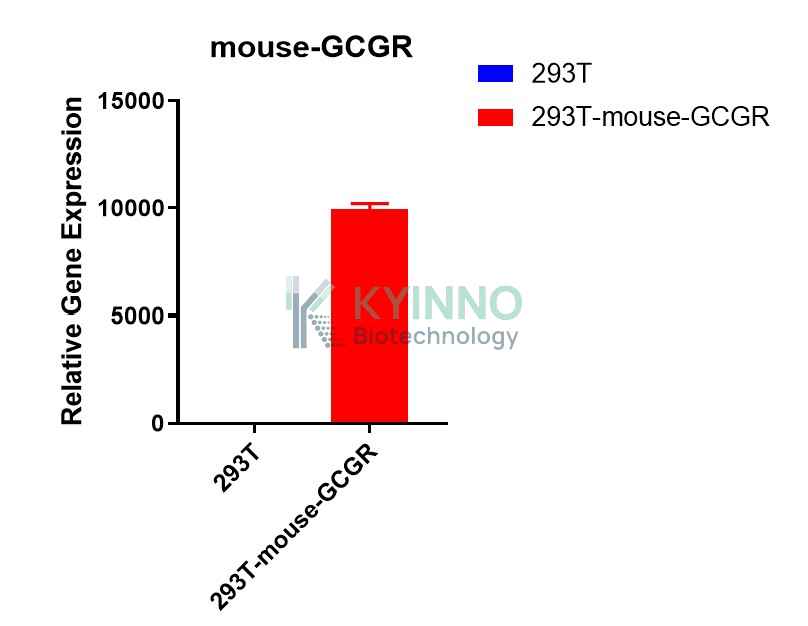
293T-mouse-GCGR cell line was generated using a lentiviral vector expressing the mouse GCGR sequence.
Characterization
Figure 1: Characterization of mouse GCGR overexpression in the 293T-mouse-GCGR stable clone using qPCR.
Figure 2: Characterization of mouse GCGR in the 293T-mouse-GCGR stable clone using PCR sequencing.
Cell Resuscitation
1. Prewarm culture medium (DMEM supplemented with 10% FBS and 1μg/mL puromycin)in a 37°C water bath.
2. Thaw the frozen vial in a 37°C water bath for 1-2 minutes.
3. Transfer the vial into biosafety cabinet, and wipe the surface with 70% ethanol.
4. Unscrew the top of the vial and transfer the cell suspension gently into a sterile centrifuge tube containing 9.0mL complete culture medium.
5. Spin at ~ 125 × g for 5-7 minutes at room temperature, and discard the supernatant without disturbing the pellet.
6. Resuspend cell pellet with the appropriate volume of complete medium and transfer the cell suspension into a T25 culture flask.
7. Incubate the flask at 37°C, 5% CO2 incubator.
8. Split saturated culture 1:4-1:8 every 2-3 days; seed out at about 1-3 × 10⁵ cells/mL.
Cell Freezing
1. Prepare the freezing medium (70% DMEM + 20% FBS + 10% DMSO) fresh immediately before use.
2. Keep the freezing medium on ice and label cryovials.
3. Transfer cells to a sterile, conical centrifuge tube, and count the cells.
4. Centrifuge the cells at 250×g for 5 minutes at room temperature and carefully aspirate off the medium.
5. Resuspend the cells at a density of at least 3×10⁶ cells/mL in chilled freezing medium.
6. Aliquot 1 mL of the cell suspension into each cryovial.
7. Freeze cells in the CoolCell freezing container overnight in a -80°C freezer.
8. Transfer vials to liquid nitrogen for long-term storage.
References
1. Pocai A. G protein-coupled receptors and obesity. Front Endocrinol (Lausanne). 2023 Dec 14;14:1301017. doi: 10.3389/fendo.2023.1301017. PMID: 38161982; PMCID: PMC10757641.
Use License Agreement
Research Use Only.
Not for use in diagnostic procedures or therapeutic applications.
Redistribution of the cell line or its derivatives is prohibited without prior written permission from Kyinno Biotechnology.