KC-4462

293T-mouse-ITGAV-Cell-Line

×
Please enable JavaScript in your browser to complete this form.
47086
Home » 293T-mouse-ITGAV-Cell-Line

Background of 293T-mouse-ITGAV-Cell-Line

The products of the ITGAV gene belong to the integrin alpha chain family. Integrins are heterodimeric integrated membrane proteins composed of alpha and beta subunits, which play a role in cell surface adhesion and signal transduction. The pre encoded protein undergoes protein hydrolysis treatment to produce light and heavy chains containing the methylene V subunit. This subunit binds to β 1, β 3, β 5, β 6, and β 8 subunits. The heterodimer composed of α V and β 3 subunits is also known as a fibronectin receptor. This integrin may regulate angiogenesis and cancer progression.

Specifications

Catalog NumberKC-4462
Cell Line Name293T-mouse-ITGAV-Cell-Line
Host Cell Line293T
DescriptionStable 293T clone expressing exogenous mouse-ITGAV gene
QuantityTwo vials of frozen cells (≥2-106/vial)
StabilityStable in culture over a minimum of 10 passages
ApplicationDrug screening and biological assays
Freezing Medium70% DMEM + 20% FBS + 10% DMSO
Propagation MediumDMEM + 10% FBS + 1μg/mL Puromycin
Selection MarkerPuromycin
MorphologyEpithelial
SubcultureSplit saturated culture 1:4-1:8 every 2-3 days; seed out at about 1-3 × 10⁵ cells/mL
Incubation37 °C with 5% CO2
StorageLiquid nitrogen immediately upon receiving
Doubling TimeApproximately 30 hours
Mycoplasma StatusNegative

Cell Line Generation

293T-mouse-ITGAV-cell-line was generated using a lentiviral vector expressing the mouse-ITGAV sequence.

Characterization

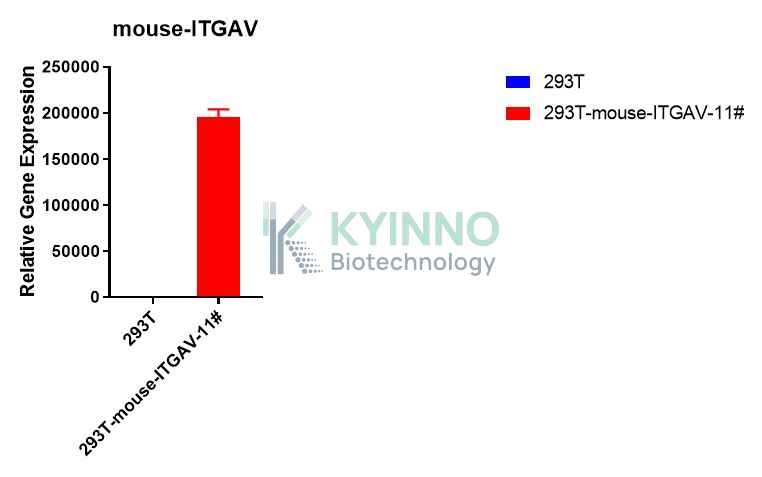
Figure 1: Characterization of mouse-ITGAV overexpression in the 293T-mouse-ITGAV stable clone using qPCR.

Figure 2: Characterization of mouse-ITGAV in the 293T-mouse-ITGAV stable clone using PCR sequencing.

Cell Resuscitation

  1. Prewarm culture medium (DMEM supplemented with 10% FBS and 1μg/mL puromycin)in a 37°C water bath.
  2. Thaw the frozen vial in a 37°C water bath for 1-2 minutes.
  3. Transfer the vial into biosafety cabinet, and wipe the surface with 70% ethanol.
  4. Unscrew the top of the vial and transfer the cell suspension gently into a sterile centrifuge tube containing 9.0mL complete culture medium.
  5. Spin at ~ 125 × g for 5-7 minutes at room temperature, and discard the supernatant without disturbing the pellet.
  6. Resuspend cell pellet with the appropriate volume of complete medium and transfer the cell suspension into a T25 culture flask.
  7. Incubate the flask at 37°C, 5% CO2 incubator.
  8. Split saturated culture 1:4-1:8 every 2-3 days; seed out at about 1-3 × 10⁵ cells/mL.

Cell Freezing

  1. Prepare the freezing medium (70% DMEM + 20% FBS + 10% DMSO) fresh immediately before use.
  2. Keep the freezing medium on ice and label cryovials.
  3. Transfer cells to a sterile, conical centrifuge tube, and count the cells.
  4. Centrifuge the cells at 250×g for 5 minutes at room temperature and carefully aspirate off the medium.
  5. Resuspend the cells at a density of at least 3×10⁶ cells/mL in chilled freezing medium.
  6. Aliquot 1 mL of the cell suspension into each cryovial.
  7. Freeze cells in the CoolCell freezing container overnight in a -80°C freezer.
  8. Transfer vials to liquid nitrogen for long-term storage.

References

  1. Lee SK, Kim MH, Cheong JY, Cho SW, Yang SJ, Kwack K. Integrin alpha V polymorphisms and haplotypes in a Korean population are associated with susceptibility to chronic hepatitis and hepatocellular carcinoma. Liver Int. 2009 Feb;29(2):187-95. doi: 10.1111/j.1478-3231.2008.01843.x. Epub 2008 Aug 7. PMID: 18694400.
  2. Ghasempour S, Warner N, Guan R, Rodari MM, Ivanochko D, Whittaker Hawkins R, Marwaha A, Nowak JK, Liang Y, Mulder DJ, Stallard L, Li M, Yu DD, Pluthero FG, Batura V, Zhao M, Siddiqui I, Upton JEM, Hulst JM, Kahr WHA, Mendoza-Londono R, Charbit-Henrion F, Hoefsloot LH, Khiat A, Moreira D, Trindade E, Espinheira MDC, Pinto Pais I, Weerts MJA, Douben H, Kotlarz D, Snapper SB, Klein C, Dowling JJ, Julien JP, Joosten M, Cerf-Bensussan N, Freeman SA, Parlato M, van Ham TJ, Muise AM. Human ITGAV variants are associated with immune dysregulation, brain abnormalities, and colitis. J Exp Med. 2024 Dec 2;221(12):e20240546. doi: 10.1084/jem.20240546. Epub 2024 Nov 11. PMID: 39526957; PMCID: PMC11554753.
Please enable JavaScript in your browser to complete this form.