KC-6702

293T-MUC17-short Cell Line

×
请在浏览器中启用JavaScript来完成此表单。
64230
Home » 293T-MUC17-short Cell Line

Background of 293T-MUC17-short Cell Line

MUC17 (Mucin 17, Cell Surface Associated) is a Protein Coding gene. This gene encodes a membrane-bound mucin protein that plays a key role in maintaining homeostasis on mucosal surfaces, particularly in the gastrointestinal tract. The encoded protein is a type I transmembrane protein characterized by a large extracellular domain containing approximately 60 tandem repeats of around 60 amino acids each, along with an SEA domain and an EGF-like domain. N-glycosylation of the protein is required for its proper localization to the cell surface, while the C-terminus interacts with the scaffold protein PDZ domain containing 1 (PDZK1). MUC17 is expressed almost exclusively in the intestine, including the duodenum and transverse colon, where it is found in mature absorptive cells and provides protection to gut epithelial cells. It has also been reported to be highly expressed in pancreatic adenocarcinoma tissue. Two transcript variants have been identified for this gene, one protein-coding and the other non-protein coding.

Specifications

Catalog NumberKC-6702
Cell Line Name293T-MUC17-short Cell Line
NCBI/UniProt Accession NumberNM_001040105.1
Clone Number5#
Host Cell Line293T
DescriptionStable 293T cell line expressing exogenous MUC17 short gene
QuantityOne vial of frozen cells (≥2-106/vial)
StabilityStable in culture over a minimum of 10 passages
ApplicationDrug screening and biological assays
Freezing Medium70% DMEM+20% FBS+10% DMSO
Propagation Medium90% DMEM+10% FBS +1μg/mL Puromycin
Selection MarkerPuromycin
MorphologyEpithelial
SubcultureSplit saturated culture 1:4 to 1:8 every 2-3 days
Incubation37 °C with 5% CO2
StorageLiquid nitrogen immediately upon receiving
Doubling TimeApproximately 30 hours
Mycoplasma StatusNegative

Cell Line Generation

293T-MUC17-short cell line was generated using a lentiviral vector expressing the MUC17 short sequence.

Characterization

Figure 1. Characterization of MUC17 overexpression in the 293T-MUC17-short stable clone using PCR sequencing.

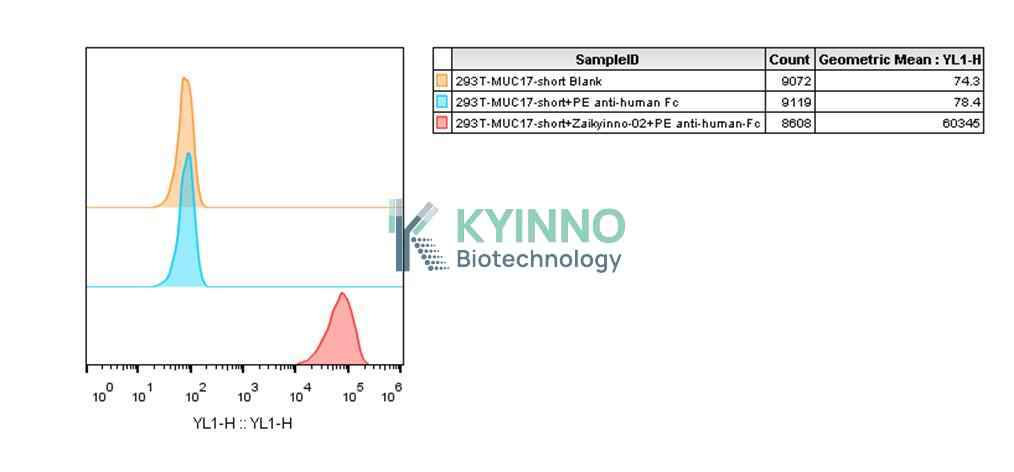
Figure 2: Characterization of MUC17 in the 293T-MUC17-short stable clone using FACS.

Cell Resuscitation

  1. Pre-warm complete culture medium (90% DMEM+10% FBS +1μg/mL Puromycin) in a 37°C water bath.
  2. Rapidly thaw the cryovial in a 37°C water bath for 1-2 minutes with gentle agitation.
  3. Transfer the vial to a biosafety cabinet, and disinfect the exterior with 70% ethanol.
  4. Aseptically transfer the cell suspension dropwise into a sterile centrifuge tube containing 9.0 mL of pre-warmed complete medium.
  5. Centrifuge at approximately 125 × g for 5–7 minutes at room temperature, carefully aspirate the supernatant without disturbing the cell pellet.
  6. Gently resuspend the pellet in an appropriate volume of complete medium and transfer the suspension into a T25 flask.
  7. Incubate the flask in a 37°C in a humidified 5% CO2 incubator.
  8. Assess cell viability and morphology after 24 hours. If cells appear healthy, replace the medium with fresh medium supplemented with the appropriate selective antibiotic.
  9. Subculture the cells at a ratio of 1:4 to 1:8 every 2-3 days upon reaching 80%–90% confluency.

Cell Freezing

  1. Prepare the freezing medium (70% DMEM+20% FBS+10% DMSO) freshly before use.
  2. Pre-chill the freezing medium on ice and label the cryovials accordingly.
  3. Transfer the cell suspension to a sterile conical tube and perform a cell count to determine total viability and density.
  4. Centrifuge the cells at 250×g for 5 minutes at room temperature; carefully aspirate the supernatant.
  5. Gently resuspend the cell pellet in chilled freezing medium, ensuring a minimum cell density of 3×10⁶ cells/mL.
  6. Aliquot 1 mL of the cell suspension into each pre-labeled cryovial.
  7. Place the cryovials into a CoolCell® container and store at -80°C overnight for controlled-rate cooling.
  8. Transfer the cryovials to the liquid nitrogen for long-term storage the following day.

References

  1. Moniaux N, Junker WM, Singh AP, Jones AM, Batra SK. Characterization of human mucin MUC17. Complete coding sequence and organization. J Biol Chem. 2006 Aug 18;281(33):23676-85. doi: 10.1074/jbc.M512065200. PMID: 16737958.
  2. Ho JJ, Jaituni RS, Crawley SC, Yang SC, Gum JR Jr, Kim YS. N-glycosylation is required for the surface localization of MUC17 mucin. Int J Oncol. 2003 Sep;23(3):585-92. doi: 10.3892/ijo.23.3.585. PMID: 12888891.

Use License Agreement

Research Use Only.
Not for use in diagnostic procedures or therapeutic applications.
Redistribution of the cell line or its derivatives is prohibited without prior written permission from Kyinno Biotechnology.
请在浏览器中启用JavaScript来完成此表单。