KC-3470

293T-NFAT-Luc2-NTSR1 Cell Line

×
Please enable JavaScript in your browser to complete this form.
34410
Home » 细胞系 » 293T-NFAT-Luc2-NTSR1 Cell Line

Background of 293T-NFAT-Luc2-NTSR1 Cell Line

Neurotensin receptor-1 (NTSR-1) is a G-protein coupled receptor (GPCR) that has been recently identified as a mediator of cancer progression. NTSR-1 and its endogenous ligand, neurotensin (NTS), are co-expressed in several breast cancer cell lines and breast cancer tumor samples. Signaling is effected via G proteins that activate a phosphatidylinositol-calcium second messenger system. Signaling leads to the activation of downstream MAP kinases and protects cells against apoptosis.

Specifications

Catalog NumberKC-3470
Cell Line Name293T-NFAT-Luc2-NTSR1 Cell Line
Host Cell Line293T-NFAT-Luc2
DescriptionStable 293T cell line expressing exogenous luciferase gene under the control of NTSR1 signaling pathway.
QuantityTwo vials of frozen cells (≥2-106/vial)
StabilityStable in culture over a minimum of 10 passages
ApplicationDrug screening and biological assays
Freezing Medium70% DMEM+20% FBS+10% DMSO
Propagation MediumDMEM+10%FBS+1µg/mL Puromycin+150µg/ml Hygromycin B
Selection MarkerPuromycin, Hygromycin B
MorphologyEpithelial
SubcultureSplit saturated culture 1:4-1:8 every 2-3 days; seed out at about 1-3 × 10⁵ cells/mL
Incubation37 °C with 5% CO2
StorageLiquid nitrogen immediately upon receiving
Doubling TimeApproximately 30 hours
Mycoplasma StatusNegative
In Vivo ValidationNA

Cell Line Generation

293T cell line was generated using lentivirus expressing NTSR1 sequence.

Characterization

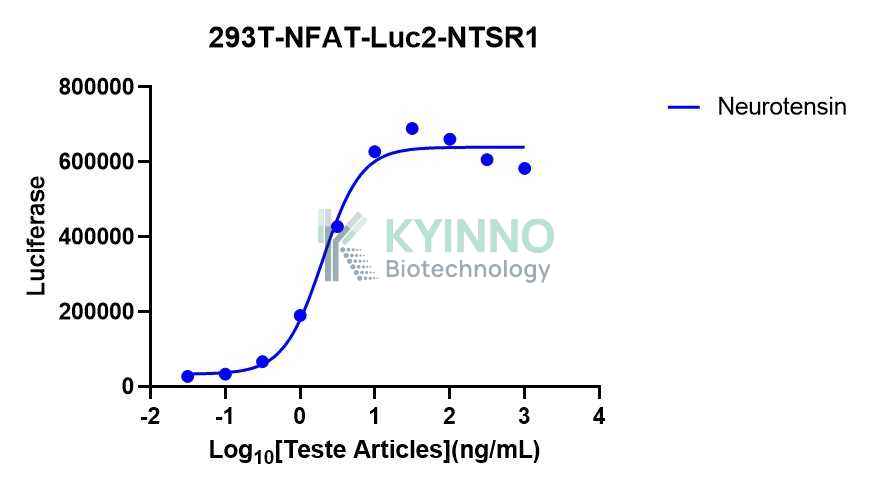
Figure 1. 293T-NFAT-Luc2-NTSR1 cell line was seeded into the 96-well plate, and treated with Neurotensin at a maximum concentration of 1μg/mL for 16 hours, then readout with Bright-Glo system.

Cell Resuscitation

1. Prewarm culture medium (DMEM supplemented with 10% FBS, 150μg/ml Hygromycin and 1µg/mL Puromycin)in a 37°C water bath. 2. Thaw the frozen vial in a 37°C water bath for 1-2 minutes. 3. Transfer the vial into biosafety cabinet, and wipe the surface with 70% ethanol. 4. Unscrew the top of the vial and transfer the cell suspension gently into a sterile centrifuge tube containing 9.0mL complete culture medium. 5. Spin at ~ 125 × g for 5-7 minutes at room temperature, and discard the supernatant without disturbing the pellet. 6. Resuspend cell pellet with the appropriate volume of complete medium and transfer the cell suspension into a T25 culture flask. 7. Incubate the flask at 37°C, 5% CO2 incubator. 8. Split saturated culture 1:4-1:8 every 2-3 days; seed out at about 1-3 × 10⁵ cells/mL.

Cell Freezing

1. Prepare the freezing medium (70% DMEM + 20% FBS + 10% DMSO) fresh immediately before use. 2. Keep the freezing medium on ice and label cryovials. 3. Transfer cells to a sterile, conical centrifuge tube, and count the cells. 4. Centrifuge the cells at 250×g for 5 minutes at room temperature and carefully aspirate off the medium. 5. Resuspend the cells at a density of at least 3×10⁶ cells/mL in chilled freezing medium. 6. Aliquot 1 mL of the cell suspension into each cryovial. 7. Freeze cells in the CoolCell freezing container overnight in a -80°C freezer. 8. Transfer vials to liquid nitrogen for long-term storage.

References

1.Heakal Y, Woll MP, Fox T, Seaton K, Levenson R, Kester M. Neurotensin receptor-1 inducible palmitoylation is required for efficient receptor-mediated mitogenic-signaling within structured membrane microdomains. Cancer Biol Ther. 2011 Sep 1;12(5):427-35. doi: 10.4161/cbt.12.5.15984. Epub 2011 Sep 1. PMID: 21725197; PMCID: PMC3219081. 2.Da Costa G, Bondon A, Coutant J, Curmi P, Monti JP. Intermolecular interactions between the neurotensin and the third extracellular loop of human neurotensin 1 receptor. J Biomol Struct Dyn. 2013 Dec;31(12):1381-92. doi: 10.1080/07391102.2012.736776. Epub 2012 Nov 12. Erratum in: J Biomol Struct Dyn. 2014;32(1):170. PMID: 23140271.

Please enable JavaScript in your browser to complete this form.