KC-4830

293T-rat-ITGB6-ITGAV Cell Line

×
Please enable JavaScript in your browser to complete this form.
53656
Home » 293T-rat-ITGB6-ITGAV Cell Line

Background of 293T-rat-ITGB6-ITGAV Cell Line

Integrins play crucial roles in epithelial adhesion, proliferation, wound healing and cancer. Integrin β6 (ITGB6), a member of the integrin family of proteins, is only present in epithelial tissues and frequently associates with integrin subunit αv to form transmembrane heterodimers named integrin αvβ6. This heterodimer can bind to ligands like fibronectin and transforming growth factor beta 1. Diseases associated with ITGB6 include Amelogenesis Imperfecta, Type Ih and Alopecia-Intellectual Disability Syndrome.
ITGAV (Integrin Subunit Alpha V) also known as CD51, it is a Protein Coding gene. Integrins are heterodimeric integrated membrane proteins composed of alpha and beta subunits, which play a role in cell surface adhesion and signal transduction. This subunit binds to β 1, β 3, β 5, β 6, and β 8 subunits. This integrin may regulate angiogenesis and cancer progression. Diseases associated with ITGAV include Visceral Myopathy 1 and West Nile Virus.

Specifications

Catalog NumberKC-4830
Cell Line Name293T-rat-ITGB6-ITGAV Cell Line
Host Cell Line293T
DescriptionStable 293T clone expressing exogenous rat ITGB6 and ITGAV gene
QuantityTwo vials of frozen cells (≥2-106/vial)
StabilityStable in culture over a minimum of 10 passages
ApplicationDrug screening and biological assays
Freezing Medium70% DMEM + 20% FBS + 10% DMSO
Propagation MediumDMEM + 10% FBS + 1μg/mL Puromycin
Selection MarkerPuromycin
MorphologyEpithelial
SubcultureSplit saturated culture 1:4-1:8 every 2-3 days; seed out at about 1-3 × 10⁵ cells/mL
Incubation37 °C with 5% CO2
StorageLiquid nitrogen immediately upon receiving
Doubling TimeApproximately 30 hours
Mycoplasma StatusNegative

Cell Line Generation

293T-rat-ITGB6-ITGAV cell line was generated using a lentiviral vector expressing the rat ITGB6 and ITGAV Norrin sequence.

Characterization

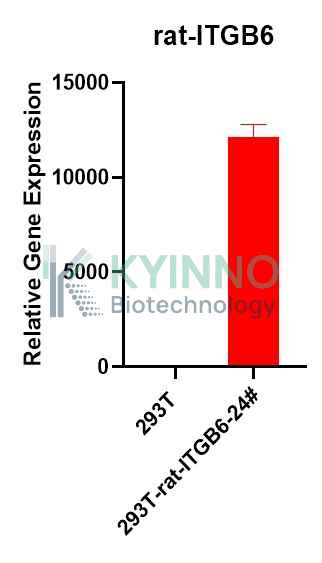
Figure 1: Characterization of rat ITGB6 overexpression in the 293T stable clone using QPCR.

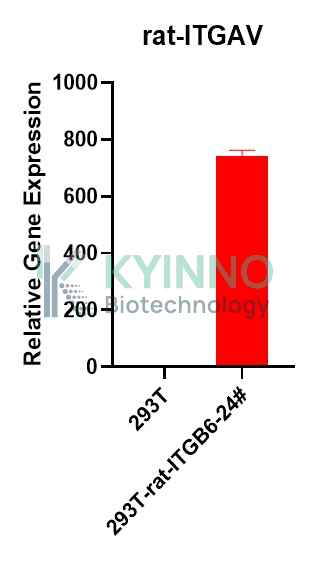
Figure 2: Characterization of rat ITGAV overexpression in the 293T stable clone using QPCR.

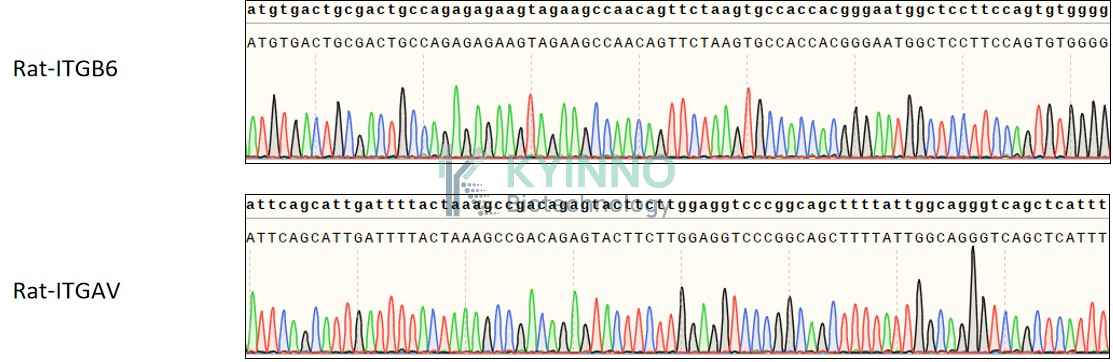
Figure 3: Characterization of rat ITGB6 and ITGAV in the 293T stable clone using PCR sequencing.

Cell Resuscitation

1. Prewarm culture medium (DMEM supplemented with 10% FBS and 1μg/mL puromycin)in a 37°C water bath.
2. Thaw the frozen vial in a 37°C water bath for 1-2 minutes.
3. Transfer the vial into biosafety cabinet, and wipe the surface with 70% ethanol.
4. Unscrew the top of the vial and transfer the cell suspension gently into a sterile centrifuge tube containing 9.0mL complete culture medium.
5. Spin at ~ 125 × g for 5-7 minutes at room temperature, and discard the supernatant without disturbing the pellet.
6. Resuspend cell pellet with the appropriate volume of complete medium and transfer the cell suspension into a T25 culture flask.
7. Incubate the flask at 37°C, 5% CO2 incubator.
8. Split saturated culture 1:4-1:8 every 2-3 days; seed out at about 1-3 × 10⁵ cells/mL.

Cell Freezing

1. Prepare the freezing medium (70% DMEM + 20% FBS + 10% DMSO) fresh immediately before use.
2. Keep the freezing medium on ice and label cryovials.
3. Transfer cells to a sterile, conical centrifuge tube, and count the cells.
4. Centrifuge the cells at 250×g for 5 minutes at room temperature and carefully aspirate off the medium.
5. Resuspend the cells at a density of at least 3×10⁶ cells/mL in chilled freezing medium.
6. Aliquot 1 mL of the cell suspension into each cryovial.
7. Freeze cells in the CoolCell freezing container overnight in a -80°C freezer.
8. Transfer vials to liquid nitrogen for long-term storage.

References

1. Yi M, Tang Y, Liu B, Li Q, Zhou X, Yu S, Fu S, Cai Y, Yuan X. Genetic variants in the ITGB6 gene is associated with the risk of radiation pneumonitis in lung cancer patients treated with thoracic radiation therapy. Tumour Biol. 2016 Mar;37(3):3469-77. doi: 10.1007/s13277-015-4171-y. Epub 2015 Oct 8. PMID: 26449830.
2. Chen W, Lou J, Hsin J, Schulten K, Harvey SC, Zhu C. Molecular dynamics simulations of forced unbending of integrin α(v)β₃. PLoS Comput Biol. 2011 Feb;7(2):e1001086. doi: 10.1371/journal.pcbi.1001086. Epub 2011 Feb 17. PMID: 21379327; PMCID: PMC3040657.
3. Duperret EK, Dahal A, Ridky TW. Focal-adhesion-independent integrin-αv regulation of FAK and c-Myc is necessary for 3D skin formation and tumor invasion. J Cell Sci. 2015 Nov 1;128(21):3997-4013. doi: 10.1242/jcs.175539. Epub 2015 Sep 10. PMID: 26359297; PMCID: PMC4647167.

Please enable JavaScript in your browser to complete this form.