
KC-4182

293T-SMAD-Luc2-ACVR2A-ACVR2B-KO-Cell-Line

×
请在浏览器中启用JavaScript来完成此表单。
44029
Home » 293T-SMAD-Luc2-ACVR2A-ACVR2B-KO-Cell-Line

Background of 293T-SMAD-Luc2-ACVR2A-ACVR2B-KO-Cell-Line

Smads are intracellular proteins that act as central effectors for transforming growth factor-beta (TGF-beta) and related proteins from the activated receptor into the nucleus, where they regulate ligand-induced gene expression.Smad4 is a central mediator for TGF-β pathway. Alternation of Smad4 has been found to associate with many types of human cancers, thus Smad4 is considered as an important tumor suppressor gene. Activins are members of the TGF-β family of ligands that have multiple biological functions in embryonic stem cells as well as in differentiated tissue.The encoded protein is a transmembrane serine-threonine kinase receptor which mediates signaling by forming heterodimeric complexes with various combinations of type I and type II receptors and ligands in a cell-specific manner.

Specifications

Catalog NumberKC-4182
Cell Line Name293T-SMAD-Luc2-ACVR2A-ACVR2B-KO-Cell-Line
NCBI/UniProt Accession NumberNA
Clone Number3B3
Host Cell Line293T-ACVR2A-ACVR2B-KO
DescriptionStable 293T cell line expressing exogenous luciferase gene under the control of SMAD transcription factor with human ACVR2A and ACVR2B gene knockout.
QuantityOne vial of frozen cells (≥2-106/vial)
StabilityStable in culture over a minimum of 10 passages
ApplicationDrug screening and biological assays
Freezing Medium70% DMEM+20% FBS+10% DMSO
Propagation MediumDMEM+10% FBS +150μg/mL Hygromycin B
Selection MarkerHygromycin B
MorphologyEpithelial
SubcultureSplit saturated culture 1:4-1:8 every 2-3 days
Incubation37 °C with 5% CO2
StorageLiquid nitrogen immediately upon receiving
Doubling TimeApproximately 30 hours
Mycoplasma StatusNegative
In Vivo ValidationNA

Cell Line Generation

293T-SMAD-Luc2-ACVR2A-ACVR2B-KO cell line was generated using lentivirus expressing luciferase under the control of SMAD signal pathway.

Characterization

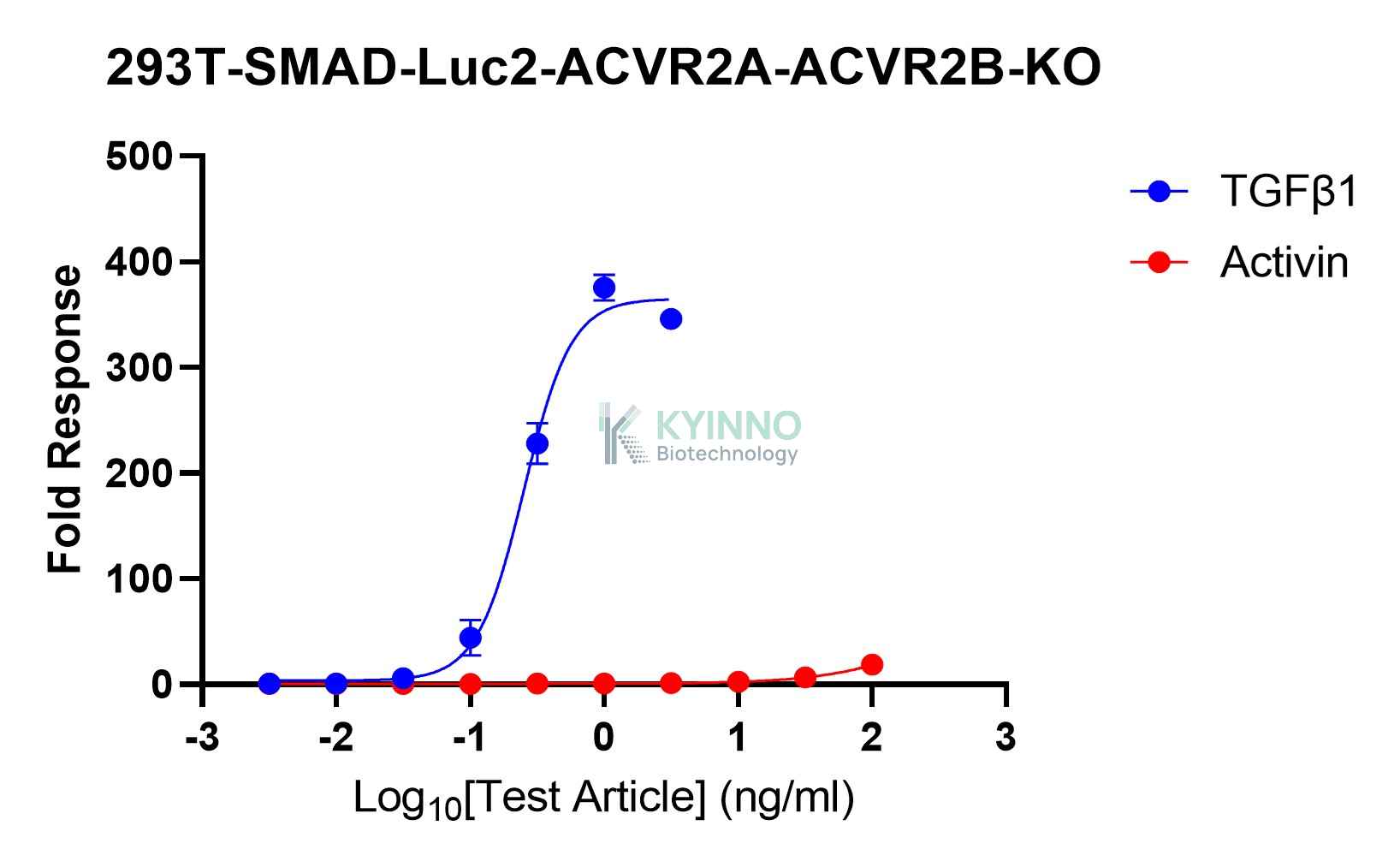
Figure 1. 293T-SMAD-Luc2-ACVR2A-ACVR2B-KO cell line was seeded into the 96-well plate, and treated with TGFβ1 and Activin at a maximum concentration of 3.16ng/mL and 100ng/mL for 6 hours, then readout with Bright-Glo system.
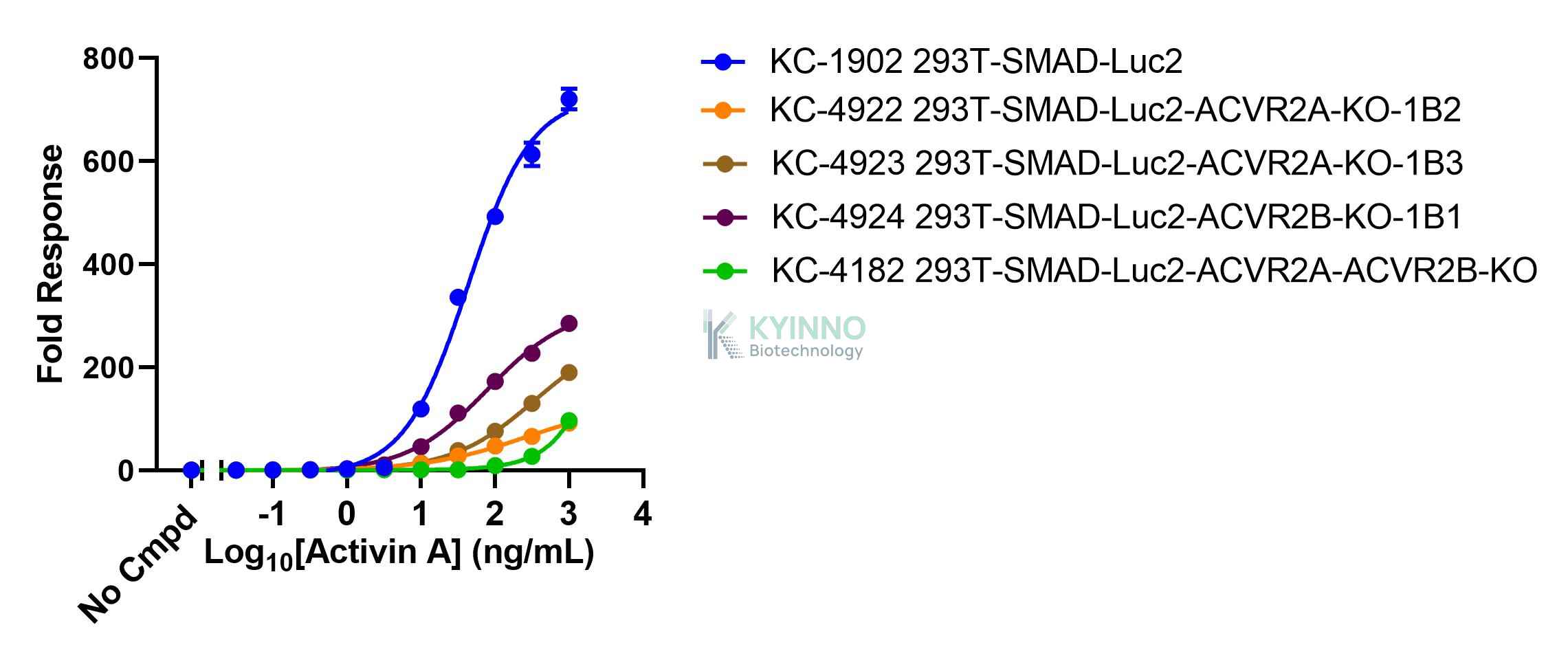
Figure 2: 293T-SMAD-Luc2-ACVR2A-ACVR2B-KO cells were seeded into 96-well plates, treated with Activin A for 16 hours, and then read out using Bright-Glo Detection System.

Cell Resuscitation

  1. Pre-warm complete culture medium (basal medium and 10% FBS) in a 37°C water bath.
  2. Rapidly thaw the cryovial in a 37°C water bath for 1-2 minutes with gentle agitation.
  3. Transfer the vial to a biosafety cabinet, and disinfect the exterior with 70% ethanol.
  4. Aseptically transfer the cell suspension dropwise into a sterile centrifuge tube containing 9.0 mL of pre-warmed complete medium.
  5. Centrifuge at approximately 125 × g for 5–7 minutes at room temperature, carefully aspirate the supernatant without disturbing the cell pellet.
  6. Gently resuspend the pellet in an appropriate volume of complete medium and transfer the suspension into a T25 flask.
  7. Incubate the flask in a 37°C in a humidified 5% CO2 incubator.
  8. Assess cell viability and morphology after 24 hours. If cells appear healthy, replace the medium with fresh medium supplemented with the appropriate selective antibiotic.
  9. Subculture the cells at a ratio of 1:4-1:8 every 2-3 days upon reaching 80%–90% confluency.

Cell Freezing

  1. Prepare the freezing medium (70% basal medium, 20% FBS and 10% DMSO) freshly before use.
  2. Pre-chill the freezing medium on ice and label the cryovials accordingly.
  3. Transfer the cell suspension to a sterile conical tube and perform a cell count to determine total viability and density.
  4. Centrifuge the cells at 250×g for 5 minutes at room temperature; carefully aspirate the supernatant.
  5. Gently resuspend the cell pellet in chilled freezing medium, ensuring a minimum cell density of 3×10⁶ cells/mL.
  6. Aliquot 1 mL of the cell suspension into each pre-labeled cryovial.
  7. Place the cryovials into a CoolCell® container and store at -80°C overnight for controlled-rate cooling.
  8. Transfer the cryovials to the liquid nitrogen for long-term storage the following day.

References

  1. Qing J, Zhang Y, Derynck R. Structural and functional characterization of the transforming growth factor-beta -induced Smad3/c-Jun transcriptional cooperativity. J Biol Chem. 2000 Dec 8;275(49):38802-12. doi: 10.1074/jbc.M004731200. PMID: 10995748.
  2. Yang Y, Cui J, Xue F, Zhang C, Mei Z, Wang Y, Bi M, Shan D, Meredith A, Li H, Xu ZQ. Pokemon (FBI-1) interacts with Smad4 to repress TGF-β-induced transcriptional responses. Biochim Biophys Acta. 2015 Mar;1849(3):270-81. doi: 10.1016/j.bbagrm.2014.12.008. Epub 2014 Dec 13. PMID: 25514493.

Use License Agreement

Research Use Only.
Not for use in diagnostic procedures or therapeutic applications.
Redistribution of the cell line or its derivatives is prohibited without prior written permission from Kyinno Biotechnology.
请在浏览器中启用JavaScript来完成此表单。