KC-4417

293T-STAT5-Luc2-GHR-Cell-Line

×
Please enable JavaScript in your browser to complete this form.
46080
Home » 293T-STAT5-Luc2-GHR-Cell-Line

Background of 293T-STAT5-Luc2-GHR-Cell-Line

This gene encodes a member of the type I cytokine receptor family, which is a transmembrane receptor for growth hormone. Binding of growth hormone to the receptor leads to receptor dimerization and the activation of an intra- and intercellular signal transduction pathway leading to growth. Mutations in this gene have been associated with Laron syndrome, also known as the growth hormone insensitivity syndrome (GHIS), a disorder characterized by short stature. In humans and rabbits, but not rodents, growth hormone binding protein (GHBP) is generated by proteolytic cleavage of the extracellular ligand-binding domain from the mature growth hormone receptor protein. Multiple alternatively spliced transcript variants have been found for this gene.

Specifications

Catalog NumberKC-4417
Cell Line Name293T-STAT5-Luc2-GHR-Cell-Line
Host Cell Line293T-STAT5-Luc2
DescriptionStable 293T-STAT5-Luc2 cell line expressing exogenous GHR gene
QuantityTwo vials of frozen cells (≥2-106/vial)
StabilityStable in culture over a minimum of 10 passages
ApplicationDrug screening and biological assays
Freezing Medium70% DMEM+20% FBS+10% DMSO
Propagation MediumDMEM+10% FBS +150μg/mL Hygromycin+1μg/mL Puromycin
Selection MarkerHygromycin and Puromycin
MorphologyEpithelial
SubcultureSplit saturated culture 1:4-1:5 every 2-3 days; seed out at about 1-3 × 10⁵ cells/mL
Incubation37 °C with 5% CO2
StorageLiquid nitrogen immediately upon receiving
Doubling TimeApproximately 30 hours
Mycoplasma StatusNegative
In Vivo ValidationNA

Cell Line Generation

293T-STAT5-Luc2-GHR cell line was generated using lentivirus expressing GHR sequence.

Characterization

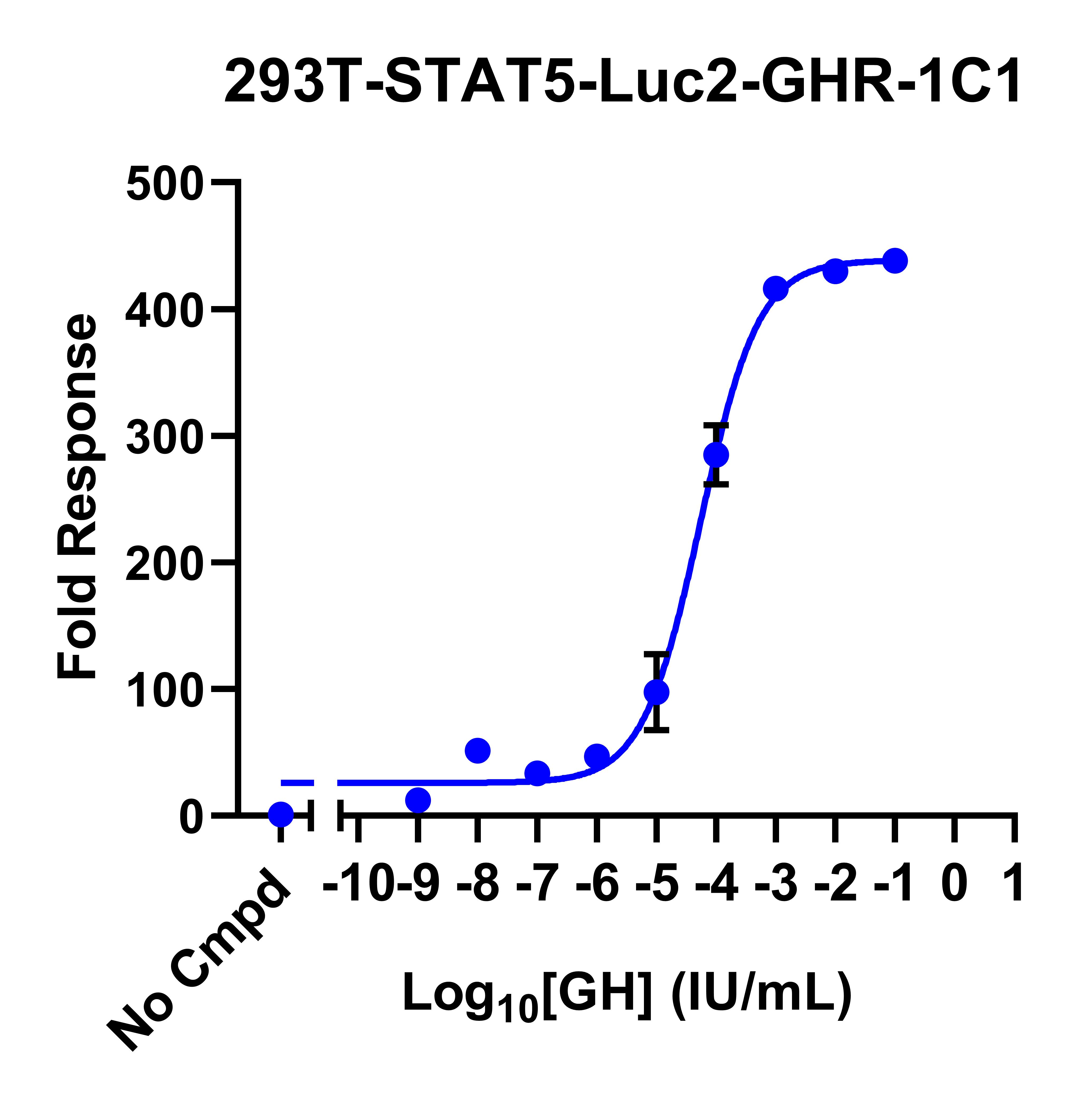
Figure: 293T-STAT5-Luc2-GHR cells were seeded into the 96-well plate, treated with GH for 16 hours, then readout with Bright-lite™ Luciferase Assay system.

Cell Resuscitation

  1. Prewarm culture medium (DMEM supplemented with 10% FBS, 150μg/mL Hygromycin and 1μg/mL Puromycin)in a 37°C water bath.
  2. Thaw the frozen vial in a 37°C water bath for 1-2 minutes.
  3. Transfer the vial into biosafety cabinet, and wipe the surface with 70% ethanol.
  4. Unscrew the top of the vial and transfer the cell suspension gently into a sterile centrifuge tube containing 9.0mL complete culture medium.
  5. Spin at ~ 125 × g for 5-7 minutes at room temperature, and discard the supernatant without disturbing the pellet.
  6. Resuspend cell pellet with the appropriate volume of complete medium and transfer the cell suspension into a T25 culture flask.
  7. Incubate the flask at 37°C, 5% CO2 incubator.
  8. Split saturated culture 1:4-1:8 every 2-3 days; seed out at about 1-3 × 10⁵ cells/mL.

Cell Freezing

  1. Prepare the freezing medium (70% DMEM + 20% FBS + 10% DMSO) fresh immediately before use.
  2. Keep the freezing medium on ice and label cryovials.
  3. Transfer cells to a sterile, conical centrifuge tube, and count the cells.
  4. Centrifuge the cells at 250×g for 5 minutes at room temperature and carefully aspirate off the medium.
  5. Resuspend the cells at a density of at least 3×10⁶ cells/mL in chilled freezing medium.
  6. Aliquot 1 mL of the cell suspension into each cryovial.
  7. Freeze cells in the CoolCell freezing container overnight in a -80°C freezer.
  8. Transfer vials to liquid nitrogen for long-term storage

References

  1. Unterberger CJ, McIlwain SJ, Tsourkas PK, Maklakova VI, Prince JL, Onesti A, Hu R, Kopchick JJ, Swanson SM, Marker PC. Conditional gene regulation models demonstrate a pro-proliferative role for growth hormone receptor in prostate cancer. Prostate. 2023 Apr;83(5):416-429. doi: 10.1002/pros.24474. Epub 2022 Dec 22. PMID: 36562110; PMCID: PMC9974633.
  2. Park HJ, Ahn SJ, Jang J, Kim SJ, Park YG, Kim KA. Genetic effect of single nucleotide polymorphisms in growth hormone receptor gene on the risk of non-syndromic mandibular prognathism in the Korean population. Orthod Craniofac Res. 2022 Aug;25(3):437-446. doi: 10.1111/ocr.12554. Epub 2021 Dec 10. PMID: 34863024.
Please enable JavaScript in your browser to complete this form.