KC-4919

293T-STAT5-Luc2-IL31Ra-OSMRb Cell Line

×
Please enable JavaScript in your browser to complete this form.
53917
Home » 293T-STAT5-Luc2-IL31Ra-OSMRb Cell Line

Background of 293T-STAT5-Luc2-IL31Ra-OSMRb Cell Line

The protein encoded by this gene belongs to the type I cytokine receptor family. This receptor, with homology to gp130, is expressed on monocytes, and is involved in IL-31 signaling via activation of STAT-3 and STAT-5. It functions either as a monomer, or as part of a receptor complex with oncostatin M receptor (OSMR). Several alternatively spliced transcript variants encoding different isoforms have been noted for this gene.IL31RA (Interleukin 31 Receptor A) is a Protein Coding gene. Diseases associated with IL31RA include Amyloidosis, Primary Localized Cutaneous, 2 and Primary Cutaneous Amyloidosis. Among its related pathways are Cytokine Signaling in Immune system and Interleukin-6 family signaling. Gene Ontology (GO) annotations related to this gene include protein kinase binding and cytokine receptor activity. This gene encodes a member of the type I cytokine receptor family. The encoded protein heterodimerizes with interleukin 6 signal transducer to form the type II oncostatin M receptor and with interleukin 31 receptor A to form the interleukin 31 receptor, and thus transduces oncostatin M and interleukin 31 induced signaling events. Mutations in this gene have been associated with familial primary localized cutaneous amyloidosis. Alternatively spliced transcript variants encoding different isoforms have been found for this gene.

Specifications

Catalog NumberKC-4919
Cell Line Name293T-STAT5-Luc2-IL31Ra-OSMRb Cell Line
Host Cell Line293T-STAT5-Luc2
DescriptionStable 293T cell line expressing exogenous luciferase under the control of IL31Ra-OSMRb signaling pathway.
QuantityTwo vials of frozen cells (≥2-106/vial)
StabilityStable in culture over a minimum of 10 passages
ApplicationDrug screening and biological assays
Freezing Medium70% DMEM + 20% FBS + 10% DMSO
Propagation MediumDMEM + 10% FBS + 1μg/mL Puromycin
Selection MarkerPuromycin
MorphologyEpithelial
SubcultureSplit saturated culture 1 : 10 every 3 days; seed out at about 1 × 10⁵ cells/mL
Incubation37 °C with 5% CO2
StorageLiquid nitrogen immediately upon receiving
Doubling TimeApproximately 30 hours
Mycoplasma StatusNegative

Cell Line Generation

293T-STAT5-Luc2-IL31Ra-OSMRb Cell Line was generated using a lentiviral vector expressing the IL31Ra-OSMRb sequence.

Characterization

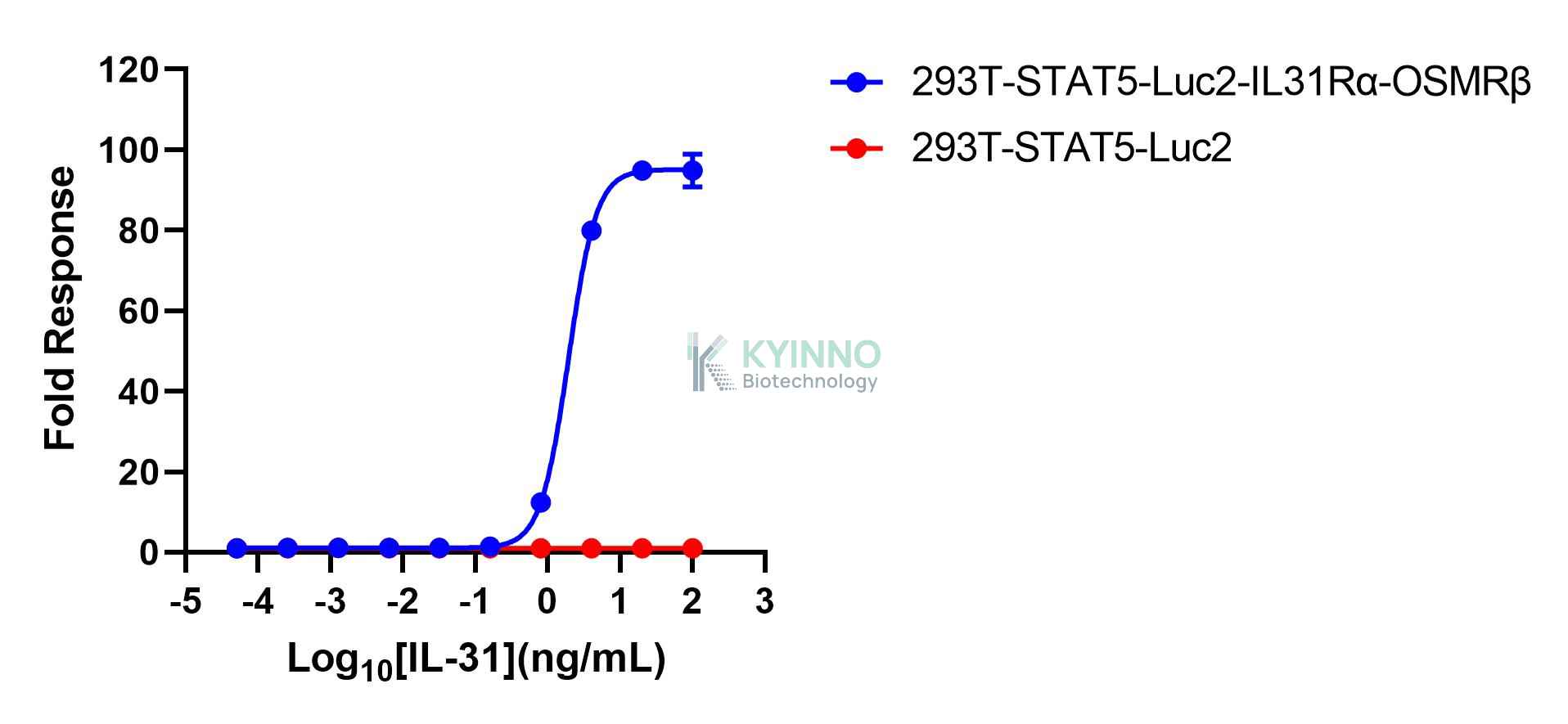
Figure1: 293T-STAT5-Luc2-IL31Ra-OSMRb cells were seeded into 96-well plates, treated with IL-31 for 16 hours, and then read out using Bright-Glo Detection System.

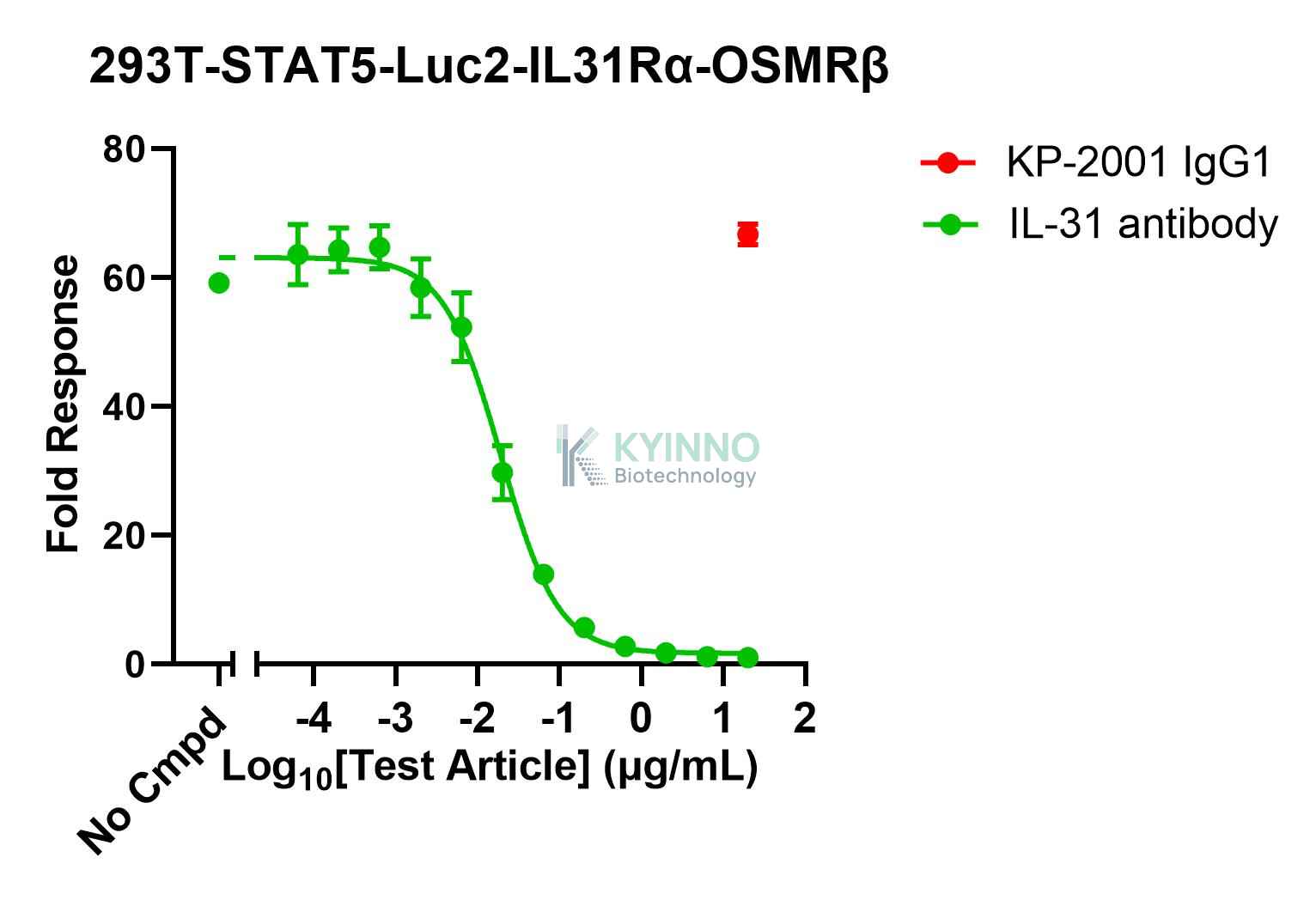
Figure2: 293T-STAT5-Luc2-IL31Ra-OSMRb cells were seeded into 96-well plates, treated with IL-31 antibody for 1 hours, and then treated with 10ng/mL IL-31 for 16 hours, and then read out using Bright-Glo Detection System.

Cell Resuscitation

  1. Prewarm culture medium (DMEM supplemented with 10% FBS, 1μg/mL Puromycin) in a 37°C water bath.
  2. Thaw the frozen vial in a 37°C water bath for 1-2 minutes.
  3. Transfer the vial into biosafety cabinet, and wipe the surface with 70% ethanol.
  4. Unscrew the top of the vial and transfer the cell suspension gently into a sterile centrifuge tube containing 9.0mL complete culture medium.
  5. Spin at ~ 125 × g for 5-7 minutes at room temperature, and discard the supernatant without disturbing the pellet.
  6. Resuspend cell pellet with the appropriate volume of complete medium and transfer the cell suspension into a T25 culture flask.
  7. Incubate the flask at 37°C, 5% CO2 incubator.
  8. Split saturated culture 1 : 10 every 3 days; seed out at about 1 × 10⁵ cells/mL

Cell Freezing

  1. Prepare the freezing medium (70% DMEM + 20% FBS + 10% DMSO) fresh immediately before use.
  2. Keep the freezing medium on ice and label cryovials.
  3. Transfer cells to a sterile, conical centrifuge tube, and count the cells.
  4. Centrifuge the cells at 250×g for 5 minutes at room temperature and carefully aspirate off the medium.
  5. Resuspend the cells at a density of at least 3×10⁶ cells/mL in chilled freezing medium.
  6. Aliquot 1 mL of the cell suspension into each cryovial.
  7. Freeze cells in the CoolCell freezing container overnight in a -80°C freezer.
  8. Transfer vials to liquid nitrogen for long-term storage.

References

1. Diveu C, Lak-Hal AH, Froger J, Ravon E, Grimaud L, Barbier F, Hermann J, Gascan H, Chevalier S. Predominant expression of the long isoform of GP130-like (GPL) receptor is required for interleukin-31 signaling. Eur Cytokine Netw. 2004 Oct-Dec;15(4):291-302. PMID: 15627637.
2. Lin MW, Lee DD, Liu TT, Lin YF, Chen SY, Huang CC, Weng HY, Liu YF, Tanaka A, Arita K, Lai-Cheong J, Palisson F, Chang YT, Wong CK, Matsuura I, McGrath JA, Tsai SF. Novel IL31RA gene mutation and ancestral OSMR mutant allele in familial primary cutaneous amyloidosis. Eur J Hum Genet. 2010 Jan;18(1):26-32. doi: 10.1038/ejhg.2009.135. PMID: 19690585; PMCID: PMC2987153.
3. Kausar T, Sharma R, Hasan MR, Saraya A, Chattopadhyay TK, Gupta SD, Ralhan R. Overexpression of a splice variant of oncostatin M receptor beta in human esophageal squamous carcinoma. Cell Oncol (Dordr). 2011 Jun;34(3):177-87. doi: 10.1007/s13402-011-0011-2. Epub 2011 Mar 11. PMID: 21394648.
4. Tanaka A, Lai-Cheong JE, van den Akker PC, Nagy N, Millington G, Diercks GF, van Voorst Vader PC, Clements SE, Almaani N, Techanukul T, Hide M, South AP, McGrath JA. The molecular skin pathology of familial primary localized cutaneous amyloidosis. Exp Dermatol. 2010 May;19(5):416-23. doi: 10.1111/j.1600-0625.2010.01083.x. PMID: 20507362.

Please enable JavaScript in your browser to complete this form.