KB-1104

4LS21-hIgG1

×
Please enable JavaScript in your browser to complete this form.
45176
Home » 4LS21-hIgG1

Background of 4LS21-hIgG1

CD16, alternatively referred to as FcγRIII, is a cluster of differentiation molecule prominently present on the surface of natural killer cells, neutrophils, monocytes, macrophages, and select T cells. Notably, CD16 encompasses two distinct Fc receptors known as FcγRIIIa (CD16a) and FcγRIIIb (CD16b), both contributing to signal transduction processes. As the most extensively studied membrane receptor implicated in triggering lysis by NK cells, CD16 stands as a pivotal molecule within the immunoglobulin superfamily (IgSF), playing a significant role in antibody-dependent cellular cytotoxicity (ADCC).

Specifications

Catalog NumberKB-1104
Antibody Name4LS21-hIgG1
IsotypeHuman IgG1,kappa
FC MuationsWild Type
TargetCD16
Species ReactivityHuman
Host Cell LineEXPI CHO
Purification MethodAffinity purified
Concentration>2 mg/mL
Formulation50 mM sodium citrate,150mM NaCl,pH5.5
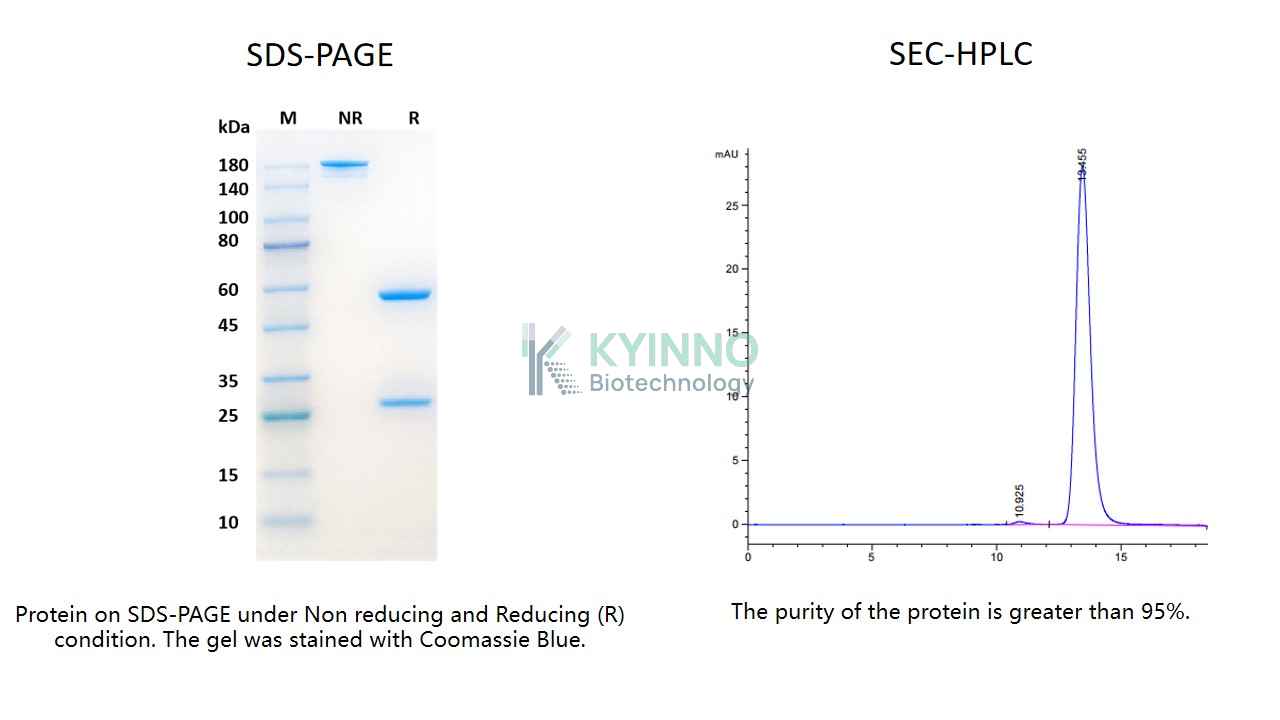
Purity>95% by SDS-PAGE and SEC-HPLC
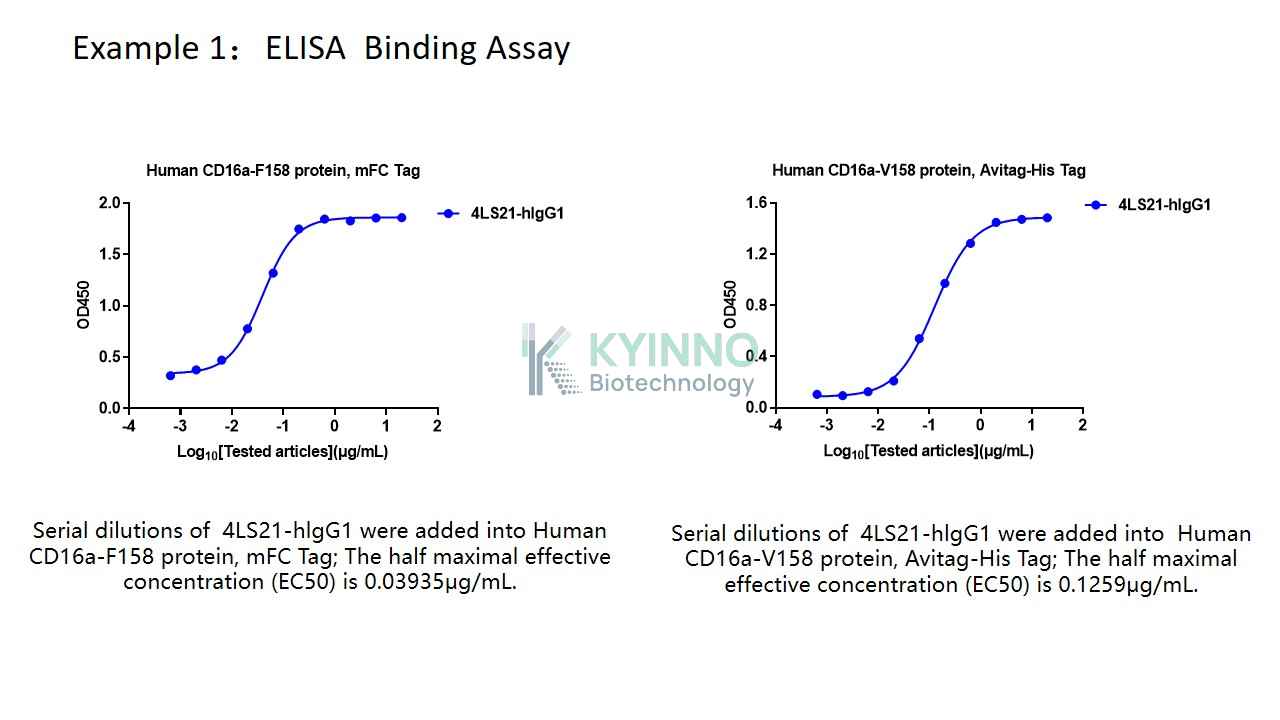
ValidationELISA
Endotoxin Level<0.2 EU/mg as determined by the LAL method
Sterility0.2μm filtered
StorageIt is recommended that the protein should be aliquoted for optimal storage.
Avoid repeated freeze-thaw cycles.
StabilityStable for twelve months from date of receipt when stored at -20°C to -80°C;
Stored at 2-8°C for one month without detectable loss of activity.

Characterization

Application

References

  1. Mandelboim O, Malik P, Davis DM, Jo CH, Boyson JE, Strominger JL (May 1999). "Human CD16 as a lysis receptor mediating direct natural killer cell cytotoxicity". Proceedings of the National Academy of Sciences of the United States of America. 96 (10): 5640–4. Bibcode:1999PNAS.96.5640M.
  2. Vivier E, Morin P, O'Brien C, Druker B, Schlossman SF, Anderson P (January 1991). "Tyrosine phosphorylation of the Fc gamma RIII(CD16): zeta complex in human natural killer cells. Induction by antibody-dependent cytotoxicity but not by natural killing". Journal of Immunology. 146 (1): 206–10.
Please enable JavaScript in your browser to complete this form.