

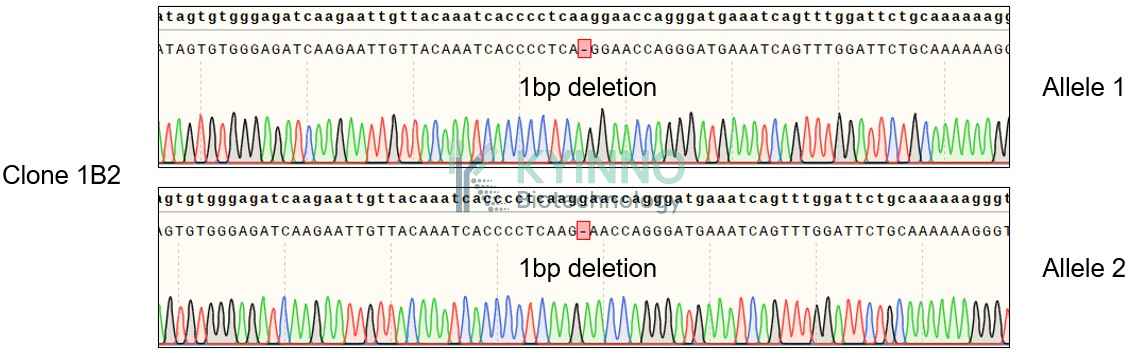
Figure 1: Characterization of A549-BRCA1-KO-1B2 cell line stable clone using PCR sequencing.

Figure 2: Characterization of A549-BRCA1-KO-1B2 cell line stable clone using RT-PCR sequencing.
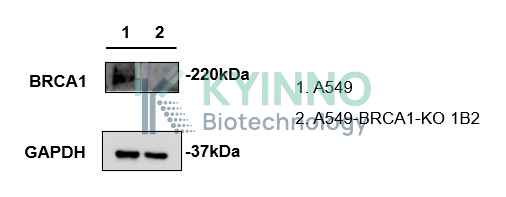
Figure 3: Characterization of A549-BRCA1-KO-1B2 cell line stable clone using western blot.
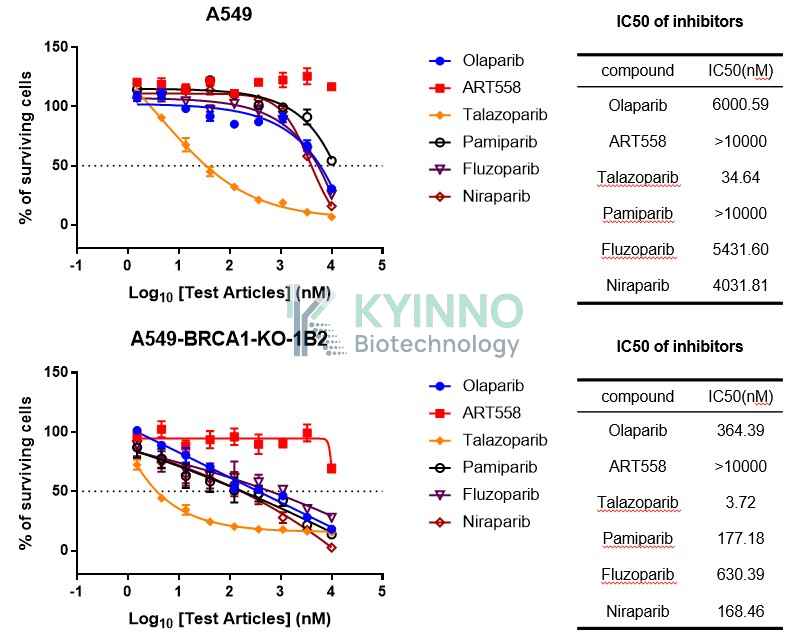
Figure 4: Characterization of Dose-response curves and IC50 values for A549 and A549-BRCA1-KO-1B2 cells treated with Olaparib,ART558,Talazoparib,Pamiparib,Fluzoparib and Niraparib over 5 days.