KC-1003

293T-GPC3 cell line

×
Please enable JavaScript in your browser to complete this form.
47093
Home » 293T-GPC3 cell line

Background of 293T-GPC3 cell line

GPC3 is a family of heparan sulfate proteoglycans that are composed of a membrane-associated protein core substituted with a variable number of heparan sulfate chains and attached to the cell surface by a glycosylphosphatidylinositol (GPI) anchor. GPC3 play a role in the control of cell division and growth regulation.GPC3 is also found to be overexpressed in differentiating hepatocellular carcinoma (HCC) and dysplastic changes in cirrhotic livers, which might have the utility for diagnosis or treatment in cancer patient.

Specifications

Catalog NumberKC-1003
Cell Line Name293T-GPC3 cell line
Host Cell Line293T
DescriptionStable HEK293T clone expressing exogenous GPC3 gene
QuantityTwo vials of frozen cells (≥2-106/vial)
StabilityStable in culture over a minimum of 10 passages
ApplicationDrug screening and biological assays
Freezing Medium70% DMEM + 20% FBS + 10% DMSO
Propagation MediumDMEM + 10% FBS + 1μg/mL Puromycin
Selection MarkerPuromycin
MorphologyEpithelial
SubcultureSplit saturated culture 1:4-1:8 every 2-3 days; seed out at about 1-3 × 10⁵ cells/mL
Incubation37 °C with 5% CO2
StorageLiquid nitrogen immediately upon receiving
Doubling TimeApproximately 30 hours
Mycoplasma StatusNegative

Cell Line Generation

"293T human GPC3 cell line was generated using lentiviral vector expressing human GPC3 sequence"

Characterization

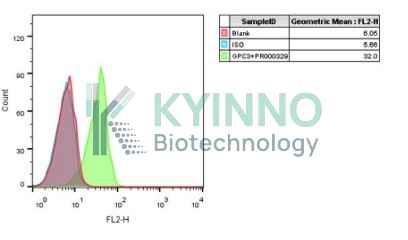
Figure 1: Characterization of GPC3 overexpressing in 293T-GPC3 stable clones using FACS.

Cell Resuscitation

1. Prewarm culture medium (DMEM supplemented with 10% FBS and 1ug/ml puromycin) in a 37°C water bath.
2. Thaw the frozen vial in a 37°C water bath for 1-2 minutes.
3. Transfer the vial into biosafety cabinet, and wipe the surface with 70% ethanol.
4. Unscrew the top of the vial and transfer the cell suspension gently into a sterile centrifuge tube containing 9.0mL complete culture medium.
5. Spin at ~ 125 x g for 5~7 minutes at room temperature, and discard the supernatant without disturbing the pellet.
6. Resuspend cell pellet with the appropriate volume of complete medium and transfer the cell suspension into a T25 culture flask.
7. Incubate the flask at 37°C, 5% CO2 incubator.
8. Split saturated culture 1:4-1:8 every 2~3 days; seed out at about 1-3 x 10⁵ cells/ml.

Cell Freezing

  1. Prepare the freezing medium (70% DMEM + 20% FBS + 10% DMSO) fresh immediately before use.
  2. Keep the freezing medium on ice and label cryovials.
  3. Transfer cells to a sterile, conical centrifuge tube, and count the cells.
  4. Centrifuge the cells at 250 x g for 5 minutes at room temperature and carefully aspirate off the medium.
  5. Resuspend the cells at a density of at least 3 x10⁶cells/ml in chilled freezing medium.
  6. Aliquot 1 ml of the cell suspension into each cryovial.
  7. Freeze cells in the CoolCell freezing container overnight in a −80°C freezer.
  8. Transfer vials to liquid nitrogen for long-term storage.

References

1. Ishiguro, Takahiro, Yuji Sano, Shun-Ichiro Komatsu, Mika Kamata-Sakurai, Akihisa Kaneko, Yasuko Kinoshita,Hirotake Shiraiwa, et al. 2017. “An Anti-Glypican 3/CD3 Bispecific T Cell-Redirecting Antibody for Treatment of Solid Tumors.” Science Translational Medicine 9 (410). American Association for the Advancement of Science:eaal4291. doi:10.1126/scitranslmed.aal4291.
2.Akkermans O, Delloye-Bourgeois C, Peregrina C, Carrasquero-Ordaz M, Kokolaki M, Berbeira-Santana M, Chavent M, Reynaud F, Raj R, Agirre J, Aksu M, White ES, Lowe E, Ben Amar D, Zaballa S, Huo J, Pakos I, McCubbin PTN, Comoletti D,OwensRJ, Robinson CV, Castellani V, Del Toro D, Seiradake E. GPC3-Unc5 receptor complex structure and role in cell migration. Cell. 2022 Oct13;185(21):3931-3949.e26. doi: 10.1016/j.cell.2022.09.025. PMID: 36240740;PMCID: PMC9596381.
3.Qin L, Wang J, Cheng F, Cheng J, Zhang H, Zheng H, Liu Y, Liang Z, Wang B, Li C, Wang H, Ju Y, Tian H, Meng S. GPC3 and PEG10 peptides associated with placental gp96 elicit specific T cell immunity against hepatocellular carcinoma. Cancer Immunol Immunother. 2023 Dec;72(12):4337-4354. doi:10.1007/s00262-023-03569-2. Epub 2023 Nov 6. PMID: 37932427; PMCID: PMC10700408.

Please enable JavaScript in your browser to complete this form.