KC-4168

A549-PBRM1-KO-2A4-Cell-Line

×
Please enable JavaScript in your browser to complete this form.
42382
Home » A549-PBRM1-KO-2A4-Cell-Line

Background of A549-PBRM1-KO-2A4-Cell-Line

The PBRM1 gene, which stands for Polybromo 1, encodes a subunit of the SWI/SNF (Switch/Sucrose Non-Fermentable) chromatin remodeling complex. This complex plays a critical role in maintaining normal chromatin structure and regulating gene expression. The encoded protein contains a bromodomain, which allows it to bind acetylated histones, and a bromo-adjacent homology (BAH) domain, which is involved in DNA binding and chromatin targeting.Mutations in PBRM1 are frequently observed in several types of cancer, most notably in clear cell renal cell carcinoma (ccRCC), where it is one of the most commonly mutated genes. Loss-of-function mutations in PBRM1 have been associated with impaired chromatin remodeling, leading to aberrant gene expression and subsequent tumorigenesis. Furthermore, PBRM1 mutations have been correlated with better prognosis in ccRCC patients, indicating its potential as a predictive biomarker.

Specifications

Catalog NumberKC-4168
Cell Line NameA549-PBRM1-KO-2A4-Cell-Line
Host Cell LineA549
DescriptionStable A549 clone with human PBRM1 gene knockout, No.2A4
QuantityTwo vials of frozen cells (≥2-106/vial)
StabilityStable in culture over a minimum of 10 passages
ApplicationDrug screening and biological assays
Freezing MediumMcCoy5A+20% FBS+10% DMSO
Propagation MediumMcCoy5A+10% FBS
Selection MarkerN/A
MorphologyEpithelial
SubcultureSplit saturated culture 1:3-1:6 every 2-3 days; seed out at about 1-3 × 10⁵ cells/mL
Incubation37 °C with 5% CO2
StorageLiquid nitrogen immediately upon receiving
Doubling TimeApproximately 30 hours
Mycoplasma StatusNegative
In Vivo ValidationNA

Cell Line Generation

Characterization

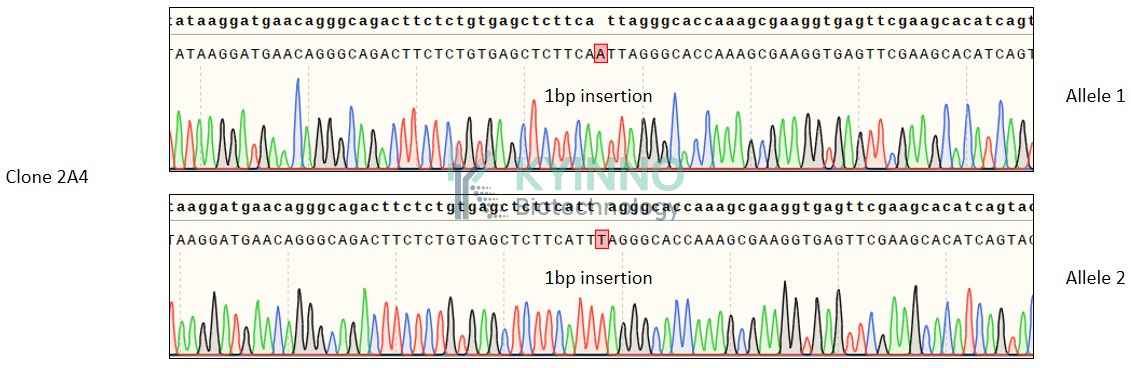
Figure 1: Characterization of A549-PBRM1-KO-2A4 cell line stable clone using PCR sequencing.

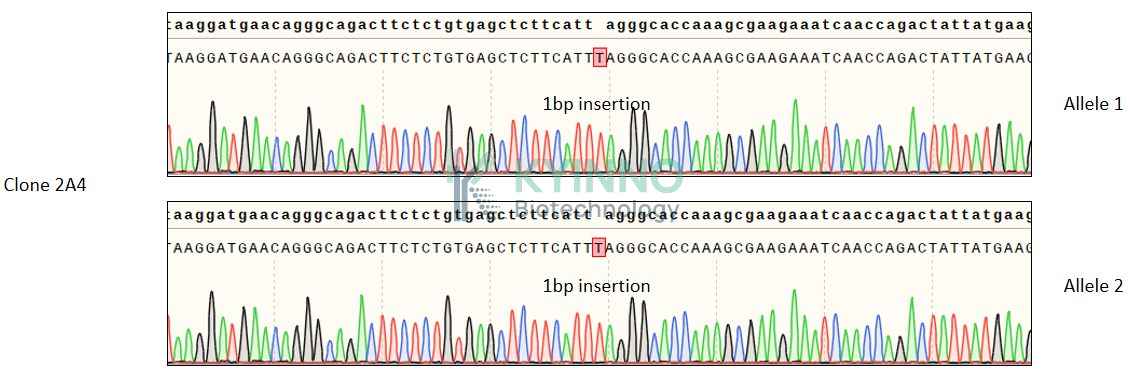
Figure 2: Characterization of A549-PBRM1-KO-2A4 cell line stable clone using RT-PCR sequencing.

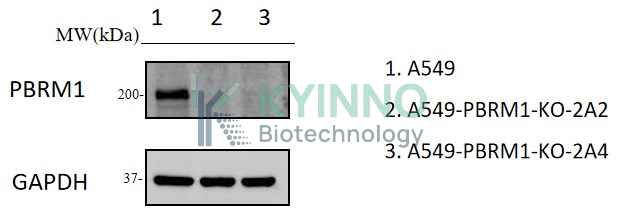
Figure 3: Characterization of A549-PBRM1-KO-2A4 cell line stable clone using western blot.

Cell Resuscitation

  1. Prewarm culture medium (McCoy5A + 10% FBS)in a 37°C water bath.
  2. Thaw the frozen vial in a 37°C water bath for 1-2 minutes.
  3. Transfer the vial into biosafety cabinet, and wipe the surface with 70% ethanol.
  4. Unscrew the top of the vial and transfer the cell suspension gently into a sterile centrifuge tube containing 9.0mL complete culture medium.
  5. Spin at ~ 125 × g for 5-7 minutes at room temperature, and discard the supernatant without disturbing the pellet.
  6. Resuspend cell pellet with the appropriate volume of complete medium and transfer the cell suspension into a T25 culture flask.
  7. Incubate the flask at 37°C, 5% CO2 incubator.
  8. Split saturated culture 1:3-1:6 every 2-3 days; seed out at about 1-3 × 10⁵ cells/mL.

Cell Freezing

  1. Prepare the freezing medium (70% McCoy5A + 20% FBS + 10% DMSO) fresh immediately before use.
  2. Keep the freezing medium on ice and label cryovials.
  3. Transfer cells to a sterile, conical centrifuge tube, and count the cells.
  4. Centrifuge the cells at 250×g for 5 minutes at room temperature and carefully aspirate off the medium.
  5. Resuspend the cells at a density of at least 3×10⁶ cells/mL in chilled freezing medium.
  6. Aliquot 1 mL of the cell suspension into each cryovial.
  7. Freeze cells in the CoolCell freezing container overnight in a -80°C freezer.
  8. Transfer vials to liquid nitrogen for long-term storage.

References

  1. Vogelstein, B., Papadopoulos, N., Velculescu, V. E., Zhou, S., Diaz, L. A., Jr., & Kinzler, K. W. (2013). Cancer genome landscapes.Science, 339(6127), 1546-1558. https://doi.org/10.1126/science.1235122
  2. Vogelstein, B., Papadopoulos, N., Velculescu, V. E., Zhou, S., Diaz, L. A., Jr., & Kinzler, K. W. (2013). Cancer genome landscapes.Science, 339(6127), 1546-1558. https://doi.org/10.1126/science.1235122
  3. Wang, Z., et al. (2016). PBRM1 mutations are associated with favorable prognosis and distinct immune microenvironment in clear cell renal cell carcinoma.Clinical Cancer Research, 22(12), 2889-2900. https://doi.org/10.1158/1078-0432.CCR-15-2765
Please enable JavaScript in your browser to complete this form.