KC-6691

A549-SLFN11-KO Cell Line

×
请在浏览器中启用JavaScript来完成此表单。
64220
Home » 细胞系 » A549-SLFN11-KO Cell Line

Background of A549-SLFN11-KO Cell Line

Schlafen 11 (SLFN11) is a member of the evolutionarily conserved Schlafen gene family and an interferon-stimulated early response gene that has emerged as a critical regulator of the DNA damage response (DDR) and replication stress . The SLFN11 protein possesses three distinct functional domains: an N-terminal endonuclease domain responsible for tRNA cleavage, a linker domain, and a C-terminal helicase/ATPase domain involved in binding to replication protein A (RPA)-coated single-stranded DNA at stalled replication forks . Upon exposure to DNA-damaging agents (DDAs) such as platinum compounds, topoisomerase inhibitors, and PARP inhibitors, SLFN11 is recruited early to stressed replication forks, where it irreversibly blocks replication by destabilizing nascent DNA strands and inhibiting homologous recombination repair . Consequently, high SLFN11 expression levels are strongly correlated with enhanced sensitivity to DDAs and PARP inhibitors across multiple cancer types, including small cell lung cancer, breast cancer, ovarian cancer, and various sarcomas . Conversely, SLFN11 downregulation—frequently mediated by epigenetic silencing mechanisms such as promoter methylation, histone deacetylation, and histone methylation—confers resistance to these therapies . Beyond its canonical role in chemosensitivity, SLFN11 also exhibits non-canonical functions, including antiviral defense, immune regulation, modulation of oncological behaviors, induction of apoptosis, and protection against proteotoxic stress . Notably, SLFN11 expression is dynamic and context-dependent, varying during tumorigenesis and under treatment pressure, which highlights its potential as both a predictive biomarker and a therapeutic target . Emerging strategies aimed at modulating SLFN11 expression—including epigenetic modulation and CRISPR-based activation—are being explored to overcome chemoresistance and advance precision oncology.

Specifications

Catalog NumberKC-6691
Cell Line NameA549-SLFN11-KO Cell Line
Clone Number1A6
Host Cell LineA549
DescriptionStable A549 clone with human SLFN11 gene knockout
QuantityOne vial of frozen cells (≥2-106/vial)
StabilityStable in culture over a minimum of 10 passages
ApplicationDrug screening and biological assays
Freezing MediumMcCoy's 5a+20% FBS+10% DMSO
Propagation MediumMcCoy's 5a+10%FBS+L-GlutaMax
Selection MarkerN/A
MorphologyEpithelial
SubcultureSplit saturated culture 1:2-1:4 every 2-3 days; seed out at about 1-3 × 10⁵ cells/mL
Incubation37 °C with 5% CO2
StorageLiquid nitrogen immediately upon receiving
Doubling TimeApproximately 30 hours
Mycoplasma StatusNegative

Cell Line Generation

A549-SLFN11-KO cell line was generated using the CRISPR method.

Characterization

Figure 1: Characterization of A549-SLFN11-KO cell line stable clone using PCR sequencing.

Figure 2: Characterization of A549-SLFN11-KO cell line stable clone using RT-PCR sequencing.

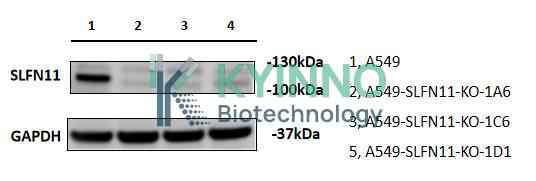
Figure 3: Characterization of A549-SLFN11-KO cell line stable clone using western blot.

Cell Resuscitation

  1. Prewarm culture medium (McCoy's 5a+10%FBS+L-GlutaMax)in a 37°C water bath.
  2. Thaw the frozen vial in a 37°C water bath for 1-2 minutes.
  3. Transfer the vial into biosafety cabinet, and wipe the surface with 70% ethanol.
  4. Unscrew the top of the vial and transfer the cell suspension gently into a sterile centrifuge tube containing 9.0mL complete culture medium.
  5. Spin at ~ 125 × g for 5-7 minutes at room temperature, and discard the supernatant without disturbing the pellet.
  6. Resuspend cell pellet with the appropriate volume of complete medium and transfer the cell suspension into a T25 culture flask.
  7. Incubate the flask at 37°C, 5% CO2 incubator.
  8. Split saturated culture 1:2-1:4 every 2-3 days; seed out at about 1-3 × 10⁵ cells/mL.

Cell Freezing

  1. Prepare the freezing medium (70% McCoy's 5a + 20% FBS + 10% DMSO) fresh immediately before use.
  2. Keep the freezing medium on ice and label cryovials.
  3. Transfer cells to a sterile, conical centrifuge tube, and count the cells.
  4. Centrifuge the cells at 250×g for 5 minutes at room temperature and carefully aspirate off the medium.
  5. Resuspend the cells at a density of at least 3×10⁶ cells/mL in chilled freezing medium.
  6. Aliquot 1 mL of the cell suspension into each cryovial.
  7. Freeze cells in the CoolCell freezing container overnight in a -80°C freezer.
  8. Transfer vials to liquid nitrogen for long-term storage.

References

  1. Clinical and Experimental Medicine. (2025). SLFN11, far from being limited to responding to cancer DNA damage. Clinical and Experimental Medicine, 25, 304.
  2. Mu, A., et al. (2024). The role of SLFN11 in DNA replication stress response and its implications for the Fanconi anemia pathway. DNA Repair, 141, 103721.
  3. ScienceDirect. (2025). Clinical insight on the pathway of SLFN11 as emergent biomarker in SCLC. Cancer Treatment Reviews, 129, 102889.

Use License Agreement

Research Use Only.
Not for use in diagnostic procedures or therapeutic applications.
Redistribution of the cell line or its derivatives is prohibited without prior written permission from Kyinno Biotechnology.
请在浏览器中启用JavaScript来完成此表单。