KC-3144

Ba/F3-cKit-Y503_F504insAY-D716N-D820N Cell Line

×
Please enable JavaScript in your browser to complete this form.
24864
Home » Ba/F3-cKit-Y503_F504insAY-D716N-D820N Cell Line

Background of Ba/F3-cKit-Y503_F504insAY-D716N-D820N Cell Line

Mast/stem cell factor receptor (SCFR), also named as proto-oncogene c-Kit or CD117, which is a cytokine receptor mainly expressed on the surface of hematopoietic stem cells, play important roles in gametogenesis, melanogenesis and hematopoiesis. The constitutive activation of C-Kit due to amino-acid mutations, such as D816V/H, V560G, can lead to the anchorage-independent growth and tumorigenicity. Ba/F3 cell, a murine interleukin-3 dependent pro-B cell line, is a popular system for exploring both kinases and their inhibitors, because some protein kinases can render the Ba/F3 cells to be depended on the activation of the kinases instead of IL-3 supplement, while their inhibitors can antagonize the kinase-dependent growth effects.

Specifications

Catalog NumberKC-3144
Cell Line NameBa/F3-cKit-Y503_F504insAY-D716N-D820N Cell Line
NCBI/UniProt Accession NumberNM_000222.3
Host Cell LineBa/F3 cell line
DescriptionStable Ba/F3 clone expressing exogenous C-KIT with Y503_F504insAY, D716N, and D820N mutations.
QuantityTwo vials of frozen cells (≥2-106/vial)
StabilityStable in culture over a minimum of 10 passages
ApplicationDrug screening and biological assays
Freezing Medium70% RPMI1640+20% FBS+10% DMSO
Propagation MediumRPMI1640+10%FBS
Selection MarkerPuromycin
MorphologyMostly single, round (some polymorph) cells in suspension
SubcultureSplit saturated culture 1:10 every 3 days; seed out at about 1-3 × 10⁵ cells/mL
Incubation37 °C with 5% CO2
StorageLiquid nitrogen immediately upon receiving
Doubling TimeApproximately 20 hours
Mycoplasma StatusNegative
In Vivo ValidationNA

Cell Line Generation

Ba/F3-cKit-Y503_F504insAY-D716N-D820N cell line was generated by retroviral transduction of the mutant cKit sequence.

Characterization

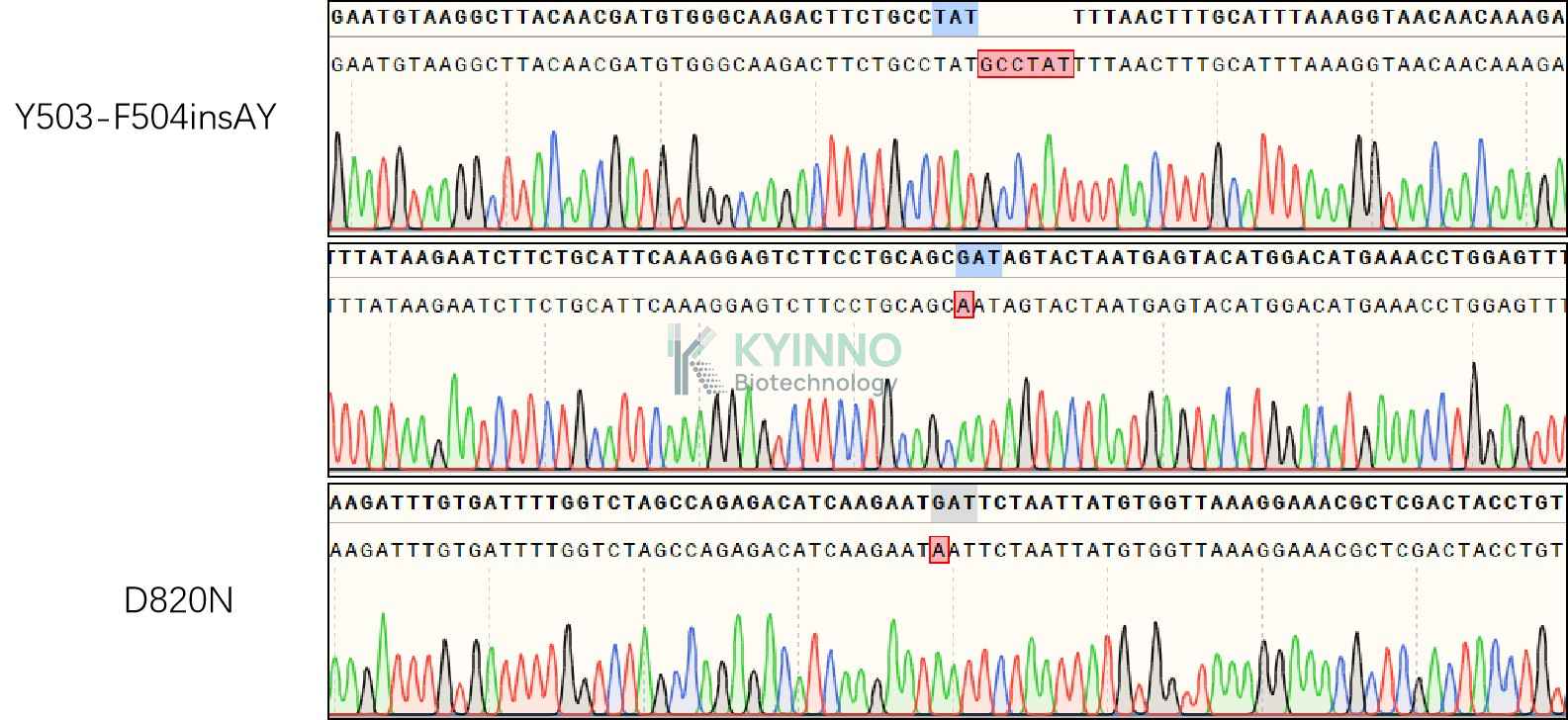
Figure 1: Characterization of cKit mutation in the Ba/F3 stable clone using PCR sequencing.

Cell Resuscitation

1. Prewarm culture medium (RPMI1640 supplemented with 10% FBS)in a 37°C water bath.
2. Thaw the frozen vial in a 37°C water bath for 1-2 minutes.
3. Transfer the vial into biosafety cabinet, and wipe the surface with 70% ethanol.
4. Unscrew the top of the vial and transfer the cell suspension gently into a sterile centrifuge tube containing 9.0mL complete culture medium.
5. Spin at ~ 125 × g for 5-7 minutes at room temperature, and discard the supernatant without disturbing the pellet.
6. Resuspend cell pellet with the appropriate volume of complete medium and transfer the cell suspension into a T25 culture flask.
7. Incubate the flask at 37°C, 5% CO2 incubator.
8. Split saturated culture 1:10 every 3 days; seed out at about 1-3 × 10⁵ cells/mL.

Cell Freezing

1. Prepare the freezing medium (70% RPMI-1640 + 20% FBS + 10% DMSO) fresh immediately before use.
2. Keep the freezing medium on ice and label cryovials.
3. Transfer cells to a sterile, conical centrifuge tube, and count the cells.
4. Centrifuge the cells at 250×g for 5 minutes at room temperature and carefully aspirate off the medium.
5. Resuspend the cells at a density of at least 3×10⁶ cells/mL in chilled freezing medium.
6. Aliquot 1 mL of the cell suspension into each cryovial.
7. Freeze cells in the CoolCell freezing container overnight in a -80°C freezer.
8. Transfer vials to liquid nitrogen for long-term storage.

References

1.Mayerhofer, M. et al. Unique effects of KIT D816V in BaF3 cells: induction of cluster formation, histamine synthesis, and early mast cell differentiation antigens. The Journal of Immunology 180, 5466ÿ5476 (2008).
2.Fletcher, J. A. KIT Oncogenic Mutations: Biologic Insights, Therapeutic Advances, and Future Directions. Cancer Research 76, 6140ÿ6142 (2016).
3.Kim, S. Y. et al. Mechanism of activation of human c-KIT kinase by internal tandem duplications of the juxtamembrane domain and point mutations at aspartic acid 816. Biochemical and Biophysical Research Communications 410, 224ÿ228 (2011).
Please enable JavaScript in your browser to complete this form.