KC-2789

Ba/F3-EGFR-B2M-HLA-A1101-Cell-Line

×
Please enable JavaScript in your browser to complete this form.
24620
Home » Ba/F3-EGFR-B2M-HLA-A1101-Cell-Line

Background of Ba/F3-EGFR-B2M-HLA-A1101-Cell-Line

B2M, also known as β2 microglobulin, is a component of MHC class I molecules and expressed on nearly all nucleated cell. B2M noncovalently lies beside α3 heavy chain of MHC class I molecules on the cell surface without transmembrane region. HLA-A belongs to the HLA class I heavy chain paralogues. HLA-A is a heterodimer consisting of a heavy chain and a light chai. The heavy chain is anchored in the membrane. HLA-A plays a central role in the immune system by presenting peptides derived from the endoplasmic reticulum lumen so that they can be recognized by cytotoxic T cells. They are expressed in nearly all cells. HLA-A is a Protein Coding gene. Diseases associated with HLA-A include Severe Cutaneous Adverse Reaction and Birdshot Chorioretinopathy. Among its related pathways are SARS-CoV-2 Infection and Infectious disease. Ba/F3 cell, a murine interleukin-3 dependent pro-B cell line, is a popular system for exploring both kinases and their inhibitors, because some protein kinases can render the Ba/F3 cells to be depended on the activation of the kinases instead of IL-3 supplement, while their inhibitors can antagonize the kinase-dependent growth effects.

Specifications

Catalog NumberKC-2789
Cell Line NameBa/F3-EGFR-B2M-HLA-A1101-Cell-Line
Host Cell LineBa/F3-EGFR
DescriptionStable Ba/F3-EGFR clone expressing exogenous B2M-HLA-A1101 gene
QuantityTwo vials of frozen cells (≥2-106/vial)
StabilityStable in culture over a minimum of 10 passages
ApplicationDrug screening and biological assays
Freezing Medium70% RPMI1640+20% FBS+10% DMSO
Propagation MediumRPMI1640+10%FBS+1000µg/mL Hygromycin B
Selection MarkerHygromycin B
MorphologyMostly single, round (some polymorph) cells in suspension
SubcultureSplit saturated culture 1:10 every 3 days; seed out at about 1-3 × 10⁵ cells/mL
Incubation37 °C with 5% CO2
StorageLiquid nitrogen immediately upon receiving
Doubling TimeApproximately 20 hours
Mycoplasma StatusNegative
In Vivo ValidationNA

Cell Line Generation

Ba/F3 EGFR-B2M-HLA-A1101 cell line was generated using a retrovirus vector expressing the human B2M-HLA-A1101 fusion sequence.

Characterization

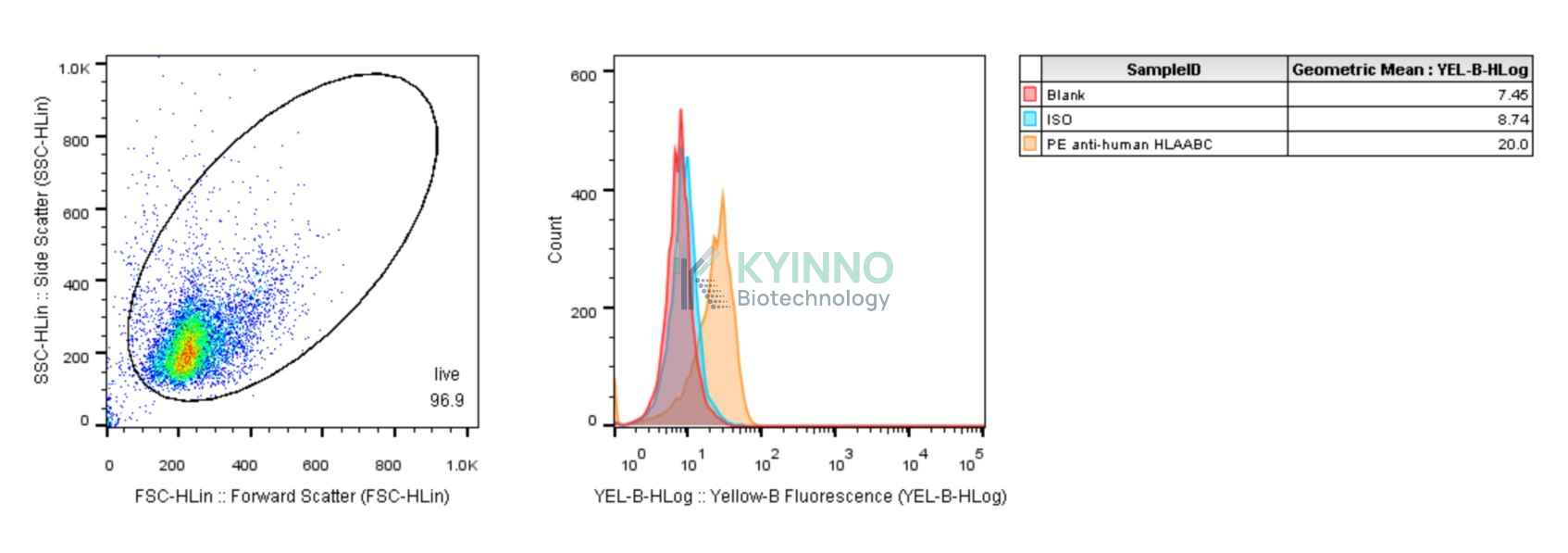
Figure 1: Characterization of B2M-HLA-A1101 overexpression in the Ba/F3-EGFR stable clone by using FACS.

Cell Resuscitation

  1. Prewarm culture medium (RPMI1640+10%FBS+1000µg/mL Hygromycin B) in a 37°C water bath.
  2. Thaw the frozen vial in a 37°C water bath for 1-2 minutes.
  3. Transfer the vial into biosafety cabinet, and wipe the surface with 70% ethanol.
  4. Unscrew the top of the vial and transfer the cell suspension gently into a sterile centrifuge tube containing 9.0mL complete culture medium.
  5. Spin at ~ 125 × g for 5-7 minutes at room temperature, and discard the supernatant without disturbing the pellet.
  6. Resuspend cell pellet with the appropriate volume of complete medium and transfer the cell suspension into a T25 culture flask.
  7. Incubate the flask at 37°C, 5% CO2 incubator.
  8. Split saturated culture 1:10 every 3 days; seed out at about 1-3 × 10⁵ cells/mL.

Cell Freezing

  1. Prepare the freezing medium (70% RPMI1640 + 20% FBS + 10% DMSO) fresh immediately before use.
  2. Keep the freezing medium on ice and label cryovials.
  3. Transfer cells to a sterile, conical centrifuge tube, and count the cells.
  4. Centrifuge the cells at 250×g for 5 minutes at room temperature and carefully aspirate off the medium.
  5. Resuspend the cells at a density of at least 3×10⁶ cells/mL in chilled freezing medium.
  6. Aliquot 1 mL of the cell suspension into each cryovial.
  7. Freeze cells in the CoolCell freezing container overnight in a -80°C freezer.
  8. Transfer vials to liquid nitrogen for long-term storage.

References

  1. Wang H, Liu B, Wei J. Beta2-microglobulin(B2M) in cancer immunotherapies: Biological function, resistance and remedy. Cancer Lett. 2021 Oct 1;517:96-104. doi: 10.1016/j.canlet.2021.06.008. Epub 2021 Jun 12. PMID: 34129878.
  2. Manca MA, Simula ER, Cossu D, Solinas T, Madonia M, Cusano R, Sechi LA. Association of HLA-A*11:01, -A*24:02, and -B*18:01 with Prostate Cancer Risk: A Case-Control Study. Int J Mol Sci. 2023 Oct 20;24(20):15398. doi: 10.3390/ijms242015398. PMID: 37895076; PMCID: PMC10607162.
Please enable JavaScript in your browser to complete this form.