

KC-1015

Ba/F3-ETV6-NTRK3-G696C-Cell-Line

×
Please enable JavaScript in your browser to complete this form.
21385
Home » 细胞系 » Ba/F3-ETV6-NTRK3-G696C-Cell-Line

Background of Ba/F3-ETV6-NTRK3-G696C-Cell-Line

NTRK2, also named Tropomyosin receptor kinase B (TrkB), is the high affinity catalytic receptor for the neurotrophin and play a major role in neuronal differentiation and survival, the overactivation or overexpression of NTRK2 fusion protein, due to chromosomal rearrangement, was originally found in congenital fibrosarcoma and subsequently found in secretory breast cancer and other type cancer, the identification of NTRK2 fusion genes as driver genes has led to the rapid development of anticancer therapeutics agents, such as LOXO-101, PF-026732240, TSR-011, RXDX-101.

Specifications

Catalog NumberKC-1015
Cell Line NameBa/F3-ETV6-NTRK3-G696C-Cell-Line
Host Cell LineMouse Ba/F3 cell line
DescriptionStable Ba/F3 clone expressing exogenous ETV6-NTRK2 fusion protein
QuantityTwo vials of frozen cells (≥2-106/vial)
StabilityStable in culture over a minimum of 10 passages
ApplicationDrug screening and biological assays
Freezing Medium70% RMPI-1640 + 20% FBS + 10% DMSO
Propagation MediumRPMI1640+10%FBS
Selection MarkerPuromycin
MorphologyMostly single, round (some polymorph) cells in suspension
SubcultureSplit saturated culture 1:10 every 3 days; seed out at about 1-3 × 10⁵ cells/mL
Incubation37 °C with 5% CO2
StorageLiquid nitrogen immediately upon receiving
Doubling TimeApproximately 20 hours
Mycoplasma StatusNegative
In Vivo ValidationNA

Cell Line Generation

Ba/F3 ETV6-NTRK2 cell line was generated using retrovirus vector expressing human ETV6-NTRK2 sequence.

Characterization

Figure1: Characterization of ETV6-NTRK2 overexpressing in Ba/F3 stable clones.
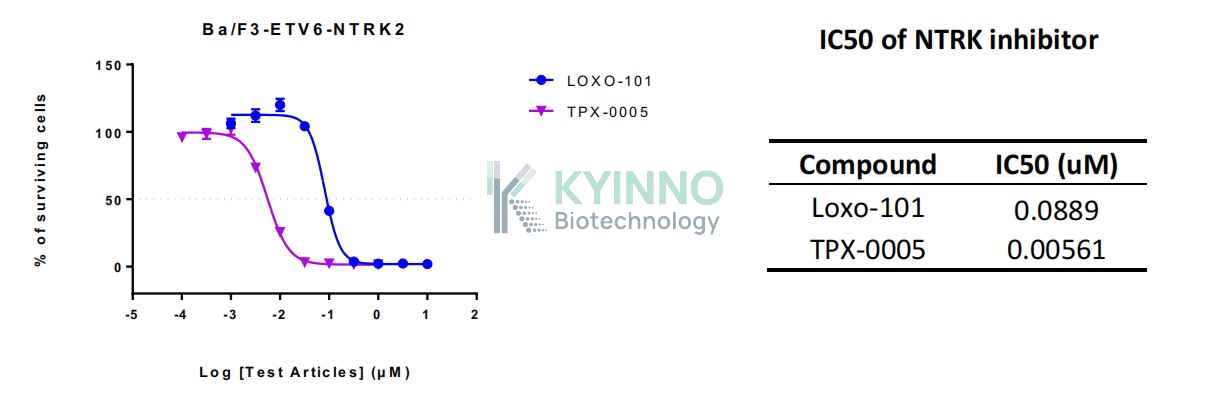
Figure 1: 1. Harvest and seed the Ba/F3 cells in 96-well plate (3000 cells/90ul medium). 2. Next day, add 10ul 10X serially diluted compound solution each well and incubate the plates for another 72hours. 3. Add 100ul Cell Titer-Glo each well, mixed and readout using Envision. 4. Plot the dose-responsive curve and fit the IC50 (the centration of 50% inhibition of DMSO vehicle treated clones) using GraphPad Prism software (Version 5).

Cell Resuscitation

  1. Prewarm culture medium (RPMI-1640 supplemented with 10% FBS)in a 37°C water bath.
  2. Thaw the frozen vial in a 37°C water bath for 1-2 minutes.
  3. Transfer the vial into biosafety cabinet, and wipe the surface with 70% ethanol.
  4. Unscrew the top of the vial and transfer the cell suspension gently into a sterile centrifuge tube containing 9.0mL complete culture medium.
  5. Spin at ~ 125 × g for 5-7 minutes at room temperature, and discard the supernatant without disturbing the pellet.
  6. Resuspend cell pellet with the appropriate volume of complete medium and transfer the cell suspension into a T25 culture flask.
  7. Incubate the flask at 37°C, 5% CO2 incubator.
  8. Split saturated culture 1:10 every 3 days; seed out at about 1-3 × 10⁵ cells/mL.

Cell Freezing

  1. Prepare the freezing medium (70% RPMI-1640 + 20% FBS + 10% DMSO) fresh immediately before use.
  2. Keep the freezing medium on ice and label cryovials.
  3. Transfer cells to a sterile, conical centrifuge tube, and count the cells.
  4. Centrifuge the cells at 250×g for 5 minutes at room temperature and carefully aspirate off the medium.
  5. Resuspend the cells at a density of at least 3×10⁶ cells/mL in chilled freezing medium.
  6. Aliquot 1 mL of the cell suspension into each cryovial.
  7. Freeze cells in the CoolCell freezing container overnight in a -80°C freezer.
  8. Transfer vials to liquid nitrogen for long-term storage

References

  1. Vaishnavi, A, A T Le, and R C Doebele. 2015. “TRKing Down an Old Oncogene in a New Era of Targeted Therapy.” Cancer Discovery 5 (1): 25–34.
  2. Jones, David T W, Barbara Hutter, Natalie Jäger, Andrey Korshunov, Marcel Kool, Hans-Jörg Warnatz, Thomas Zichner, et al. 2013. “Recurrent Somatic Alterations of FGFR1 and NTRK2 in Pilocytic Astrocytoma.” Nature Publishing Group 45 (8). Nature Publishing Group: 927–32.
Please enable JavaScript in your browser to complete this form.