KC-4033

Ba/F3-NFκB-GFP Cell Line

×
Please enable JavaScript in your browser to complete this form.
40524
Home » Ba/F3-NFκB-GFP Cell Line

Background of Ba/F3-NFκB-GFP Cell Line

NF-κB pathway consists of canonical and non-canonical pathways. The canonical NF-κB is activated by various stimuli, transducing a quick but transient transcriptional activity, to regulate the expression of various proinflammatory genes and also serve as the critical mediator for inflammatory response. Meanwhile, the activation of the non-canonical NF-κB pathway occurs through a handful of TNF receptor superfamily members.

Specifications

Catalog NumberKC-4033
Cell Line NameBa/F3-NFκB-GFP Cell Line
Clone Number10A4
Host Cell LineBa/F3
DescriptionStable Ba/F3 cell line expressing exogenous green fluorescent protein gene under the control of NFκB signaling pathway
QuantityTwo vials of frozen cells (≥2-106/vial)
StabilityStable in culture over a minimum of 10 passages
ApplicationDrug screening and biological assays
Freezing Medium70% RPMI1640+20% FBS+10% DMSO
Propagation MediumRPMI1640+10%FBS+8ng/mL mIL-3+1mg/mL Hygromycin B
Selection MarkerHygromycin B
MorphologyMostly single, round (some polymorph) cells in suspension
SubcultureSplit saturated culture 1:10 every 3 days; seed out at about 1-3 × 10⁵ cells/mL
Incubation37 °C with 5% CO2
StorageLiquid nitrogen immediately upon receiving
Doubling TimeApproximately 20 hours
Mycoplasma StatusNegative
In Vivo ValidationNA

Cell Line Generation

Ba/F3-NFκB-GFP cell line was generated using lentivirus expressing NFκB sequence.

Characterization

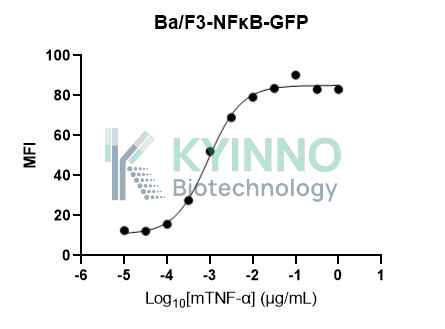
Figure 1. Ba/F3-NFκB-GFP cell line was seed into the 96-well plate, and treated with mTNF-α at a maximum concentration 1μg/mL for 6 hours, then readout with FACS.

Cell Resuscitation

1. Prewarm culture medium (RPMI1640 supplemented with 10%FBS, 1mg/mL Hygromycin B, 8ng/mL mIL-3)in a 37°C water bath.
2. Thaw the frozen vial in a 37°C water bath for 1-2 minutes.
3. Transfer the vial into biosafety cabinet, and wipe the surface with 70% ethanol.
4. Unscrew the top of the vial and transfer the cell suspension gently into a sterile centrifuge tube containing 9.0mL complete culture medium.
5. Spin at ~ 125 × g for 5-7 minutes at room temperature, and discard the supernatant without disturbing the pellet.
6. Resuspend cell pellet with the appropriate volume of complete medium and transfer the cell suspension into a T25 culture flask.
7. Incubate the flask at 37°C, 5% CO2 incubator.
8. Split saturated culture 1:10 every 3 days; seed out at about 1-3 × 10⁵ cells/mL.

Cell Freezing

1. Prepare the freezing medium (70% RPMI1640 + 20% FBS + 10% DMSO) fresh immediately before use.
2. Keep the freezing medium on ice and label cryovials.
3. Transfer cells to a sterile, conical centrifuge tube, and count the cells.
4. Centrifuge the cells at 250×g for 5 minutes at room temperature and carefully aspirate off the medium.
5. Resuspend the cells at a density of at least 3×10⁶ cells/mL in chilled freezing medium.
6. Aliquot 1 mL of the cell suspension into each cryovial.
7. Freeze cells in the CoolCell freezing container overnight in a -80°C freezer.
8. Transfer vials to liquid nitrogen for long-term storage.

References

1.Yu H, Lin L, Zhang Z, Zhang H, Hu H. Targeting NF-κB pathway for the therapy of diseases: mechanism and clinical study. Signal Transduct Target Ther. 2020 Sep 21;5(1):209. doi: 10.1038/s41392-020-00312-6. PMID: 32958760; PMCID: PMC7506548.
2.Lawrence T. The nuclear factor NF-kappaB pathway in inflammation. Cold Spring Harb Perspect Biol. 2009 Dec;1(6):a001651. doi: 10.1101/cshperspect.a001651. Epub 2009 Oct 7. PMID: 20457564; PMCID: PMC2882124.
Please enable JavaScript in your browser to complete this form.