KB-1430

BA001-hIgG1

×
Please enable JavaScript in your browser to complete this form.
45684
Home » Antibodies » BA001-hIgG1

Background of BA001-hIgG1

CD137, also recognized as 4-1BB, stands as a member of the TNFR superfamily denoted TNFRSF9. Initially identified as a costimulatory receptor exerting its influence on primed T cells, CD137's expression extends beyond the T cell lineage to encompass various leukocyte types. Of significance, CD137 assumes a pivotal role in activated T cells previously exposed to TCR-CD3 (signal 1) and reliant on CD28 (signal 2) to achieve robust surface expression of CD137. Upon ligation with its natural ligand, CD137L (4-1BBL), or through the engagement of an agonist monoclonal antibody, CD137 bestows upon T cells costimulatory signals.

Specifications

Catalog NumberKB-1430
Antibody NameBA001-hIgG1
IsotypeHuman IgG1,lambda
TargetCD137
Species ReactivityHuman
Host Cell LineEXPI CHO
Purification MethodAffinity purified
Concentration>2 mg/mL
Formulation50 mM sodium citrate,150mM NaCl,pH5.5
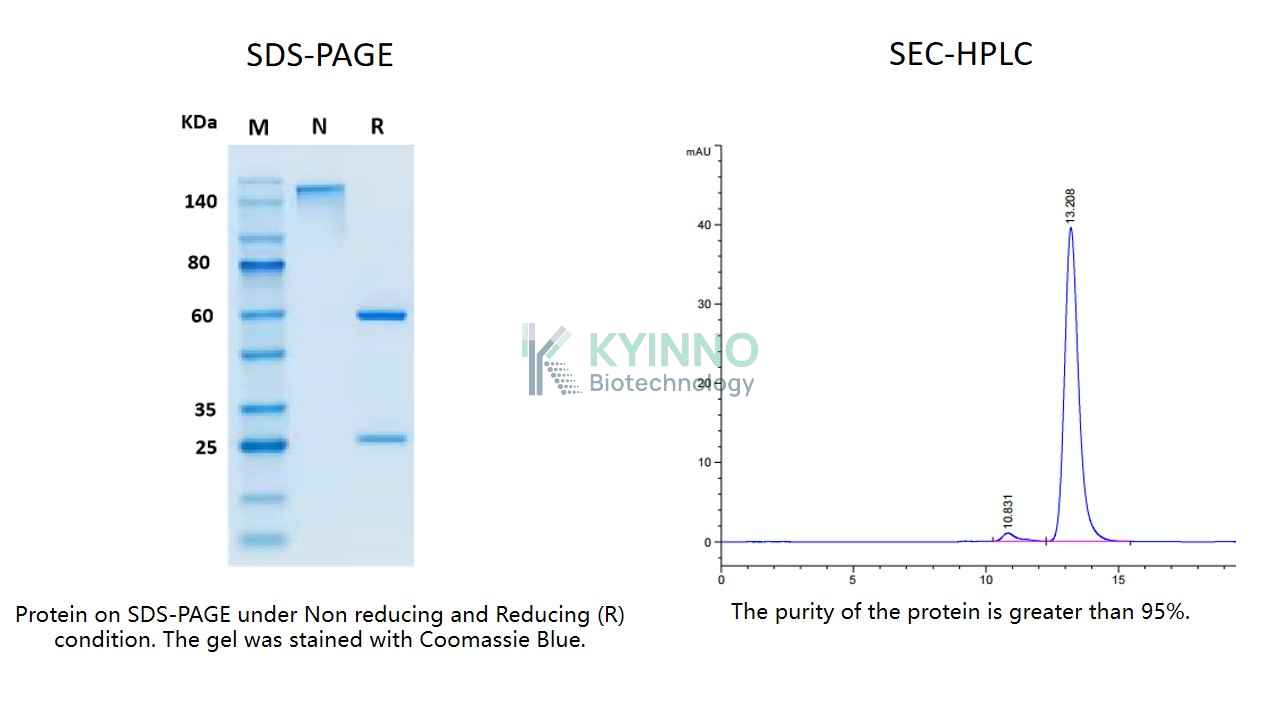
Purity>95% by SDS-PAGE and SEC-HPLC
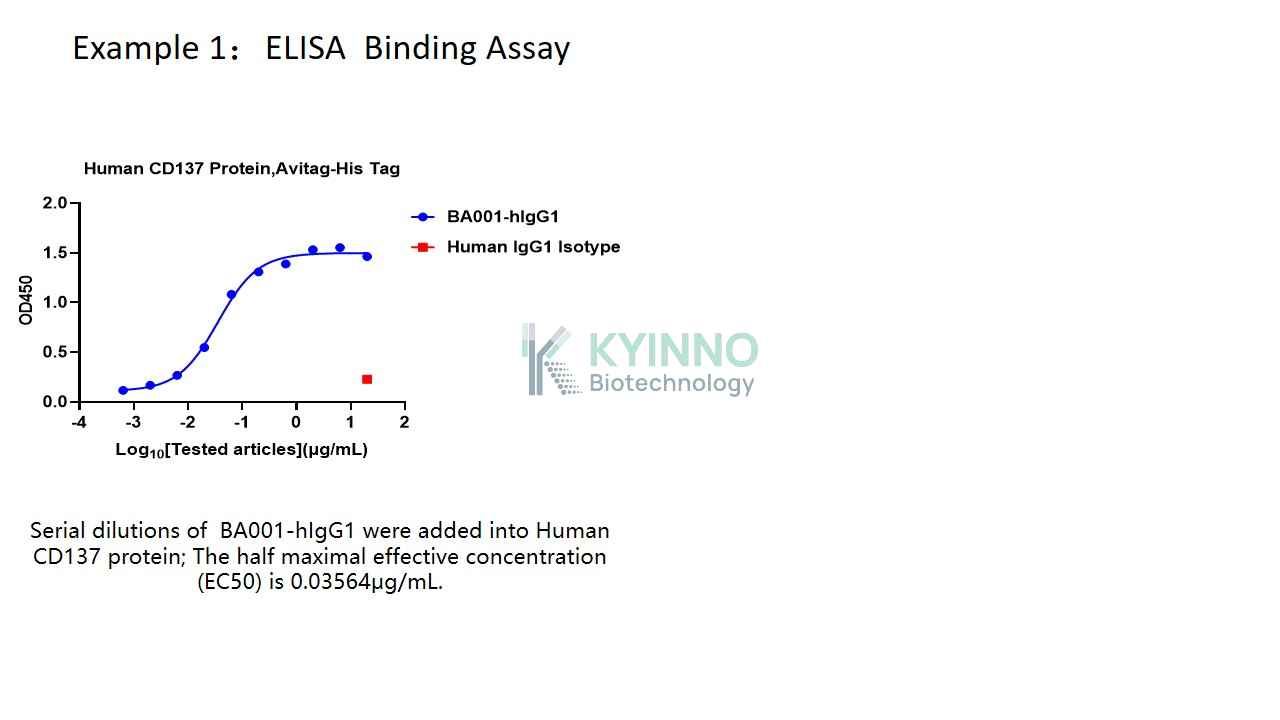
ValidationELISA
Endotoxin Level<0.2 EU/mg as determined by the LAL method
Sterility0.2μm filtered
StorageIt is recommended that the protein should be aliquoted for optimal storage.
Avoid repeated freeze-thaw cycles.
StabilityStable for twelve months from date of receipt when stored at -20°C to -80°C;
Stored at 2-8°C for one month without detectable loss of activity.

Characterization

Application

References

  1. Melero, I. et al. Amplification of tumor immunity by gene transfer of the co-stimulatory 4-1BB ligand: Synergy with the CD28 co-stimulatory pathway. Eur. J. Immunol. 28, 1116–1121 (1998).
  2. Etxeberria, I., Glez-Vaz, J., Teijeira, Á. & Melero, I. New emerging targets in cancer immunotherapy: CD137/4-1BB costimulatory axis. ESMO open 4 e000733 (2020).
  3. Somekh, I. et al. CD137 deficiency causes immune dysregulation with predisposition to lymphomagenesis. Blood 134, 1510–1516 (2019).
Please enable JavaScript in your browser to complete this form.