KC-3488

BHK21-T7-RNA-polymerase Cell Line

×
Please enable JavaScript in your browser to complete this form.
26513
Home » 细胞系 » BHK21-T7-RNA-polymerase Cell Line

Background of BHK21-T7-RNA-polymerase Cell Line

T7 RNA polymerase is an RNA polymerase from the T7 bacteriophage that catalyzes the synthesis of RNA from a DNA template in the 5' to 3' direction. T7 polymerase is a representative member of the single-subunit DNA-dependent RNAP family, and it is extremely promoter-specific and only transcribes the DNA downstream of the T7 promoter. The T7 polymerase also requires a double stranded DNA template and Mg2+ as cofactor for the synthesis of RNA. It has a very low error rate. T7 RNA polymerase is usually used in the synthesis of mRNA and sgRNA.

Specifications

Catalog NumberKC-3488
Cell Line NameBHK21-T7-RNA-polymerase Cell Line
Clone Number1#
Host Cell LineBHK21
DescriptionStable BHK21 cell line expressing exogenous T7-RNA-polymerase gene
QuantityTwo vials of frozen cells (≥2-106/vial)
StabilityStable in culture over a minimum of 10 passages
ApplicationDrug screening and biological assays
Freezing Medium70% RPMI1640 + 20% FBS + 10% DMSO
Propagation MediumRPMI1640+10%FBS+10μg/mL Puromycin
Selection MarkerPuromycin
MorphologyFibroblast
SubcultureSplit saturated culture 1:4-1:8 every 2-3 days; seed out at about 1-3 × 10⁵ cells/mL
Incubation37 °C with 5% CO2
StorageLiquid nitrogen immediately upon receiving
Doubling TimeApproximately 30 hours
Mycoplasma StatusNegative
In Vivo ValidationNA

Cell Line Generation

BHK21-T7-RNA-polymerase Cell Line was generated using a lentiviral vector expressing the T7-RNA-polymerase sequence.

Characterization

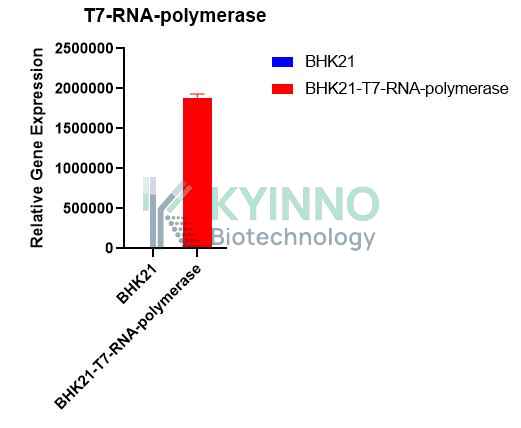
Figure 1: Characterization of T7-RNA-polymerase overexpression in the BHK21-T7-RNA-polymerase stable clone using qPCR.

Figure 2: Characterization of T7-RNA-polymerase overexpression in the BHK21-T7-RNA-polymerase stable clone using PCR.

Cell Resuscitation

  1. Prewarm culture medium (RPMI1640+10%FBS+10μg/mL Puromycin)in a 37°C water bath.
  2. Thaw the frozen vial in a 37°C water bath for 1-2 minutes.
  3. Transfer the vial into biosafety cabinet, and wipe the surface with 70% ethanol.
  4. Unscrew the top of the vial and transfer the cell suspension gently into a sterile centrifuge tube containing 9.0mL complete culture medium.
  5. Spin at ~ 125 × g for 5-7 minutes at room temperature, and discard the supernatant without disturbing the pellet.
  6. Resuspend cell pellet with the appropriate volume of complete medium and transfer the cell suspension into a T25 culture flask.
  7. Incubate the flask at 37°C, 5% CO2 incubator.
  8. Split saturated culture 1:4-1:8 every 2-3 days; seed out at about 1-3 × 10⁵ cells/mL.

Cell Freezing

  1. Prepare the freezing medium (70% RPMI1640 + 20% FBS + 10% DMSO) fresh immediately before use.
  2. Keep the freezing medium on ice and label cryovials.
  3. Transfer cells to a sterile, conical centrifuge tube, and count the cells.
  4. Centrifuge the cells at 250×g for 5 minutes at room temperature and carefully aspirate off the medium.
  5. Resuspend the cells at a density of at least 3×10⁶ cells/mL in chilled freezing medium.
  6. Aliquot 1 mL of the cell suspension into each cryovial.
  7. Freeze cells in the CoolCell freezing container overnight in a -80°C freezer.
  8. Transfer vials to liquid nitrogen for long-term storage.

References

  1. T7 RNA Polymerase (20 U/uL). www.thermofisher.com. Retrieved 2023-01-19.
  2. Rong M, He B, McAllister WT, Durbin RK (January 1998). Promoter specificity determinants of T7 RNA polymerase. Proceedings of the National Academy of Sciences of the United States of America. 95 (2): 515–9.
  3. T7 RNA Polymerase | NEB. www.neb.com. Retrieved 2023-01-19.
  4. McAllister WT, Raskin C. The phage RNA polymerases are related to DNA polymerases and reverse transcriptases. Molecular Microbiology. 1993, 10 (1): 1–6.
Please enable JavaScript in your browser to complete this form.