KC-4095

CHOK1-CD2-Cell-Line

×
Please enable JavaScript in your browser to complete this form.
41799
Home » CHOK1-CD2-Cell-Line

Background of CHOK1-CD2-Cell-Line

CD2 encodes a bifunctional protein. In the cytoplasm, the encoded protein binds the cytoplasmic tail of the human surface antigen CD2 through its C-terminal GYF structural domain and regulates CD2-triggered T lymphocyte activation. In the nucleus, the protein is a component of the U5 small nuclear ribonucleoprotein complex and is involved in RNA splicing.

Specifications

Catalog NumberKC-4095
Cell Line NameCHOK1-CD2-Cell-Line
Host Cell LineCHOK1
DescriptionStable CHOK1 cell line expressing exogenous CD2 gene
QuantityTwo vials of frozen cells (≥2-106/vial)
StabilityStable in culture over a minimum of 10 passages
ApplicationDrug screening and biological assays
Freezing Medium70% RPMI1640 + 20% FBS + 10% DMSO
Propagation MediumRPMI1640 + 10% FBS + 10μg/ml Puromycin
Selection MarkerPuromycin
MorphologyEpithelial
SubcultureSplit saturated culture 1:4-1:8 every 2-3 days; seed out at about 1-3 × 10⁵ cells/ml
Incubation37 °C with 5% CO2
StorageLiquid nitrogen immediately upon receiving
Doubling TimeApproximately 30 hours
Mycoplasma StatusNegative
In Vivo ValidationNA

Cell Line Generation

CHOK1 CD2 Cell Line was generated using a lentiviral vector expressing the CD2 sequence.

Characterization

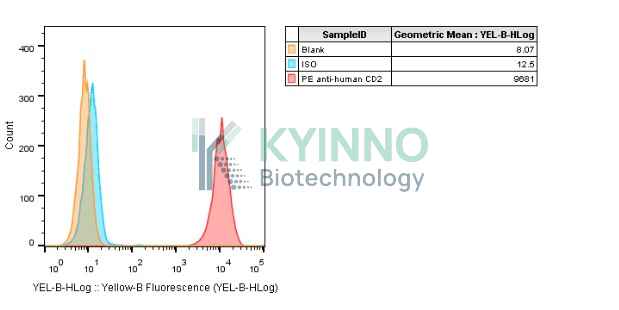
Figure 1: Characterization of CD2 overexpression in the CHO-K1 CD2 stable clone using FACS.

Cell Resuscitation

  1. Prewarm culture medium (RPMI1640 supplemented with 10% FBS and 10μg/mL Puromycin)in a 37°C water bath.
  2. Thaw the frozen vial in a 37°C water bath for 1-2 minutes.
  3. Transfer the vial into biosafety cabinet, and wipe the surface with 70% ethanol.
  4. Unscrew the top of the vial and transfer the cell suspension gently into a sterile centrifuge tube containing 9.0mL complete culture medium.
  5. Spin at ~ 125 × g for 5-7 minutes at room temperature, and discard the supernatant without disturbing the pellet.
  6. Resuspend cell pellet with the appropriate volume of complete medium and transfer the cell suspension into a T25 culture flask.
  7. Incubate the flask at 37°C, 5% CO2 incubator.
  8. Split saturated culture 1:4-1:8 every 2-3 days; seed out at about 1-3 × 10⁵ cells/mL.

Cell Freezing

  1. Prepare the freezing medium (70% RPMI1640 + 20% FBS + 10% DMSO) fresh immediately before use.
  2. Keep the freezing medium on ice and label cryovials.
  3. Transfer cells to a sterile, conical centrifuge tube, and count the cells.
  4. Centrifuge the cells at 250×g for 5 minutes at room temperature and carefully aspirate off the medium.
  5. Resuspend the cells at a density of at least 3×10⁶ cells/mL in chilled freezing medium.
  6. Aliquot 1 mL of the cell suspension into each cryovial.
  7. Freeze cells in the CoolCell freezing container overnight in a -80°C freezer.
  8. Transfer vials to liquid nitrogen for long-term storage.

References

  1. Binder C, Cvetkovski F, Sellberg F, Berg S, Paternina Visbal H, Sachs DH, Berglund E, Berglund D. CD2 Immunobiology. Front Immunol. 2020 Jun 9;11:1090. doi: 10.3389/fimmu.2020.01090. PMID: 32582179; PMCID: PMC7295915.
  2. Ghosh A, Marques-Piubelli ML, Wang X, Sheu TG, Cheng J, Khan K, Lu W, Manning J, Tang G, Solis LM, Vega F. CD2-negative lymphoma-associated T-cells: a potential mechanism of immune-evasion in diffuse large B-cell lymphoma. Virchows Arch. 2022 Oct;481(4):659-663. doi: 10.1007/s00428-022-03348-x. Epub 2022 May 27. PMID: 35622145.
  3. Kanatsu-Shinohara M, Chen G, Morimoto H, Shinohara T. CD2 is a surface marker for mouse and rat spermatogonial stem cells. J Reprod Dev. 2020 Aug 20;66(4):341-349. doi: 10.1262/jrd.2020-019. Epub 2020 Mar 26. PMID: 32213736; PMCID: PMC7470899.
Please enable JavaScript in your browser to complete this form.