KC-2190

CHOK1-cyno-LAIR1-Cell-Line

×
Please enable JavaScript in your browser to complete this form.
44804
Home » CHOK1-cyno-LAIR1-Cell-Line

Background of CHOK1-cyno-LAIR1-Cell-Line

LAIR1 (Leukocyte Associated Immunoglobulin Like Receptor 1) is a Protein Coding gene. The protein encoded by this gene is an inhibitory receptor found on peripheral mononuclear cells, including natural killer cells, T cells, and B cells. Functions as an inhibitory receptor that plays a constitutive negative regulatory role on cytolytic function of natural killer (NK) cells, B-cells and T-cells.Diseases associated with LAIR1 include Malaria.Among its related pathways are Innate Immune System and Class I MHC mediated antigen processing and presentation.

Specifications

Catalog NumberKC-2190
Cell Line NameCHOK1-cyno-LAIR1-Cell-Line
Host Cell LineCHOK1
DescriptionStable CHOK1 cell line expressing exogenous cyno LAIR1 gene
QuantityTwo vials of frozen cells (≥2-106/vial)
StabilityStable in culture over a minimum of 10 passages
ApplicationDrug screening and biological assays
Freezing Medium70% RPMI1640 + 20% FBS + 10% DMSO
Propagation MediumRPMI1640 + 10% FBS + 10μg/ml Puromycin
Selection MarkerPuromycin
MorphologyEpithelial
SubcultureSplit saturated culture 1:4-1:8 every 2-3 days; seed out at about 1-3 × 10⁵ cells/ml
Incubation37 °C with 5% CO2
StorageLiquid nitrogen immediately upon receiving
Doubling TimeApproximately 24 hours
Mycoplasma StatusNegative
In Vivo ValidationNA

Cell Line Generation

CHOK1-cyno-LAIR1 Cell Line was generated using a lentiviral vector expressing the cyno LAIR1 sequence.

Characterization

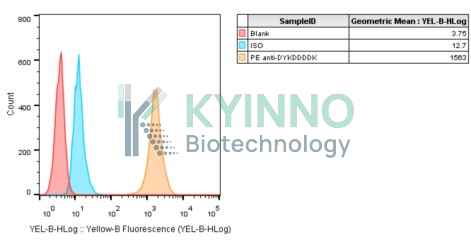
Figure 1: Characterization of cyno LAIR1 overexpression in the CHO-K1 cyno LAIR1 stable clone using FACS.

Cell Resuscitation

  1. Prewarm culture medium (RPMI1640 supplemented with 10% FBS and 10μg/mL Puromycin)in a 37°C water bath.
  2. Thaw the frozen vial in a 37°C water bath for 1-2 minutes.
  3. Transfer the vial into biosafety cabinet, and wipe the surface with 70% ethanol.
  4. Unscrew the top of the vial and transfer the cell suspension gently into a sterile centrifuge tube containing 9.0mL complete culture medium.
  5. Spin at ~ 125 × g for 5-7 minutes at room temperature, and discard the supernatant without disturbing the pellet.
  6. Resuspend cell pellet with the appropriate volume of complete medium and transfer the cell suspension into a T25 culture flask.
  7. Incubate the flask at 37°C, 5% CO2 incubator.
  8. Split saturated culture 1:4-1:8 every 2-3 days; seed out at about 1-3 × 10⁵ cells/mL.

Cell Freezing

  1. Prepare the freezing medium (70% RPMI1640 + 20% FBS + 10% DMSO) fresh immediately before use.
  2. Keep the freezing medium on ice and label cryovials.
  3. Transfer cells to a sterile, conical centrifuge tube, and count the cells.
  4. Centrifuge the cells at 250×g for 5 minutes at room temperature and carefully aspirate off the medium.
  5. Resuspend the cells at a density of at least 3×10⁶ cells/mL in chilled freezing medium.
  6. Aliquot 1 mL of the cell suspension into each cryovial.
  7. Freeze cells in the CoolCell freezing container overnight in a -80°C freezer.
  8. Transfer vials to liquid nitrogen for long-term storage

References

  1. Van Laethem F, Donaty L, Tchernonog E, Lacheretz-Szablewski V, Russello J, Buthiau D, Almeras M, Moreaux J, Bret C. LAIR1, an ITIM-Containing Receptor Involved in Immune Disorders and in Hematological Neoplasms. Int J Mol Sci. 2022 Dec 17;23(24):16136. doi: 10.3390/ijms232416136. PMID: 36555775; PMCID: PMC9788452.
  2. Achieng AO, Guyah B, Cheng Q, Ong'echa JM, Ouma C, Lambert CG, Perkins DJ. Molecular basis of reduced LAIR1 expression in childhood severe malarial anaemia: Implications for leukocyte inhibitory signalling. EBioMedicine. 2019 Jul;45:278-289. doi: 10.1016/j.ebiom.2019.06.040. Epub 2019 Jun 27. PMID: 31257148; PMCID: PMC6642411.
  3. Meyaard L. The inhibitory collagen receptor LAIR-1 (CD305). J Leukoc Biol. 2008 Apr;83(4):799-803. doi: 10.1189/jlb.0907609. Epub 2007 Dec 6. PMID: 18063695.
Please enable JavaScript in your browser to complete this form.