Growth hormone receptor (GHR), the cognate receptor of growth hormone (GH), is a membrane bound receptor that belongs to the class I cytokine receptor superfamily. Mutations in this gene have been associated with Laron syndrome, also known as the growth hormone insensitivity syndrome (GHIS), a disorder characterized by short stature. Diseases associated with GHR include Laron Syndrome and Growth Hormone Insensitivity, Partial.
Specifications
Catalog Number
KC-3971
Cell Line Name
CHOK1-GHR Cell Line
Host Cell Line
CHOK1
Description
Stable CHOK1 cell line expressing exogenous human GHR gene
Quantity
One vial of frozen cells (≥2-106/vial)
Stability
Stable in culture over a minimum of 10 passages
Application
Drug screening and biological assays
Freezing Medium
70% RPMI1640 + 20% FBS + 10% DMSO
Propagation Medium
RPMI1640 + 10% FBS + 10μg/ml Puromycin
Selection Marker
Puromycin
Morphology
Epithelial
Subculture
Split saturated culture 1:4-1:8 every 2-3 days; seed out at about 1-3 × 10⁵ cells/ml
Incubation
37 °C with 5% CO2
Storage
Liquid nitrogen immediately upon receiving
Doubling Time
Approximately 24 hours
Mycoplasma Status
Negative
In Vivo Validation
NA
Cell Line Generation
CHOK1-human-GHR Cell Line was generated using a lentiviral vector expressing the human GHR sequence.
Characterization
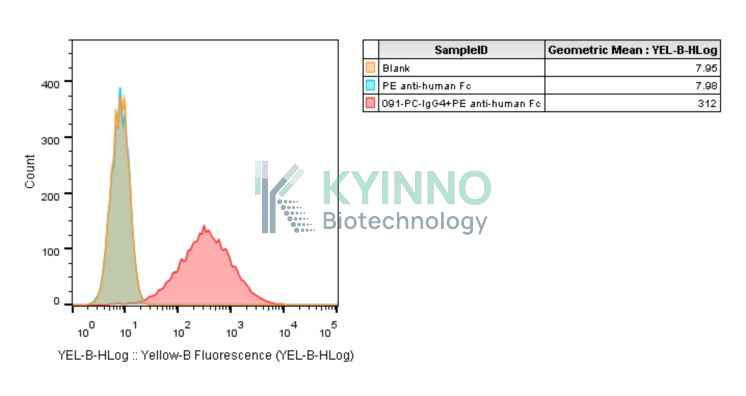
Figure 1: Characterization of human GHR overexpression in the CHOK1 human GHR stable clone using FACS.
Figure 2: Characterization of GHR and its mutants overexpressing in CHOK1 stable clones using PCR sequencing.
Cell Resuscitation
1. Prewarm culture medium (RPMI1640 supplemented with 10% FBS and 10μg/mL Puromycin)in a 37°C water bath.
2. Thaw the frozen vial in a 37°C water bath for 1-2 minutes.
3. Transfer the vial into biosafety cabinet, and wipe the surface with 70% ethanol.
4. Unscrew the top of the vial and transfer the cell suspension gently into a sterile centrifuge tube containing 9.0mL complete culture medium.
5. Spin at ~ 125 × g for 5-7 minutes at room temperature, and discard the supernatant without disturbing the pellet.
6. Resuspend cell pellet with the appropriate volume of complete medium and transfer the cell suspension into a T25 culture flask.
7. Incubate the flask at 37°C, 5% CO2 incubator.
8. Split saturated culture 1:4-1:8 every 2-3 days; seed out at about 1-3 × 10⁵ cells/mL.
Cell Freezing
1. Prepare the freezing medium (70% RPMI1640 + 20% FBS + 10% DMSO) fresh immediately before use.
2. Keep the freezing medium on ice and label cryovials.
3. Transfer cells to a sterile, conical centrifuge tube, and count the cells.
4. Centrifuge the cells at 250×g for 5 minutes at room temperature and carefully aspirate off the medium.
5. Resuspend the cells at a density of at least 3×10⁶ cells/mL in chilled freezing medium.
6. Aliquot 1 mL of the cell suspension into each cryovial.
7. Freeze cells in the CoolCell freezing container overnight in a -80°C freezer.
8. Transfer vials to liquid nitrogen for long-term storage.
References
1. Yan HZ, Wang HF, Yin Y, Zou J, Xiao F, Yi LN, He Y, He BS. GHR is involved in gastric cell growth and apoptosis via PI3K/AKT signalling. J Cell Mol Med. 2021 Mar;25(5):2450-2458.
2. Mitani M, Shima H, Sato T, Inoguchi T, Kamimaki T, Fukami M, Hasegawa T. A case report and literature review of monoallelic mutation of GHR. J Pediatr Endocrinol Metab. 2019 Apr 24;32(4):415-419.
Use License Agreement
Research Use Only.
Not for use in diagnostic procedures or therapeutic applications.
Redistribution of the cell line or its derivatives is prohibited without prior written permission from Kyinno Biotechnology.