KC-2357

CHOK1-human-PD1-High-Cell-Line

×
Please enable JavaScript in your browser to complete this form.
44691
Home » CHOK1-human-PD1-High-Cell-Line

Background of CHOK1-human-PD1-High-Cell-Line

Programmed cell death protein 1 (PDCD1) is an immune-inhibitory receptor expressed in activated T cells; it is involved in the regulation of T-cell functions, including those of effector CD8+ T cells. In addition, this protein can also promote the differentiation of CD4+ T cells into T regulatory cells. PDCD1 is expressed in many types of tumors including melanomas, and has demonstrated to play a role in anti-tumor immunity. Moreover, this protein has been shown to be involved in safeguarding against autoimmunity, however, it can also contribute to the inhibition of effective anti-tumor and anti-microbial immunity.

Specifications

Catalog NumberKC-2357
Cell Line NameCHOK1-human-PD1-High-Cell-Line
Host Cell LineCHOK1
DescriptionStable CHOK1 cell line expressing exogenous human PD1 gene in high level
QuantityTwo vials of frozen cells (≥2-106/vial)
StabilityStable in culture over a minimum of 10 passages
ApplicationDrug screening and biological assays
Freezing Medium70% RPMI1640 + 20% FBS + 10% DMSO
Propagation MediumRPMI1640 + 10% FBS + 10μg/ml Puromycin
Selection MarkerPuromycin
MorphologyEpithelial
SubcultureSplit saturated culture 1:4-1:8 every 2-3 days; seed out at about 1-3 × 10⁵ cells/ml
Incubation37 °C with 5% CO2
StorageLiquid nitrogen immediately upon receiving
Doubling TimeApproximately 30 hours
Mycoplasma StatusNegative
In Vivo ValidationNA

Cell Line Generation

CHOK1 human PD1 Cell Line was generated using a lentiviral vector expressing the human PD1 sequence.

Characterization

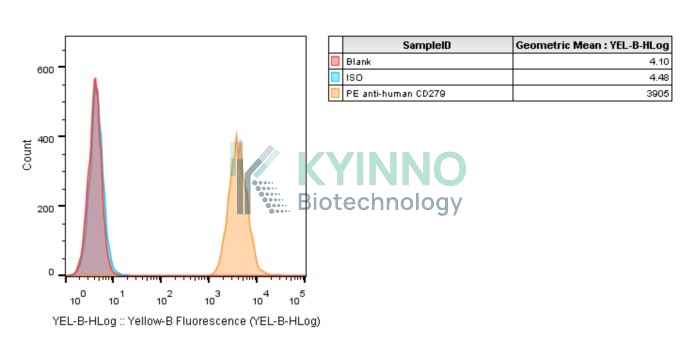
Figure 1: Characterization of human PD1 overexpression in the CHO-K1 human PD1 stable clone using FACS sequence.

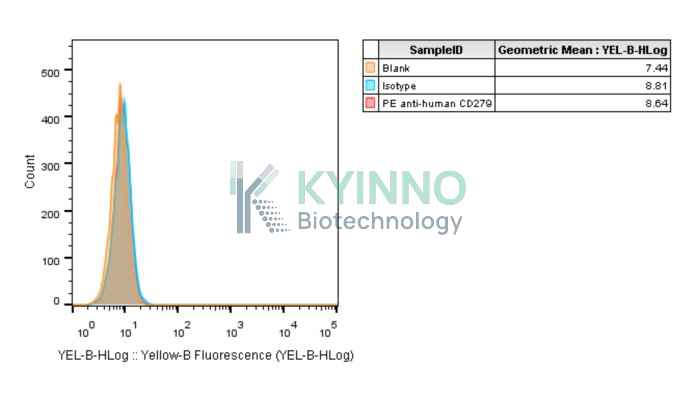
Figure 2:Characterization of endogenous PD1 expression in CHO-K1 cell using FACS.

Cell Resuscitation

  1. Prewarm culture medium (RPMI1640 supplemented with 10% FBS and 10μg/mL Puromycin)in a 37°C water bath.
  2. Thaw the frozen vial in a 37°C water bath for 1-2 minutes.
  3. Transfer the vial into biosafety cabinet, and wipe the surface with 70% ethanol.
  4. Unscrew the top of the vial and transfer the cell suspension gently into a sterile centrifuge tube containing 9.0mL complete culture medium.
  5. Spin at ~ 125 × g for 5-7 minutes at room temperature, and discard the supernatant without disturbing the pellet.
  6. Resuspend cell pellet with the appropriate volume of complete medium and transfer the cell suspension into a T25 culture flask.
  7. Incubate the flask at 37°C, 5% CO2 incubator.
  8. Split saturated culture 1:4-1:8 every 2-3 days; seed out at about 1-3 × 10⁵ cells/mL.

Cell Freezing

  1. Prepare the freezing medium (70% RPMI1640 + 20% FBS + 10% DMSO) fresh immediately before use.
  2. Keep the freezing medium on ice and label cryovials.
  3. Transfer cells to a sterile, conical centrifuge tube, and count the cells.
  4. Centrifuge the cells at 250×g for 5 minutes at room temperature and carefully aspirate off the medium.
  5. Resuspend the cells at a density of at least 3×10⁶ cells/mL in chilled freezing medium.
  6. Aliquot 1 mL of the cell suspension into each cryovial.
  7. Freeze cells in the CoolCell freezing container overnight in a -80°C freezer.
  8. Transfer vials to liquid nitrogen for long-term storage.

References

  1. Kim MS, Ra EA, Kweon SH, Seo BA, Ko HS, Oh Y, Lee G. Advanced human iPSC-based preclinical model for Parkinson's disease with optogenetic alpha-synuclein aggregation. Cell Stem Cell. 2023 Jul 6;30(7):973-986.e11.
  2. Lau HHC, Martinez-Valbuena I, So RWL, Mehra S, Silver NRG, Mao A, Stuart E, Schmitt-Ulms C, Hyman BT, Ingelsson M, Kovacs GG, Watts JC. The G51D SNCA mutation generates a slowly progressive α-synuclein strain in early-onset Parkinson's disease. Acta Neuropathol Commun. 2023 May 3;11(1):72.
  3. Kim A, Martinez-Valbuena I, Li J, Lang AE, Kovacs GG. Disease-Specific α-Synuclein Seeding in Lewy Body Disease and Multiple System Atrophy Are Preserved in Formaldehyde-Fixed Paraffin-Embedded Human Brain. Biomolecules. 2023 Jun 2;13(6):936.
Please enable JavaScript in your browser to complete this form.