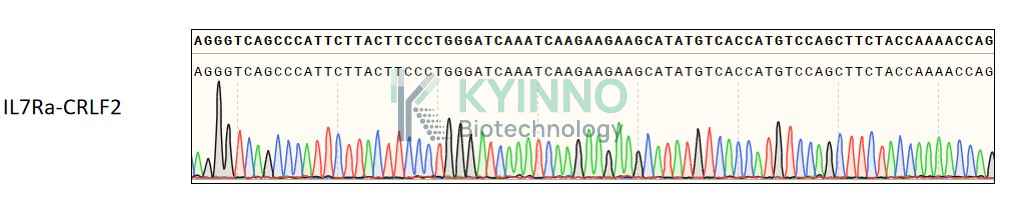
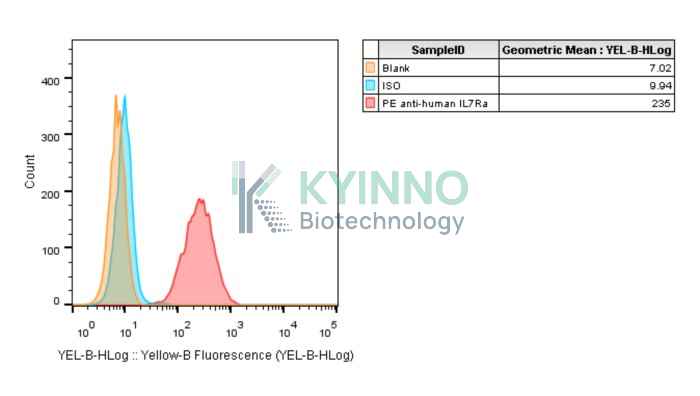
Interleukin-7 receptor α chain (IL-7Rα) single nucleotide polymorphisms (SNPs) are associated with susceptibility to immunopathologies like autoimmune and inflammatory diseases. The current hypothesis about underlying mechanisms is based on the regulation of IL-7 availability for self-reactive T cells by influencing the generation of a soluble (s)IL-7Rα variant.
CRLF2 overexpression has been described as a biomarker of poor prognosis in T-cell acute lymphoblastic leukemia (T-ALL).This gene encodes a member of the type I cytokine receptor family. The encoded protein is a receptor for thymic stromal lymphopoietin (TSLP). Together with the interleukin 7 receptor (IL7R), the encoded protein and TSLP activate STAT3, STAT5, and JAK2 pathways, which control processes such as cell proliferation and development of the hematopoietic system. Rearrangement of this gene with immunoglobulin heavy chain gene (IGH) on chromosome 14, or with P2Y purinoceptor 8 gene (P2RY8) on the same X or Y chromosomes is associated with B-progenitor acute lymphoblastic leukemia (ALL) and Down syndrome ALL.