KC-6408

CHOK1-mem-PGLYRP1-Cell-Line

×
Please enable JavaScript in your browser to complete this form.
63751
Home » CHOK1-mem-PGLYRP1-Cell-Line

Background of CHOK1-mem-PGLYRP1-Cell-Line

PGLYRP1 is a key component of the human innate immune system. It encodes a protein with direct bactericidal activity, forming the body’s first line of defense against bacterial infections. This protein can either promote or inhibit inflammatory responses to maintain immune homeostasis. For instance, it not only participates in exacerbating inflammation but also negatively regulates inflammatory reactions and the production of interferon-γ (IFN-γ). It is highly expressed in the bone marrow. As a multifunctional innate immune molecule, PGLYRP1 plays important roles in direct antimicrobial activity, immune regulation, and disease pathogenesis, and is emerging as a promising drug target.

Specifications

Catalog NumberKC-6408
Cell Line NameCHOK1-mem-PGLYRP1-Cell-Line
NCBI/UniProt Accession NumberNM_005091.3
Clone Number3#
Host Cell LineCHOK1
DescriptionStable CHOK1 clone expressing exogenous mem-PGLYRP1 gene
QuantityTwo vials of frozen cells (≥2-106/vial)
StabilityStable in culture over a minimum of 10 passages
ApplicationDrug screening and biological assays
Freezing Medium70% RPMI 1640 + 20% FBS + 10% DMSO
Propagation MediumRPMI 1640 + 10% FBS + 10μg/mL Puromycin
Selection MarkerPuromycin
MorphologyEpithelial
SubcultureSplit saturated culture 1:6-1:8 every 2-3 days; seed out at about 1-3 × 10⁵ cells/mL
Incubation37 °C with 5% CO2
StorageLiquid nitrogen immediately upon receiving
Doubling TimeApproximately 24 hours
Mycoplasma StatusNegative

Cell Line Generation

CHOK1-mem-PGLYRP1-cell-line was generated using a lentiviral vector expressing the mem-PGLYRP1 sequence.

Characterization

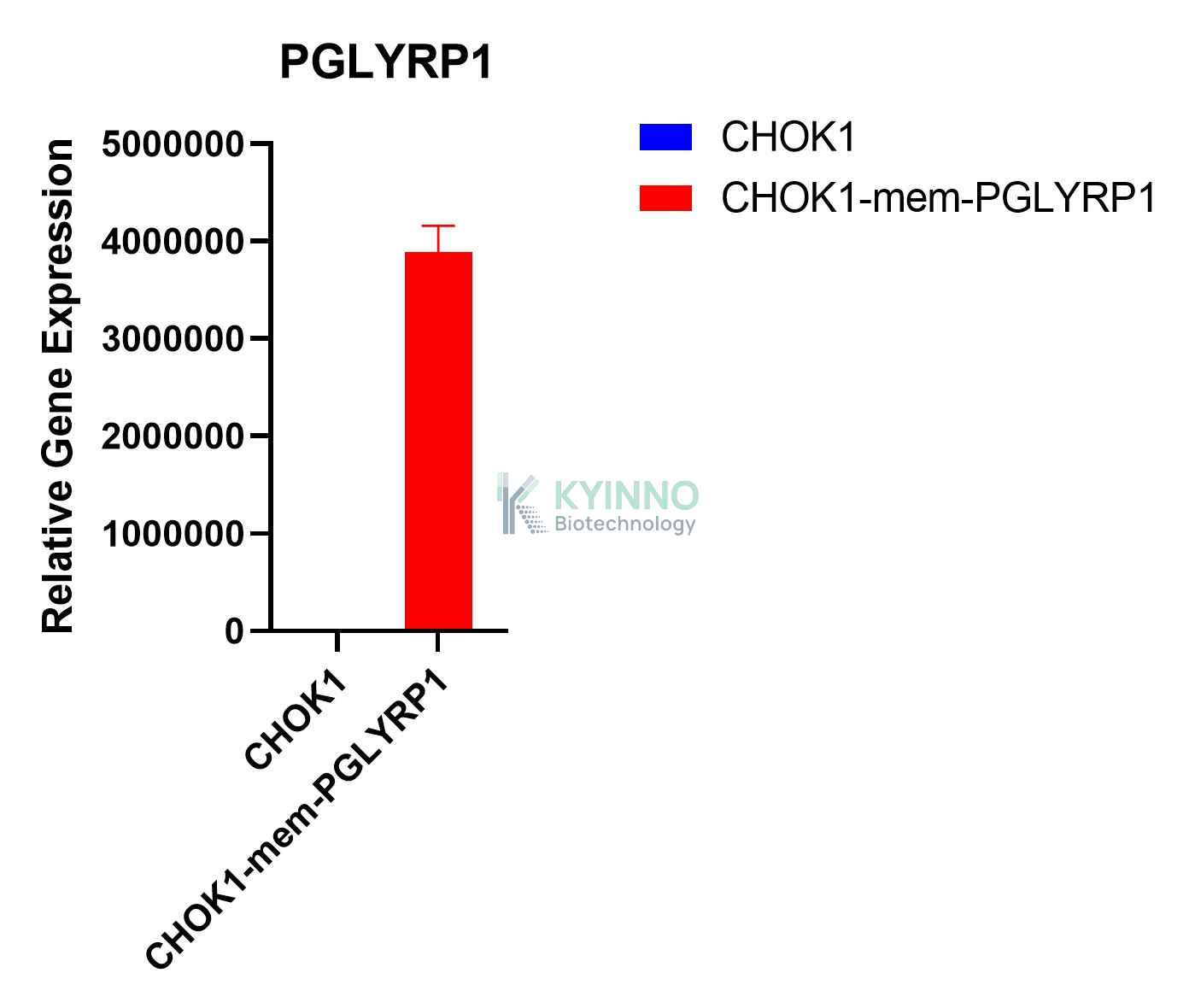
Figure 1: Characterization of mem-PGLYRP1 overexpression in the CHOK1-mem-PGLYRP1 stable clone using qPCR.

Figure 2: Characterization of mem-PGLYRP1 in the CHOK1-mem-PGLYRP1 stable clone using PCR sequencing.

Cell Resuscitation

1. Prewarm culture medium (RPMI 1640 supplemented with 10% FBS and 10μg/mL puromycin)in a 37°C water bath.
2. Thaw the frozen vial in a 37°C water bath for 1-2 minutes.
3. Transfer the vial into biosafety cabinet, and wipe the surface with 70% ethanol.
4. Unscrew the top of the vial and transfer the cell suspension gently into a sterile centrifuge tube containing 9.0mL complete culture medium.
5. Spin at ~ 125 × g for 5-7 minutes at room temperature, and discard the supernatant without disturbing the pellet.
6. Resuspend cell pellet with the appropriate volume of complete medium and transfer the cell suspension into a T25 culture flask.
7. Incubate the flask at 37°C, 5% CO2 incubator.
8. Split saturated culture 1:6-1:8 every 2-3 days; seed out at about 1-3 × 10⁵ cells/mL.

Cell Freezing

1. Prepare the freezing medium (70% RPMI 1640 + 20% FBS + 10% DMSO) fresh immediately before use.
2. Keep the freezing medium on ice and label cryovials.
3. Transfer cells to a sterile, conical centrifuge tube, and count the cells.
4. Centrifuge the cells at 250×g for 5 minutes at room temperature and carefully aspirate off the medium.
5. Resuspend the cells at a density of at least 3×10⁶ cells/mL in chilled freezing medium.
6. Aliquot 1 mL of the cell suspension into each cryovial.
7. Freeze cells in the CoolCell freezing container overnight in a -80°C freezer.
8. Transfer vials to liquid nitrogen for long-term storage.

References

1.Suk K, Lee WH. Peptidoglycan recognition proteins in the brain: Role in neuroinflammation and behavioral consequences. Histol Histopathol. 2026 Mar 18:25064. doi: 10.14670/HH-25-064. Epub ahead of print. PMID: 41869845.
2. Liu X, Lu Y, Guo Y, Huang G, Li J, Lin J, Li Z, Zhang L, Zhong H, Zhang Y, Tang J. EGFR orchestrates neutrophil activation and NETosis via CEBPβ-dependent PGLYRP1 induction. Cell Death Differ. 2026 Jan 15. doi: 10.1038/s41418-026-01660-6. Epub ahead of print. PMID: 41540251.
3. Rickert DM, Cardozo S, Carbonetti NH, Goldman WE, Scanlon KM, Skerry C. A dual role for PGLYRP1 in host defense and immune regulation during B. pertussis infection. bioRxiv [Preprint]. 2025 Sep 27:2025.09.26.678899. doi: 10.1101/2025.09.26.678899. PMID: 41040336; PMCID: PMC12485853.

Please enable JavaScript in your browser to complete this form.