KC-5493

CHOK1-mouse-ALK7-Cell-Line

×
Please enable JavaScript in your browser to complete this form.
56254
Home » CHOK1-mouse-ALK7-Cell-Line

Background of CHOK1-mouse-ALK7-Cell-Line

The Activin A Receptor Type 1C (ACVR1C), also known as ALK-7, belongs to the transforming growth factor-beta (TGF-β) superfamily of serine/threonine kinase receptors. ACVR1C plays a significant role in various biological processes, including cell proliferation, differentiation, and apoptosis by mediating signals from activin A, a cytokine involved in numerous physiological functions. Research has indicated that ACVR1C is implicated in metabolic regulation, immune responses, and embryonic development. Dysregulation or mutations in this gene have been linked to several diseases, such as polycystic ovary syndrome (PCOS) and cancer.

Specifications

Catalog NumberKC-5493
Cell Line NameCHOK1-mouse-ALK7-Cell-Line
NCBI/UniProt Accession NumberNM_001111030.1
Clone Number3-9#
Host Cell LineCHOK1
DescriptionStable CHOK1 clone expressing exogenous mouse-ALK7 gene.
QuantityTwo vials of frozen cells (≥2-106/vial)
StabilityStable in culture over a minimum of 10 passages
ApplicationDrug screening and biological assays
Freezing Medium70% RPMI 1640 + 20% FBS + 10% DMSO
Propagation MediumRPMI 1640 + 10% FBS + 10μg/mL Puromycin
Selection MarkerPuromycin
MorphologyEpithelial
SubcultureSplit saturated culture 1:6-1:8 every 2-3 days; seed out at about 1-3 × 10⁵ cells/mL
Incubation37 °C with 5% CO2
StorageLiquid nitrogen immediately upon receiving
Doubling TimeApproximately 24 hours
Mycoplasma StatusNegative

Cell Line Generation

CHOK1-mouse-ALK7-cell-line was generated using a lentiviral vector expressing the mouse-ALK7 sequence.

Characterization

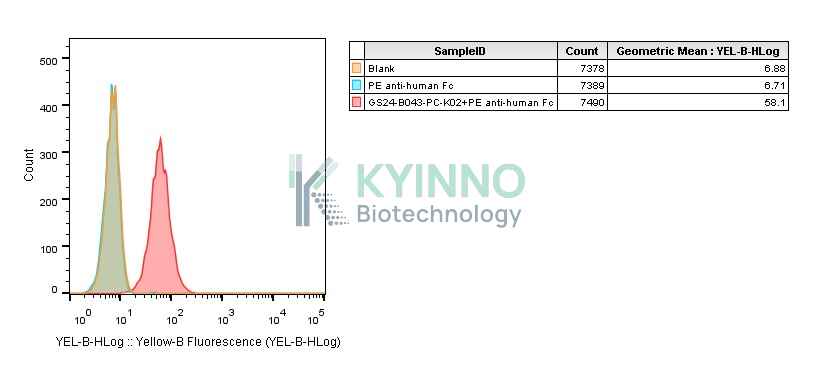
Figure 1: Characterization of mouse-ALK7 overexpression in the CHOK1-mouse-ALK7 stable clone using FACS.

Figure 2: Characterization of mouse-ALK7 in the CHOK1-mouse-ALK7 stable clone using PCR sequencing.

Cell Resuscitation

1. Prewarm culture medium (RPMI 1640 supplemented with 10% FBS and 10μg/mL puromycin)in a 37°C water bath.
2. Thaw the frozen vial in a 37°C water bath for 1-2 minutes.
3. Transfer the vial into biosafety cabinet, and wipe the surface with 70% ethanol.
4. Unscrew the top of the vial and transfer the cell suspension gently into a sterile centrifuge tube containing 9.0mL complete culture medium.
5. Spin at ~ 125 × g for 5-7 minutes at room temperature, and discard the supernatant without disturbing the pellet.
6. Resuspend cell pellet with the appropriate volume of complete medium and transfer the cell suspension into a T25 culture flask.
7. Incubate the flask at 37°C, 5% CO2 incubator.
8. Split saturated culture 1:6-1:8 every 2-3 days; seed out at about 1-3 × 10⁵ cells/mL.

Cell Freezing

1. Prepare the freezing medium (70% RPMI 1640 + 20% FBS + 10% DMSO) fresh immediately before use.
2. Keep the freezing medium on ice and label cryovials.
3. Transfer cells to a sterile, conical centrifuge tube, and count the cells.
4. Centrifuge the cells at 250×g for 5 minutes at room temperature and carefully aspirate off the medium.
5. Resuspend the cells at a density of at least 3×10⁶ cells/mL in chilled freezing medium.
6. Aliquot 1 mL of the cell suspension into each cryovial.
7. Freeze cells in the CoolCell freezing container overnight in a -80°C freezer.
8. Transfer vials to liquid nitrogen for long-term storage.

References

1.Ibáñez CF. Regulation of metabolic homeostasis by the TGF-β superfamily receptor ALK7. FEBS J. 2022 Oct;289(19):5776-5797. doi: 10.1111/febs.16090. Epub 2021 Jul 11. PMID: 34173336.
2.Gong FH, Cheng WL, Zhang Q, Chen XL, Cao JL, Yang T, Song WH, Zhao F. ALK7 Promotes Vascular Smooth Muscle Cells Phenotypic Modulation by Negative Regulating PPARγ Expression. J Cardiovasc Pharmacol. 2020 Aug;76(2):237-245. doi: 10.1097/FJC.0000000000000857. PMID: 32467530.
3.Michael IP, Saghafinia S, Tichet M, Zangger N, Marinoni I, Perren A, Hanahan D. ALK7 Signaling Manifests a Homeostatic Tissue Barrier That Is Abrogated during Tumorigenesis and Metastasis. Dev Cell. 2019 May 6;49(3):409-424.e6. doi: 10.1016/j.devcel.2019.04.015. PMID: 31063757.
4.Goebel EJ, Ongaro L, Kappes EC, Vestal K, Belcheva E, Castonguay R, Kumar R, Bernard DJ, Thompson TB. The orphan ligand, activin C, signals through activin receptor-like kinase 7. Elife. 2022 Jun 23;11:e78197. doi: 10.7554/eLife.78197. PMID: 35736809; PMCID: PMC9224996.

Please enable JavaScript in your browser to complete this form.