KC-4459

CHOK1-mouse-CD4-Cell-Line

×
Please enable JavaScript in your browser to complete this form.
47612
Home » CHOK1-mouse-CD4-Cell-Line

Background of CHOK1-mouse-CD4-Cell-Line

CD4 encodes the membrane glycoprotein of T lymphocytes. CD4 antigen acts as a co receptor with T cell receptors on T lymphocytes to recognize antigens displayed by antigen-presenting cells in the context of class II MHC molecules. CD4 antigen is also the main receptor that human immunodeficiency virus enters through interaction with HIV Env gp120 subunit. This gene is not only expressed in T lymphocytes, but also in B cells, macrophages, granulocytes, and various regions of the brain. The function of this protein is to initiate or enhance the early stages of T cell activation and may play an important role as an indirect mediator of neuronal damage in infectious and immune-mediated diseases of the central nervous system. Multiple alternative splicing transcript variants encoding different subtypes have been identified in this gene.

Specifications

Catalog NumberKC-4459
Cell Line NameCHOK1-mouse-CD4-Cell-Line
Host Cell LineCHOK1
DescriptionStable CHOK1 clone expressing exogenous mouse-CD4 gene.
QuantityTwo vials of frozen cells (≥2-106/vial)
StabilityStable in culture over a minimum of 10 passages
ApplicationDrug screening and biological assays
Freezing Medium70% RPMI 1640 + 20% FBS + 10% DMSO
Propagation MediumRPMI 1640 + 10% FBS + 10μg/mL Puromycin
Selection MarkerPuromycin
MorphologyEpithelial
SubcultureSplit saturated culture 1:6-1:8 every 2-3 days; seed out at about 1-3 × 10⁵ cells/mL
Incubation37 °C with 5% CO2
StorageLiquid nitrogen immediately upon receiving
Doubling TimeApproximately 30 hours
Mycoplasma StatusNegative

Cell Line Generation

CHOK1-mouse-CD4-cell-line was generated using a lentiviral vector expressing the mouse-CD4 sequence.

Characterization

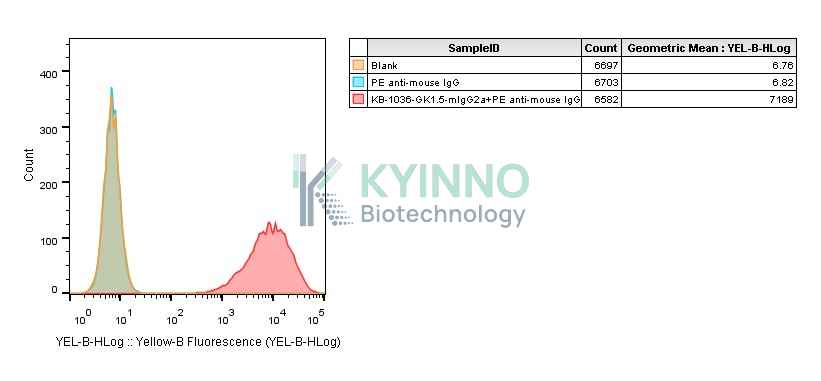
Figure 1: Characterization of mouse-CD4 overexpression in the CHOK1-mouse-CD4 stable clone using FACS.

Figure 2: Characterization of mouse-CD4 in the CHOK1-mouse-CD4 stable clone using PCR sequencing.

Cell Resuscitation

  1. Prewarm culture medium (RPMI 1640 supplemented with 10% FBS and 10μg/mL puromycin)in a 37°C water bath.
  2. Thaw the frozen vial in a 37°C water bath for 1-2 minutes.
  3. Transfer the vial into biosafety cabinet, and wipe the surface with 70% ethanol.
  4. Unscrew the top of the vial and transfer the cell suspension gently into a sterile centrifuge tube containing 9.0mL complete culture medium.
  5. Spin at ~ 125 × g for 5-7 minutes at room temperature, and discard the supernatant without disturbing the pellet.
  6. Resuspend cell pellet with the appropriate volume of complete medium and transfer the cell suspension into a T25 culture flask.
  7. Incubate the flask at 37°C, 5% CO2 incubator.
  8. Split saturated culture 1:6-1:8 every 2-3 days; seed out at about 1-3 × 10⁵ cells/mL.

Cell Freezing

  1. Prepare the freezing medium (70% RPMI 1640 + 20% FBS + 10% DMSO) fresh immediately before use.
  2. Keep the freezing medium on ice and label cryovials.
  3. Transfer cells to a sterile, conical centrifuge tube, and count the cells.
  4. Centrifuge the cells at 250×g for 5 minutes at room temperature and carefully aspirate off the medium.
  5. Resuspend the cells at a density of at least 3×10⁶ cells/mL in chilled freezing medium.
  6. Aliquot 1 mL of the cell suspension into each cryovial.
  7. Freeze cells in the CoolCell freezing container overnight in a -80°C freezer.
  8. Transfer vials to liquid nitrogen for long-term storage.

References

  1. Indraccolo S, Mion M, Biagiotti R, Romagnani S, Morfini M, Longo G, Zamarchi R, Chieco-Bianchi L, Amadori A. Genetic variability of the human CD4 V2 domain. Immunogenetics. 1996;44(1):70-2. doi: 10.1007/BF02602658. PMID: 8613144.
  2. Kim KC, Kim HG, Roh TY, Park J, Jung KM, Lee JS, Choi SY, Kim SS, Choi BS. The effect of CD4 receptor downregulation and its downstream signaling molecules on HIV-1 latency. Biochem Biophys Res Commun. 2011 Jan 14;404(2):646-51. doi: 10.1016/j.bbrc.2010.12.032. Epub 2010 Dec 10. PMID: 21146497.
  3. Wu X, Tschumper RC, Gutierrez A Jr, Mihalcik SA, Nowakowski GS, Jelinek DF. Selective induction of DNA repair pathways in human B cells activated by CD4+ T cells. PLoS One. 2010 Dec 16;5(12):e15549. doi: 10.1371/journal.pone.0015549. PMID: 21179576; PMCID: PMC3002972.
Please enable JavaScript in your browser to complete this form.