KC-3750

CHOK1-mouse-CDH3-Cell-Line

×
请在浏览器中启用JavaScript来完成此表单。
34712
Home » CHOK1-mouse-CDH3-Cell-Line

Background of CHOK1-mouse-CDH3-Cell-Line

CDH3 encodes the classic cadherin protein of the cadherin superfamily. At least one of them encodes a precursor protein, which is hydrolyzed to produce a mature glycoprotein. This calcium dependent intercellular adhesion protein consists of five extracellular cadherin repeat sequences, a transmembrane region, and a highly conserved cytoplasmic tail. The gene is located in a gene cluster on the long arm of chromosome 16, which is related to loss of heterozygosity events in breast cancer and prostate cancer. In addition, abnormal expression of this protein was observed in cervical adenocarcinoma. This gene mutation is associated with rare macular malnutrition and ectodermal dysplasia, apodactyly, and macular dystrophy syndrome (EEMS).

Specifications

Catalog NumberKC-3750
Cell Line NameCHOK1-mouse-CDH3-Cell-Line
Host Cell LineCHOK1
DescriptionStable CHOK1 clone expressing exogenous mouse-CDH3 gene.
QuantityOne vial of frozen cells (≥2-106/vial)
StabilityStable in culture over a minimum of 10 passages
ApplicationDrug screening and biological assays
Freezing Medium70% RPMI 1640 + 20% FBS + 10% DMSO
Propagation MediumRPMI 1640 + 10% FBS + 10μg/mL Puromycin
Selection MarkerPuromycin
MorphologyEpithelial
SubcultureSplit saturated culture 1:6-1:8 every 2-3 days; seed out at about 1-3 × 10⁵ cells/mL
Incubation37 °C with 5% CO2
StorageLiquid nitrogen immediately upon receiving
Doubling TimeApproximately 24 hours
Mycoplasma StatusNegative
In Vivo ValidationNA

Cell Line Generation

CHOK1-mouse-CDH3-cell-line was generated using a lentiviral vector expressing the mouse-CDH3 sequence.

Characterization

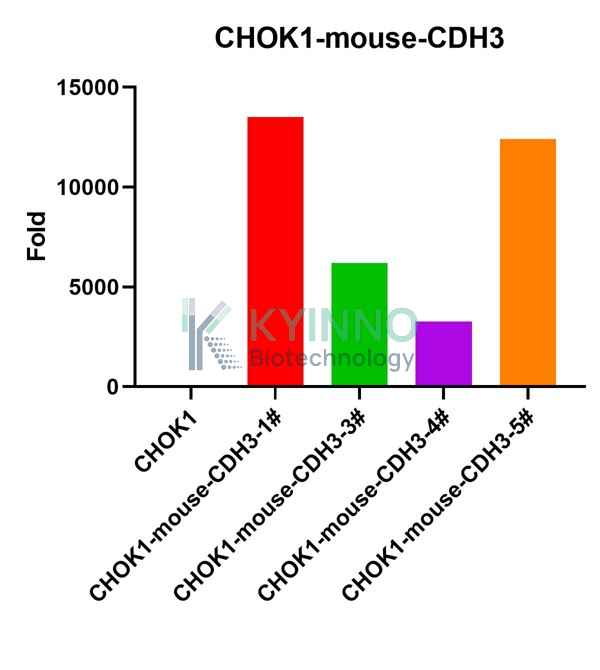
Figure 1: Characterization of mouse-CDH3 overexpression in the CHOK1-mouse-CDH3 stable clone using qPCR.

Figure 2: Characterization of mouse-CDH3 in the CHOK1-mouse-CDH3 stable clone using PCR sequencing.

Cell Resuscitation

1. Prewarm culture medium (RPMI 1640 supplemented with 10% FBS and 10μg/mL puromycin)in a 37°C water bath.
2. Thaw the frozen vial in a 37°C water bath for 1-2 minutes.
3. Transfer the vial into biosafety cabinet, and wipe the surface with 70% ethanol.
4. Unscrew the top of the vial and transfer the cell suspension gently into a sterile centrifuge tube containing 9.0mL complete culture medium.
5. Spin at ~ 125 × g for 5-7 minutes at room temperature, and discard the supernatant without disturbing the pellet.
6. Resuspend cell pellet with the appropriate volume of complete medium and transfer the cell suspension into a T25 culture flask.
7. Incubate the flask at 37°C, 5% CO2 incubator.
8. Split saturated culture 1:6-1:8 every 2-3 days; seed out at about 1-3 × 10⁵ cells/mL.

Cell Freezing

1. Prepare the freezing medium (70% RPMI 1640 + 20% FBS + 10% DMSO) fresh immediately before use.
2. Keep the freezing medium on ice and label cryovials.
3. Transfer cells to a sterile, conical centrifuge tube, and count the cells.
4. Centrifuge the cells at 250×g for 5 minutes at room temperature and carefully aspirate off the medium.
5. Resuspend the cells at a density of at least 3×10⁶ cells/mL in chilled freezing medium.
6. Aliquot 1 mL of the cell suspension into each cryovial.
7. Freeze cells in the CoolCell freezing container overnight in a -80°C freezer.
8. Transfer vials to liquid nitrogen for long-term storage.

References

1.Indelman M, Bergman R, Lurie R, Richard G, Miller B, Petronius D, Ciubutaro D, Leibu R, Sprecher E. A missense mutation in CDH3, encoding P-cadherin, causes hypotrichosis with juvenile macular dystrophy. J Invest Dermatol. 2002 Nov;119(5):1210-3. doi: 10.1046/j.1523-1747.2002.19528.x. PMID: 12445216.
2.Sousa B, Ribeiro AS, Nobre AR, Lopes N, Martins D, Pinheiro C, Vieira AF, Albergaria A, Gerhard R, Schmitt F, Baltazar F, Paredes J. The basal epithelial marker P-cadherin associates with breast cancer cell populations harboring a glycolytic and acid-resistant phenotype. BMC Cancer. 2014 Oct 1;14:734. doi: 10.1186/1471-2407-14-734. PMID: 25269858; PMCID: PMC4190447.

Use License Agreement

Research Use Only.
Not for use in diagnostic procedures or therapeutic applications.
Redistribution of the cell line or its derivatives is prohibited without prior written permission from Kyinno Biotechnology.
请在浏览器中启用JavaScript来完成此表单。