KC-4963

CHOK1-rat-CD40L Cell Line

×
Please enable JavaScript in your browser to complete this form.
53915
Home » CHOK1-rat-CD40L Cell Line

Background of CHOK1-rat-CD40L Cell Line

CD40LG (CD40 Ligand) CD154, also known as CD40 ligand, is a costimulatory molecule involved in humoral and adaptive immune responses upon pairing with its classical receptor, CD40. it is a Protein Coding gene. CD154 (CD40-ligand) is a critical immune regulator. CD154 expression is tightly regulated and largely restricted to activated CD4 T cells. Diseases associated with CD40LG include Immunodeficiency With Hyper-Igm, Type 1 and Cd40 Ligand Deficiency. The CD154/CD40 dyad is a key participant in the pathogenesis of many autoimmune diseases, including systemic lupus erythematosus (SLE).

Specifications

Catalog NumberKC-4963
Cell Line NameCHOK1-rat-CD40L Cell Line
Host Cell LineCHOK1
DescriptionStable CHOK1 cell line expressing exogenous rat CD40L gene
QuantityTwo vials of frozen cells (≥2-106/vial)
StabilityStable in culture over a minimum of 10 passages
ApplicationDrug screening and biological assays
Freezing Medium70% RPMI1640 + 20% FBS + 10% DMSO
Propagation MediumRPMI1640 + 10% FBS + 10μg/ml Puromycin
Selection MarkerPuromycin
MorphologyEpithelial
SubcultureSplit saturated culture 1:4-1:8 every 2-3 days; seed out at about 1-3 × 10⁵ cells/ml
Incubation37 °C with 5% CO2
StorageLiquid nitrogen immediately upon receiving
Doubling TimeApproximately 24 hours
Mycoplasma StatusNegative

Cell Line Generation

CHOK1-rat-CD40L Cell Line was generated using a lentiviral vector expressing the rat CD40L sequence.

Characterization

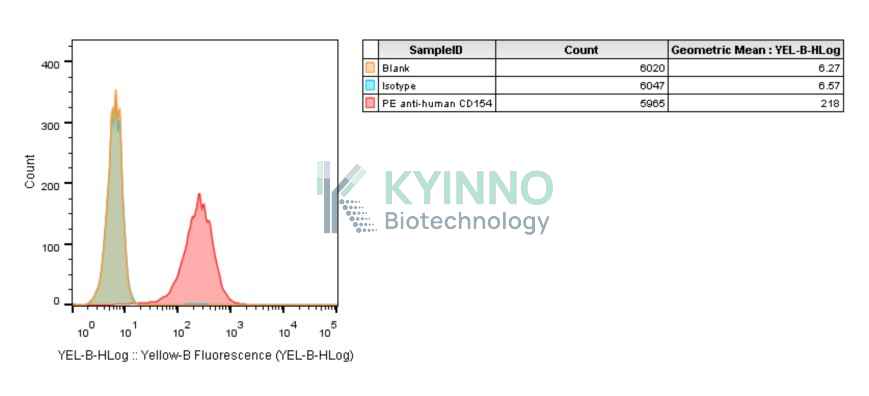
Figure 1: Characterization of rat CD40L overexpression in the CHOK1 rat CD40L stable clone using FACS.

Figure 2: Characterization of rat CD40L and its mutants overexpressing in CHOK1 stable clones using PCR sequencing.

Cell Resuscitation

1. Prewarm culture medium (RPMI1640 supplemented with 10% FBS and 10μg/mL Puromycin)in a 37°C water bath.
2. Thaw the frozen vial in a 37°C water bath for 1-2 minutes.
3. Transfer the vial into biosafety cabinet, and wipe the surface with 70% ethanol.
4. Unscrew the top of the vial and transfer the cell suspension gently into a sterile centrifuge tube containing 9.0mL complete culture medium.
5. Spin at ~ 125 × g for 5-7 minutes at room temperature, and discard the supernatant without disturbing the pellet.
6. Resuspend cell pellet with the appropriate volume of complete medium and transfer the cell suspension into a T25 culture flask.
7. Incubate the flask at 37°C, 5% CO2 incubator.
8. Split saturated culture 1:4-1:8 every 2-3 days; seed out at about 1-3 × 10⁵ cells/mL.

Cell Freezing

1. Prepare the freezing medium (70% RPMI1640 + 20% FBS + 10% DMSO) fresh immediately before use.
2. Keep the freezing medium on ice and label cryovials.
3. Transfer cells to a sterile, conical centrifuge tube, and count the cells.
4. Centrifuge the cells at 250×g for 5 minutes at room temperature and carefully aspirate off the medium.
5. Resuspend the cells at a density of at least 3×10⁶ cells/mL in chilled freezing medium.
6. Aliquot 1 mL of the cell suspension into each cryovial.
7. Freeze cells in the CoolCell freezing container overnight in a -80°C freezer.
8. Transfer vials to liquid nitrogen for long-term storage.

References

1. Brunner M, Zhang M, Genin A, Ho IC, Cron RQ. A T-cell-specific CD154 transcriptional enhancer located just upstream of the promoter. Genes Immun. 2008 Oct;9(7):640-9. doi: 10.1038/gene.2008.67. Epub 2008 Aug 21. PMID: 18719603; PMCID: PMC7333362.
2. Yang Q, Ji G, Li J. STEAP2 is down-regulated in breast cancer tissue and suppresses PI3K/AKT signaling and breast cancer cell invasion in vitro and in vivo. Cancer Biol Ther. 2020;21(3):278-291. doi: 10.1080/15384047.2019.1685290. Epub 2019 Nov 7. PMID: 31696760; PMCID: PMC7012168.
3. Allard CC, Salti S, Mourad W, Hassan GS. Implications of CD154 and Its Receptors in the Pathogenesis and Treatment of Systemic Lupus Erythematosus. Cells. 2024 Sep 28;13(19):1621. doi: 10.3390/cells13191621. PMID: 39404385; PMCID: PMC11482534.

Please enable JavaScript in your browser to complete this form.