KC-3196

CHOK1-rat-SEZ6 Cell Line

×
Please enable JavaScript in your browser to complete this form.
34210
Home » CHOK1-rat-SEZ6 Cell Line

Background of CHOK1-rat-SEZ6 Cell Line

SEZ6 (Seizure Related 6 Homolog) also known as BSRPC, it is a Protein Coding gene. SEZ-6 is a brain-specific cDNA. Its expression is increased by convulsant drug and it encodes membrane protein with five copies of short consensus repeat (SCR; complement C3b/C4b binding site) and two repeated sequences which are partially similar to CUB domain (complement Clr/s-like repeat). Diseases associated with SEZ6 include Epilepsy and Autism Spectrum Disorder.

Specifications

Catalog NumberKC-3196
Cell Line NameCHOK1-rat-SEZ6 Cell Line
Clone NumberNA
Host Cell LineCHOK1
DescriptionStable CHOK1 clone expressing exogenous rat SEZ6 gene
QuantityTwo vials of frozen cells (≥2-106/vial)
StabilityStable in culture over a minimum of 10 passages
ApplicationDrug screening and biological assays
Freezing Medium70% RPMI1640 + 20% FBS + 10% DMSO
Propagation MediumRPMI1640 + 10% FBS + 10μg/mL Puromycin
Selection MarkerPuromycin
MorphologyEpithelial
SubcultureSplit saturated culture 1:4-1:8 every 2-3 days; seed out at about 1-3 × 10⁵ cells/mL
Incubation37 °C with 5% CO2
StorageLiquid nitrogen immediately upon receiving
Doubling TimeApproximately 24 hours
Mycoplasma StatusNegative
In Vivo ValidationNA

Cell Line Generation

CHOK1-rat-SEZ6 cell line was generated using a lentiviral vector expressing the rat SEZ6 sequence.

Characterization

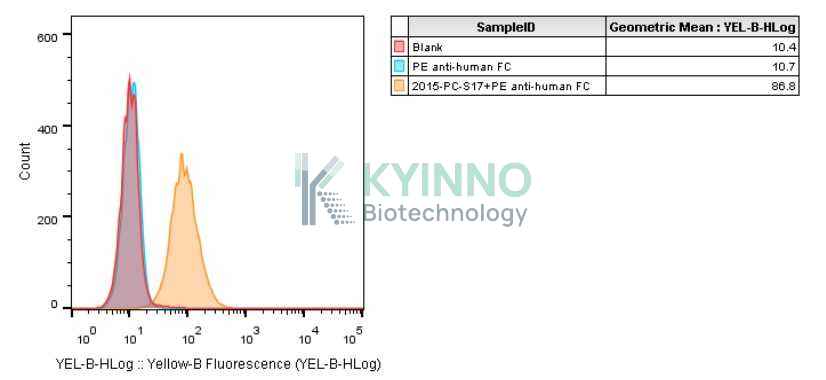
Figure 1: Characterization of rat SEZ6 overexpression in the CHOK1 rat SEZ6 stable clone using FACS.

Cell Resuscitation

1. Prewarm culture medium (RPMI1640 supplemented with 10% FBS and 10μg/mL puromycin)in a 37°C water bath. 2. Thaw the frozen vial in a 37°C water bath for 1-2 minutes. 3. Transfer the vial into biosafety cabinet, and wipe the surface with 70% ethanol. 4. Unscrew the top of the vial and transfer the cell suspension gently into a sterile centrifuge tube containing 9.0mL complete culture medium. 5. Spin at ~ 125 × g for 5-7 minutes at room temperature, and discard the supernatant without disturbing the pellet. 6. Resuspend cell pellet with the appropriate volume of complete medium and transfer the cell suspension into a T25 culture flask. 7. Incubate the flask at 37°C, 5% CO2 incubator. 8. Split saturated culture 1:4-1:8 every 2-3 days; seed out at about 1-3 × 10⁵ cells/mL.

Cell Freezing

1. Prepare the freezing medium (70% RPMI1640 + 20% FBS + 10% DMSO) fresh immediately before use. 2. Keep the freezing medium on ice and label cryovials. 3. Transfer cells to a sterile, conical centrifuge tube, and count the cells. 4. Centrifuge the cells at 250×g for 5 minutes at room temperature and carefully aspirate off the medium. 5. Resuspend the cells at a density of at least 3×10⁶ cells/mL in chilled freezing medium. 6. Aliquot 1 mL of the cell suspension into each cryovial. 7. Freeze cells in the CoolCell freezing container overnight in a -80°C freezer. 8. Transfer vials to liquid nitrogen for long-term storage.

References

1. Shimizu-Nishikawa K, Kajiwara K, Sugaya E. Cloning and characterization of seizure-related gene, SEZ-6. Biochem Biophys Res Commun. 1995 Nov 2;216(1):382-9. doi: 10.1006/bbrc.1995.2635. PMID: 7488116. 2. Hidaka C, Mitsui S, Osako Y, Takahashi K, Tanaka K, Yuri K. Differential brain expression pattern of Sez6 alternative splicing isoform with deleted transmembrane domain. Biochem Biophys Res Commun. 2022 Dec 25;636(Pt 2):128-132. doi: 10.1016/j.bbrc.2022.10.103. Epub 2022 Nov 1. PMID: 36368155. 3. Nash A, Aumann TD, Pigoni M, Lichtenthaler SF, Takeshima H, Munro KM, Gunnersen JM. Lack of Sez6 Family Proteins Impairs Motor Functions, Short-Term Memory, and Cognitive Flexibility and Alters Dendritic Spine Properties. Cereb Cortex. 2020 Apr 14;30(4):2167-2184. doi: 10.1093/cercor/bhz230. PMID: 31711114.

Please enable JavaScript in your browser to complete this form.