KC-4257

COLO205-ATRX-KO-1B4-Cell-Line

×
Please enable JavaScript in your browser to complete this form.
43414
Home » COLO205-ATRX-KO-1B4-Cell-Line

Background of COLO205-ATRX-KO-1B4-Cell-Line

ATRX (alpha-thalassemia mental retardation X-linked) is one of the most frequently mutated tumor suppressor genes in human cancers, especially in glioma, and recent findings indicate roles for ATRX in key molecular pathways, such as the regulation of chromatin state, gene expression, and DNA damage repair, placing ATRX as a central player in the maintenance of genome stability and function. This has led to new perspectives about the functional role of ATRX and its relationship with cancer. The protein encoded by this gene contains an ATPase/helicase domain, and thus it belongs to the SWI/SNF family of chromatin remodeling proteins. This protein is found to undergo cell cycle-dependent phosphorylation, which regulates its nuclear matrix and chromatin association, and suggests its involvement in the gene regulation at interphase and chromosomal segregation in mitosis. Mutations in this gene are associated with X-linked syndromes exhibiting cognitive disabilities as well as alpha-thalassemia (ATRX) syndrome. These mutations have been shown to cause diverse changes in the pattern of DNA methylation, which may provide a link between chromatin remodeling, DNA methylation, and gene expression in developmental processes.

Specifications

Catalog NumberKC-4257
Cell Line NameCOLO205-ATRX-KO-1B4-Cell-Line
Host Cell LineCOLO205
DescriptionStable COLO205 clone with human ATRX gene knockout, No.1B4
QuantityTwo vials of frozen cells (≥2-106/vial)
StabilityStable in culture over a minimum of 10 passages
ApplicationDrug screening and biological assays
Freezing MediumRPMI1640+20% FBS+10% DMSO
Propagation MediumRPMI1640+10% FBS
Selection MarkerN/A
MorphologyEpithelial
SubcultureSplit saturated culture 1:4-1:8 every 2-3 days; seed out at about 1-3 × 10⁵ cells/Ml
Incubation37 °C with 5% CO2
StorageLiquid nitrogen immediately upon receiving
Doubling TimeApproximately 26.76 hours
Mycoplasma StatusNegative
In Vivo ValidationNA

Cell Line Generation

COLO205-ATRX-KO-1B4 cell line was generated using the CRISPR method.

Characterization

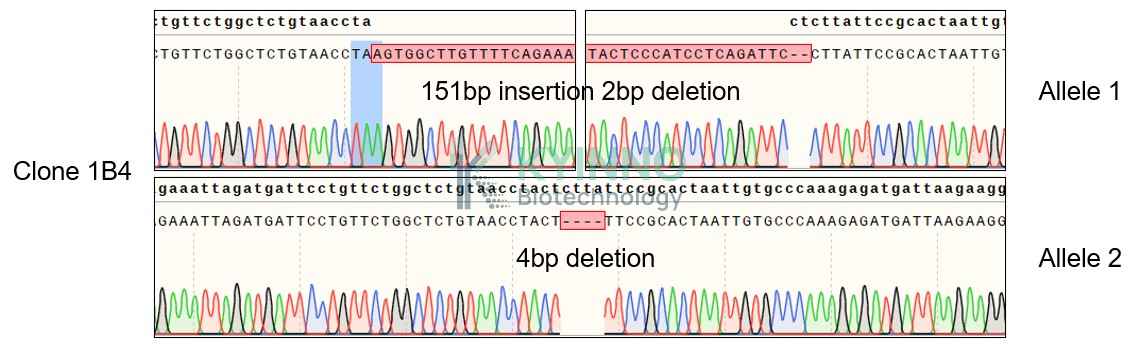
Figure 1: Characterization of COLO205-ATRX-KO-1B4 cell line stable clone using PCR sequencing.

Figure 2: Characterization of COLO205-ATRX-KO-1B4 cell line stable clone using RT-PCR sequencing.

Cell Resuscitation

  1. Prewarm culture medium (RPMI1640 + 10% FBS)in a 37°C water bath.
  2. Thaw the frozen vial in a 37°C water bath for 1-2 minutes.
  3. Transfer the vial into biosafety cabinet, and wipe the surface with 70% ethanol.
  4. Unscrew the top of the vial and transfer the cell suspension gently into a sterile centrifuge tube containing 9.0mL complete culture medium.
  5. Spin at ~ 125 × g for 5-7 minutes at room temperature, and discard the supernatant without disturbing the pellet.
  6. Resuspend cell pellet with the appropriate volume of complete medium and transfer the cell suspension into a T25 culture flask.
  7. Incubate the flask at 37°C, 5% CO2 incubator.
  8. Split saturated culture 1:4-1:8 every 2-3 days; seed out at about 1-3 × 10⁵ cells/mL.

Cell Freezing

  1. Prepare the freezing medium (70% RPMI1640 + 20% FBS + 10% DMSO) fresh immediately before use.
  2. Keep the freezing medium on ice and label cryovials.
  3. Transfer cells to a sterile, conical centrifuge tube, and count the cells.
  4. Centrifuge the cells at 250×g for 5 minutes at room temperature and carefully aspirate off the medium.
  5. Resuspend the cells at a density of at least 3×10⁶ cells/mL in chilled freezing medium.
  6. Aliquot 1 mL of the cell suspension into each cryovial.
  7. Freeze cells in the CoolCell freezing container overnight in a -80°C freezer.
  8. Transfer vials to liquid nitrogen for long-term storage

References

  1. Aguilera P, López-Contreras AJ. ATRX, a guardian of chromatin. Trends Genet. 2023 Jun;39(6):505-519. doi: 10.1016/j.tig.2023.02.009. Epub 2023 Mar 7. PMID: 36894374.
    2.https://www.ncbi.nlm.nih.gov/gene/546
Please enable JavaScript in your browser to complete this form.