KC-4093-DW

DLD1-ADAM9-KO-1A1-Cell-Line

×
Please enable JavaScript in your browser to complete this form.
43812
Home » 细胞系 » DLD1-ADAM9-KO-1A1-Cell-Line

Background of DLD1-ADAM9-KO-1A1-Cell-Line

The ADAM9 gene, which stands for A Disintegrin And Metalloproteinase 9, encodes a member of the ADAM family of proteins, which are involved in various biological processes such as cell adhesion, migration, and signaling. ADAM9 is a multi-domain protein that includes a metalloproteinase domain, a disintegrin-like domain, and a thrombospondin type I motif. This protein is known to cleave several cell surface molecules, thereby affecting cell-cell interactions and the extracellular matrix.Research has shown that ADAM9 is implicated in a range of physiological and pathological conditions. In cancer, ADAM9 has been found to be overexpressed in various types of tumors, where it promotes tumor growth, invasion, and metastasis by facilitating the shedding of cell surface receptors and modifying the tumor microenvironment. Additionally, ADAM9 has been associated with cardiovascular diseases, where it contributes to angiogenesis and plaque instability.

Specifications

Catalog NumberKC-4093-DW
Cell Line NameDLD1-ADAM9-KO-1A1-Cell-Line
Host Cell LineDLD1
DescriptionStable DLD1 clone with human ADAM9 gene knockout, No.1A1
QuantityTwo vials of frozen cells (≥2-106/vial)
StabilityStable in culture over a minimum of 10 passages
ApplicationDrug screening and biological assays
Freezing MediumPRMI1640+20% FBS+10% DMSO
Propagation MediumPRMI1640+10% FBS
Selection MarkerN/A
MorphologyEpithelial
SubcultureSplit saturated culture 1:3-1:6 every 2-3 days; seed out at about 1-3 × 10⁵ cells/mL
Incubation37 °C with 5% CO2
StorageLiquid nitrogen immediately upon receiving
Doubling TimeApproximately 30 hours
Mycoplasma StatusNegative
In Vivo ValidationNA

Cell Line Generation

DLD1-ADAM9-KO-1A1 cell line was generated using the CRISPR method.

Characterization

Figure 1: Characterization of DLD1-ADAM9-KO-1A1 cell line stable clone using PCR sequencing.

Figure 2: Characterization of DLD1-ADAM9-KO-1A1 cell line stable clone using RT-PCR sequencing.

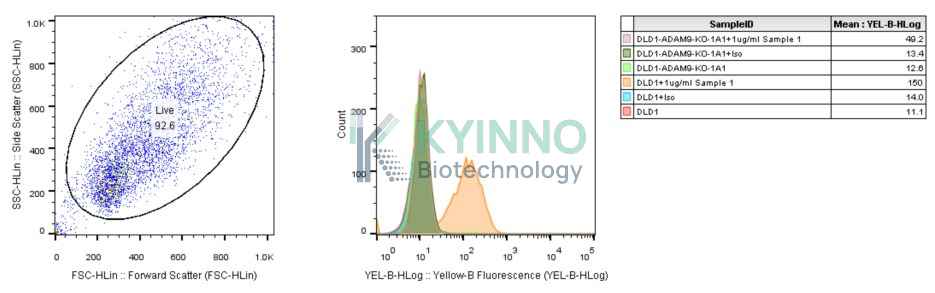
Figure 3: Characterization of DLD1-ADAM9-KO-1A1 cell line stable clone using FCAS.

Cell Resuscitation

  1. Prewarm culture medium (PRMI1640 + 10% FBS)in a 37°C water bath.
  2. Thaw the frozen vial in a 37°C water bath for 1-2 minutes.
  3. Transfer the vial into biosafety cabinet, and wipe the surface with 70% ethanol.
  4. Unscrew the top of the vial and transfer the cell suspension gently into a sterile centrifuge tube containing 9.0mL complete culture medium.
  5. Spin at ~ 125 × g for 5-7 minutes at room temperature, and discard the supernatant without disturbing the pellet.
  6. Resuspend cell pellet with the appropriate volume of complete medium and transfer the cell suspension into a T25 culture flask.
  7. Incubate the flask at 37°C, 5% CO2 incubator.
  8. Split saturated culture 1:3-1:6 every 2-3 days; seed out at about 1-3 × 10⁵ cells/mL.

Cell Freezing

  1. Prepare the freezing medium (70% PRMI1640 + 20% FBS + 10% DMSO) fresh immediately before use.
  2. Keep the freezing medium on ice and label cryovials.
  3. Transfer cells to a sterile, conical centrifuge tube, and count the cells.
  4. Centrifuge the cells at 250×g for 5 minutes at room temperature and carefully aspirate off the medium.
  5. Resuspend the cells at a density of at least 3×10⁶ cells/mL in chilled freezing medium.
  6. Aliquot 1 mL of the cell suspension into each cryovial.
  7. Freeze cells in the CoolCell freezing container overnight in a -80°C freezer.
  8. Transfer vials to liquid nitrogen for long-term storage.

References

  1. Seals, D. F., & Courtneidge, S. A. (2003). ADAMs: multidomain proteases with many functions.Nature Reviews Molecular Cell Biology, 4(12), 932-943. https://doi.org/10.1038/nrm1249
  2. Brew, K., & Nagase, H. (2010). The ADAMs: masters of cell fate.Cell Death & Differentiation, 17(1), 21-37. https://doi.org/10.1038/cdd.2009.122
  3. Chen, H., et al. (2015). ADAM9 promotes cell migration and invasion via the PI3K/Akt signaling pathway in lung adenocarcinoma cells.Oncotarget, 6(12), 9943-9954. https://doi.org/10.18632/oncotarget.3465
Please enable JavaScript in your browser to complete this form.