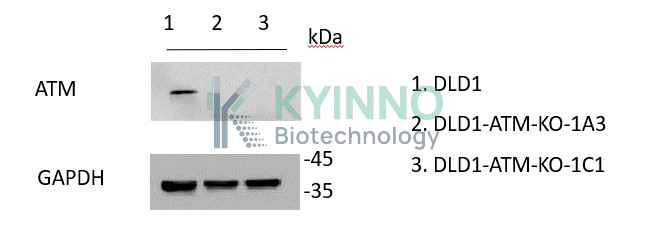
The protein encoded by ATM belongs to the PI3/PI4-kinase family. This protein is an important cell cycle checkpoint kinase that phosphorylates; thus, it functions as a regulator of a wide variety of downstream proteins, including tumor suppressor proteins p53 and BRCA1, checkpoint kinase CHK2, checkpoint proteins RAD17 and RAD9, and DNA repair protein NBS1. This protein is a master regulator of double-strand DNA break (DSB) signalling and stress responses. For three decades, ATM has been investigated extensively to elucidate its roles in the DNA damage response (DDR) and in the pathogenesis of ataxia telangiectasia (A-T), a human neurodegenerative disease caused by loss of ATM. Although hundreds of proteins have been identified as ATM phosphorylation targets and many important roles for this kinase have been identified, it is still unclear how ATM deficiency leads to the early-onset cerebellar degeneration that is common in all individuals with A-T. Recent studies suggest the existence of links between ATM deficiency and other cerebellum-specific neurological disorders, as well as the existence of broader similarities with more common neurodegenerative disorders.