KC-4468

EMT6-EGFR Cell Line

×
Please enable JavaScript in your browser to complete this form.
47773
Home » EMT6-EGFR Cell Line

Background of EMT6-EGFR Cell Line

The EGFR gene, located on the short arm q22 of chromosome 7, is a 110kb long piece of DNA containing 28 exons that encode the production of the protein EGFR. EGFR, a member of the epidermal growth factor receptor (HER) family of receptor tyrosine kinases, is an important transmembrane receptor. In normal cells, each cell expresses about 40,000-100,000 EGFR, while more than 106 overexpression were observed in cancer cells. The EGFR gene encodes a transmembrane protein that contains an extracellular ligand-binding domain, a transmembrane domain, an intracellular cytoplasmic domain with tyrosine kinase activity, and an ATP binding site.

Specifications

Catalog NumberKC-4468
Cell Line NameEMT6-EGFR Cell Line
Host Cell LineEMT6
DescriptionStable EMT6 cell line expressing exogenous EGFR gene
QuantityTwo vials of frozen cells (≥2-106/vial)
StabilityStable in culture over a minimum of 10 passages
ApplicationDrug screening and biological assays
Freezing Medium70% RPMI1640 + 20% FBS + 10% DMSO
Propagation MediumRPMI1640 + 10% FBS + 3μg/ml Puromycin
Selection MarkerPuromycin
MorphologyEpithelial
SubcultureSplit saturated culture 1:2-1:3 every 2-3 days; seed out at about 1-3 × 10⁵ cells/ml
Incubation37 °C with 5% CO2
StorageLiquid nitrogen immediately upon receiving
Doubling TimeApproximately 30 hours
Mycoplasma StatusNegative

Cell Line Generation

EMT6 EGFR Cell Line was generated using a lentiviral vector expressing the EGFR sequence.

Characterization

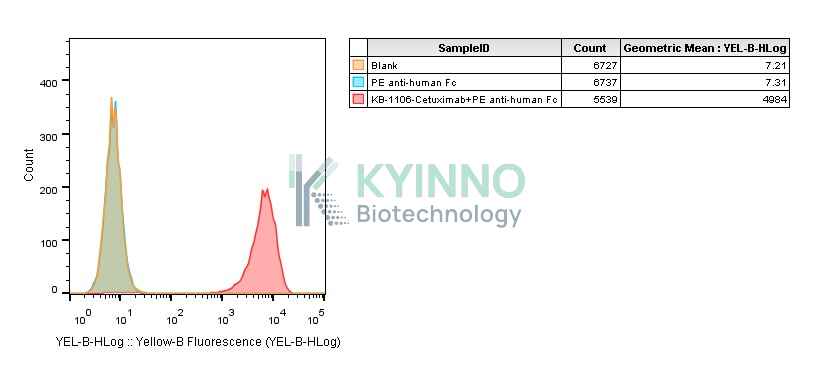
Figure 1: Characterization of EGFR overexpression in the EMT6 EGFR stable clone using FACS.

Figure 2: Characterization of EGFR overexpression in the EMT6 EGFR stable clone using PCR sequence.

Cell Resuscitation

  1. Prewarm culture medium (RPMI1640 supplemented with 10% FBS and 3μg/mL Puromycin)in a 37°C water bath.
  2. Thaw the frozen vial in a 37°C water bath for 1-2 minutes.
  3. Transfer the vial into biosafety cabinet, and wipe the surface with 70% ethanol.
  4. Unscrew the top of the vial and transfer the cell suspension gently into a sterile centrifuge tube containing 9.0mL complete culture medium.
  5. Spin at ~ 125 × g for 5-7 minutes at room temperature, and discard the supernatant without disturbing the pellet.
  6. Resuspend cell pellet with the appropriate volume of complete medium and transfer the cell suspension into a T25 culture flask.
  7. Incubate the flask at 37°C, 5% CO2 incubator.
  8. Split saturated culture 1:2-1:3 every 2-3 days; seed out at about 1-3 × 10⁵ cells/mL.

Cell Freezing

  1. Prepare the freezing medium (70% RPMI1640 + 20% FBS + 10% DMSO) fresh immediately before use.
  2. Keep the freezing medium on ice and label cryovials.
  3. Transfer cells to a sterile, conical centrifuge tube, and count the cells.
  4. Centrifuge the cells at 250×g for 5 minutes at room temperature and carefully aspirate off the medium.
  5. Resuspend the cells at a density of at least 3×10⁶ cells/mL in chilled freezing medium.
  6. Aliquot 1 mL of the cell suspension into each cryovial.
  7. Freeze cells in the CoolCell freezing container overnight in a -80°C freezer.
  8. Transfer vials to liquid nitrogen for long-term storage

References

  1. Voldborg BR, Damstrup L, Spang-Thomsen M, Poulsen HS. Epidermal growth factor
  2. receptor (EGFR) and EGFR mutations, function and possible role in clinical
  3. trials. Ann Oncol. 1997 Dec;8(12):1197-206. doi: 10.1023/a:1008209720526. PMID:

  4. Singh D, Attri BK, Gill RK, Bariwal J. Review on EGFR Inhibitors: Critical Updates. Mini Rev Med Chem. 2016;16(14):1134-66. doi:10.2174/1389557516666160321114917. PMID: 26996617.
  5. Liu X, Wang P, Zhang C, Ma Z. Epidermal growth factor receptor (EGFR): A
  6. rising star in the era of precision medicine of lung cancer. Oncotarget. 2017
  7. Jul 25;8(30):50209-50220. doi: 10.18632/oncotarget.16854. PMID: 28430586; PMCID:
  8. PMC5564844.
Please enable JavaScript in your browser to complete this form.