KC-4344

HCT116-BRCA1-KO 1A1 Cell Line

×
Please enable JavaScript in your browser to complete this form.
47699
Home » HCT116-BRCA1-KO 1A1 Cell Line

Background of HCT116-BRCA1-KO 1A1 Cell Line

The BRCA1 gene, located on human chromosome 17q21, is a tumor suppressor gene that plays a critical role in maintaining genomic stability. BRCA1 encodes a large protein that functions in multiple cellular processes, including DNA repair, transcriptional regulation, and cell cycle control. Specifically, BRCA1 is involved in the homologous recombination repair pathway, which is essential for repairing double-strand breaks in DNA. Mutations in the BRCA1 gene are strongly associated with an increased risk of breast and ovarian cancers. These mutations can disrupt the normal function of the BRCA1 protein, leading to genomic instability and the accumulation of genetic alterations that promote cancer development. Understanding the molecular mechanisms of BRCA1 function and its role in cancer has significant implications for early detection, prevention, and personalized treatment strategies.

Specifications

Catalog NumberKC-4344
Cell Line NameHCT116-BRCA1-KO 1A1 Cell Line
Host Cell LineHCT116
DescriptionStable HCT116 cell line with human BRCA1 gene knockout, No.1A1
QuantityTwo vials of frozen cells (≥2-106/vial)
StabilityStable in culture over a minimum of 10 passages
ApplicationDrug screening and biological assays
Freezing Medium70% McCoy's 5a + 20% FBS + 10% DMSO
Propagation MediumMcCoy's 5a + 10% FBS
Selection MarkerNA
MorphologyFibroblastoid cells growing as a monolayer
SubcultureSplit the saturated culture at a ratio of 1:4~1:5 every 2~3 days; seed out at about 1-3 x 10⁵ cells/ml
Incubation37 °C with 5% CO2
StorageLiquid nitrogen immediately upon receiving
Doubling TimeApproximately 30 hours
Mycoplasma StatusNegative

Cell Line Generation

HCT116-BRCA1-KO 1A1 cell line was generated using the CRISPR method.

Characterization

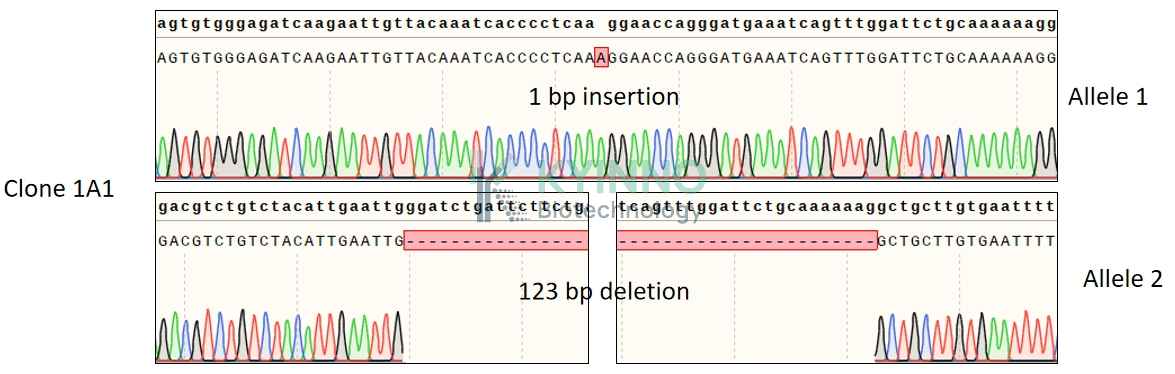
Figure 1: Characterization of HCT116-BRCA1-KO 1A1 Cell Line stable clone using PCR sequencing.

Figure 2: Characterization of HCT116-BRCA1-KO 1A1 Cell Line stable clone using RT-PCR sequencing.

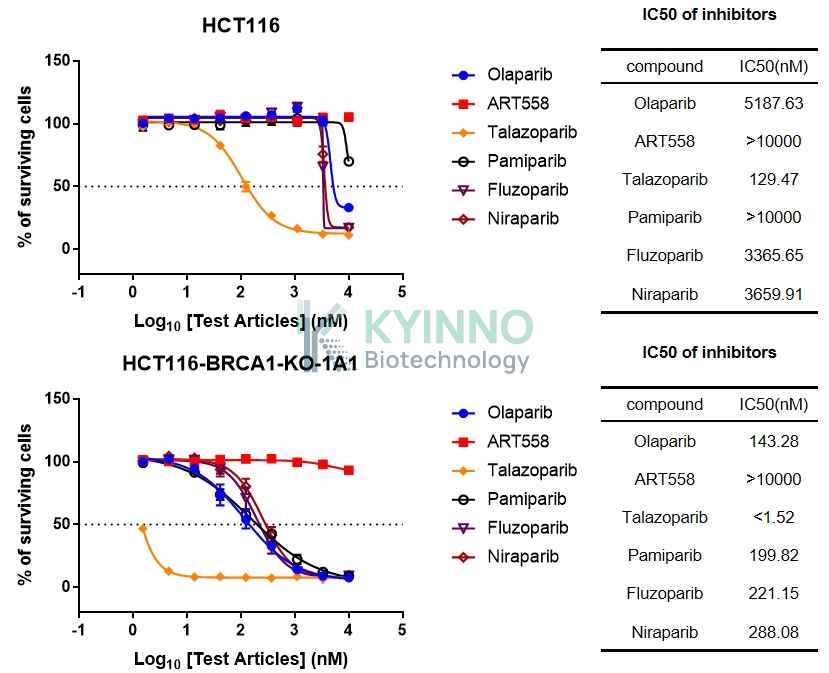
Figure 3: Characterization of Dose-response curves and IC50 values for HCT116 and HCT116-BRCA1-KO-1A1 cells treated with Olaparib,ART558,Talazoparib,Pamiparib,Fluzoparib and Niraparib over 5 days.

Cell Resuscitation

  1. Prewarm culture medium (McCoy's 5a + 10% FBS)in a 37°C water bath.
  2. Thaw the frozen vial in a 37°C water bath for 1-2 minutes.
  3. Transfer the vial into biosafety cabinet, and wipe the surface with 70% ethanol.
  4. Unscrew the top of the vial and transfer the cell suspension gently into a sterile centrifuge tube containing 9.0mL complete culture medium.
  5. Spin at ~ 125 × g for 5-7 minutes at room temperature, and discard the supernatant without disturbing the pellet.
  6. Resuspend cell pellet with the appropriate volume of complete medium and transfer the cell suspension into a T25 culture flask.
  7. Incubate the flask at 37°C, 5% CO2 incubator.
  8. Split the saturated culture at a ratio of 1:4 ~ 1:5 every 2~3 days; seed out at about 1-3 x 10⁵ cells/mL.

Cell Freezing

  1. Prepare the freezing medium (70% McCoy's 5a + 20% FBS + 10% DMSO) fresh immediately before use.
  2. Keep the freezing medium on ice and label cryovials.
  3. Transfer cells to a sterile, conical centrifuge tube, and count the cells.
  4. Centrifuge the cells at 250×g for 5 minutes at room temperature and carefully aspirate off the medium.
  5. Resuspend the cells at a density of at least 3×10⁶ cells/mL in chilled freezing medium.
  6. Aliquot 1 mL of the cell suspension into each cryovial.
  7. Freeze cells in the CoolCell freezing container overnight in a -80°C freezer.
  8. Transfer vials to liquid nitrogen for long-term storage.

References

  1. Miki Y, Swensen J, Shattuck-Eidens D, Futreal PA, Harshman K, Tavtigian S, Liu Q, Cochran C, Bennett LM, Ding W, et al. A strong candidate for the breast and ovarian cancer susceptibility gene BRCA1. Science. 1994 Oct 7;266(5182):66-71. doi: 10.1126/science.7545954. PMID: 7545954.
  2. Futreal PA, Liu Q, Shattuck-Eidens D, Cochran C, Harshman K, Tavtigian S, Bennett LM, Haugen-Strano A, Swensen J, Miki Y, et al. BRCA1 mutations in primary breast and ovarian carcinomas. Science. 1994 Oct 7;266(5182):120-2. doi: 10.1126/science.7939630. PMID: 7939630.
  3. Moynahan ME, Jasin M. Mitotic homologous recombination maintains genomic stability and suppresses tumorigenesis. Nat Rev Mol Cell Biol. 2010 Mar;11(3):196-207. doi: 10.1038/nrm2851. PMID: 20177395; PMCID: PMC3261768.
  4. Narod SA, Foulkes WD. BRCA1 and BRCA2: 1994 and beyond. Nat Rev Cancer. 2004 Sep;4(9):665-76. doi: 10.1038/nrc1431. PMID: 15343273.
Please enable JavaScript in your browser to complete this form.