KC-4198

HCT116-STEAP1-KO-1C1-Cell-Line

×
Please enable JavaScript in your browser to complete this form.
42787
Home » HCT116-STEAP1-KO-1C1-Cell-Line

Background of HCT116-STEAP1-KO-1C1-Cell-Line

The STEAP family contains four members, named STEAP1–4, all of which have in common a six transmembrane domain with the COOH- and N-terminals located in the cytosol. STEAP1 was the first member of the STEAP family to be identified and has been widely studied as a gene related to cancer progression. STEAP1 was previously predicted not to promote iron and cooper reduction or uptake mainly due to the lack of the N-terminal NADPH-binding F420H2: NADP+ oxidoreductase domain unlike other STEAP members. However, a recent study revealed that STEAP1 exhibits cellular ferric reductase activity by fusing to the intracellular NADPH-binding domain of STEAP4. These findings can ultimately contribute to the development of STEAP1 targeted therapy. In contrast, the pathological functions of STEAP1 in cancer still need further investigation.

Specifications

Catalog NumberKC-4198
Cell Line NameHCT116-STEAP1-KO-1C1-Cell-Line
Host Cell LineHCT116
DescriptionStable HCT116 cell line with human STEAP1 gene knockout, No.1C1
QuantityTwo vials of frozen cells (≥2-106/vial)
StabilityStable in culture over a minimum of 10 passages
ApplicationDrug screening and biological assays
Freezing Medium70% McCoy's 5a + 20% FBS + 10% DMSO
Propagation MediumMcCoy's 5a + 10% FBS
Selection MarkerN/A
MorphologyFibroblastoid cells growing as a monolayer
SubcultureSplit the saturated culture at a ratio of 1:4~1:5 every 2~3 days; seed out at about 1-3 x 10⁵ cells/ml
Incubation37 °C with 5% CO2
StorageLiquid nitrogen immediately upon receiving
Doubling TimeApproximately 30 hours
Mycoplasma StatusNegative
In Vivo ValidationNA

Cell Line Generation

Characterization

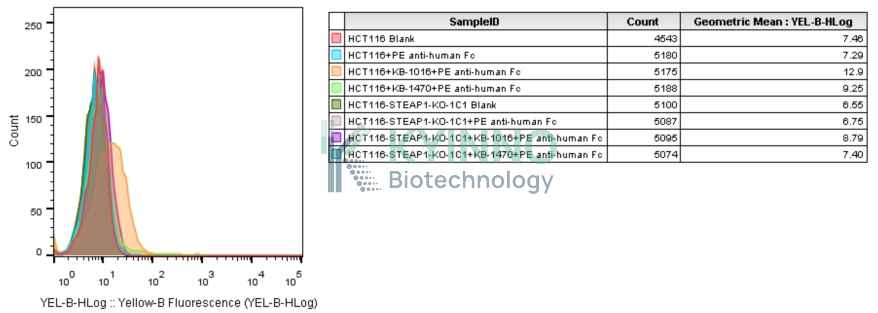
Figure 1: Characterization of HCT116-STEAP1-KO 1C1 Cell Line stable clone using FACS.

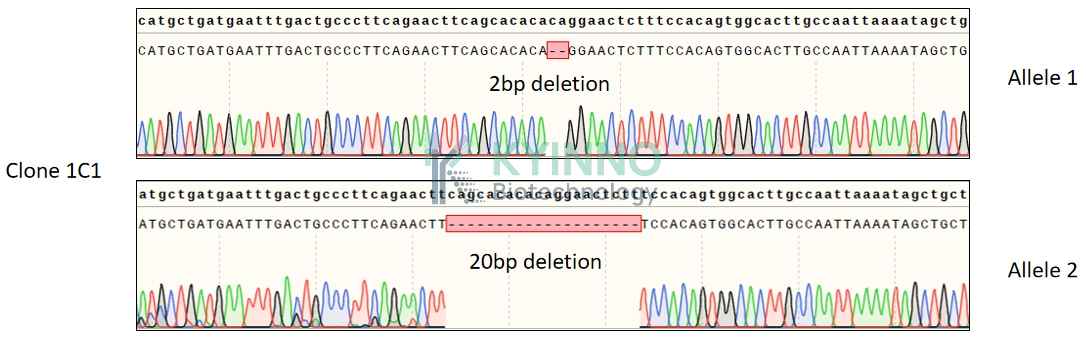
Figure 2: Characterization of HCT116-STEAP1-KO 1C1 Cell Line stable clone using PCR sequencing.

Cell Resuscitation

  1. Prewarm culture medium (McCoy's 5a + 10% FBS)in a 37°C water bath.
  2. Thaw the frozen vial in a 37°C water bath for 1-2 minutes.
  3. Transfer the vial into biosafety cabinet, and wipe the surface with 70% ethanol.
  4. Unscrew the top of the vial and transfer the cell suspension gently into a sterile centrifuge tube containing 9.0mL complete culture medium.
  5. Spin at ~ 125 × g for 5-7 minutes at room temperature, and discard the supernatant without disturbing the pellet.
  6. Resuspend cell pellet with the appropriate volume of complete medium and transfer the cell suspension into a T25 culture flask.
  7. Incubate the flask at 37°C, 5% CO2 incubator.
  8. Split the saturated culture at a ratio of 1:4 ~ 1:5 every 2~3 days; seed out at about 1-3 x 10⁵ cells/mL.

Cell Freezing

  1. Prepare the freezing medium (70% McCoy's 5a + 20% FBS + 10% DMSO) fresh immediately before use.
  2. Keep the freezing medium on ice and label cryovials.
  3. Transfer cells to a sterile, conical centrifuge tube, and count the cells.
  4. Centrifuge the cells at 250×g for 5 minutes at room temperature and carefully aspirate off the medium.
  5. Resuspend the cells at a density of at least 3×10⁶ cells/mL in chilled freezing medium.
  6. Aliquot 1 mL of the cell suspension into each cryovial.
  7. Freeze cells in the CoolCell freezing container overnight in a -80°C freezer.
  8. Transfer vials to liquid nitrogen for long-term storage.

References

  1. Nakamura H, Arihara Y, Takada K. Targeting STEAP1 as an anticancer strategy. Front Oncol. 2023 Oct 16;13:1285661. doi: 10.3389/fonc.2023.1285661. PMID: 37909017; PMCID: PMC10613890.
Please enable JavaScript in your browser to complete this form.