
KC-6223

HEK293-cAMP-biosensor-TSHR-Mc4-Cell-Line

×
请在浏览器中启用JavaScript来完成此表单。
61181
Home » HEK293-cAMP-biosensor-TSHR-Mc4-Cell-Line

Background of HEK293-cAMP-biosensor-TSHR-Mc4-Cell-Line

Cyclic adenosine monophosphate (cAMP) is a second messenger that mediates numerous biological responses. Intracellular cAMP levels are increased by activation of G(s)-coupled G protein-coupled receptors (GPCRs) and decreased by activation of G(i)-coupled GPCRs via the adenylyl cyclase. Studies on the cAMP dynamics provided useful scientific insights for drug development and treatment of cAMP-related diseases such as some cancers and prefrontal cortex disorders. The protein encoded by TSHR is a membrane protein and a major controller of thyroid cell metabolism. The encoded protein is a receptor for thyrothropin and thyrostimulin, and its activity is mediated by adenylate cyclase. The phenotype spectrum is wide: from severe congenital hypothyroidism to mild hyperthyrotropinemia. Over 250 TSHR variants have been published, many uncharacterized in vitro. TSHR is sulfated on tyrosines in a motif located downstream of the C-terminal cysteine cluster. Sulfation of one of the two tyrosines in the motif is mandatory for high-affinity binding of TSH and activation of the receptor. Site-directed mutagenesis experiments indicate that the motif, which is conserved in all members of the glycoprotein hormone receptor family, seems to play a similar role in the LH/CG and FSH receptors.

Specifications

Catalog NumberKC-6223
Cell Line NameHEK293-cAMP-biosensor-TSHR-Mc4-Cell-Line
Clone Number2A1
Host Cell LineHEK293-cAMP-biosensor
DescriptionStable HEK293-cAMP-biosensor cell line expressing exogenous luciferase gene under the control of TSHR signaling pathway.
QuantityOne vial of frozen cells (≥2-106/vial)
StabilityStable in culture over a minimum of 10 passages
ApplicationDrug screening and biological assays
Freezing Medium70% DMEM+20% FBS+10% DMSO
Propagation MediumDMEM+10% FBS+150µg/mL Hygromycin B+1µg/mL Puromycin
Selection MarkerPuromycin | Hygromycin B
MorphologyEpithelial
SubcultureSplit saturated culture 1:4-1:5 every 2-3 days; seed out at about 1-3 × 10⁵ cells/mL
Incubation37 °C with 5% CO2
StorageLiquid nitrogen immediately upon receiving
Doubling TimeApproximately 30 hours
Mycoplasma StatusNegative

Cell Line Generation

HEK293-cAMP-biosensor-TSHR-Mc4 Cell Line was generated using a lentiviral vector expressing TSHR sequence.

Characterization

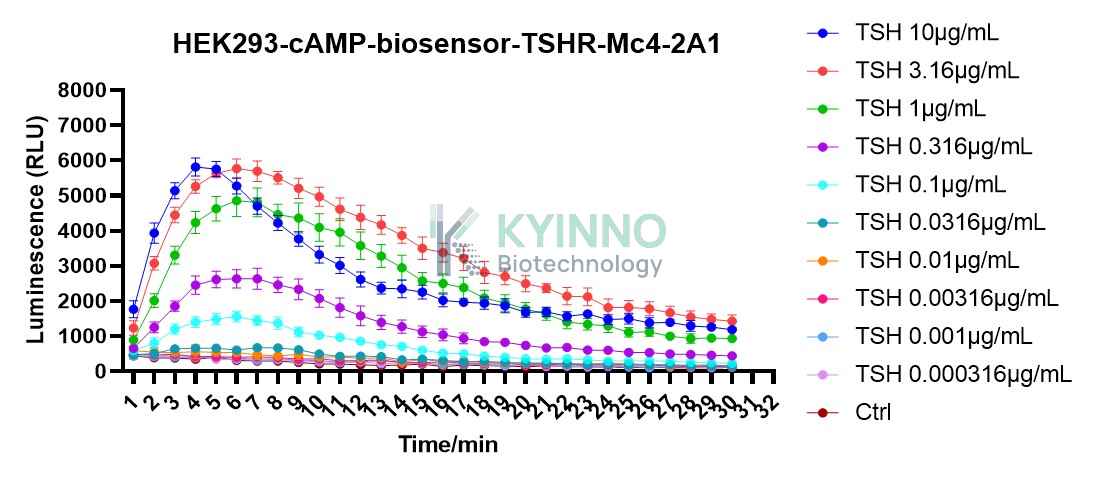
Figure 1. HEK293-cAMP-biosensor-TSHR-Mc4 cells were seeded in 96-well plates and treated with TSH (10 µg/mL max; 3.16-fold dilutions). After adding GloSensor cAMP Reagent, cAMP signals were continuously recorded for 30 min.
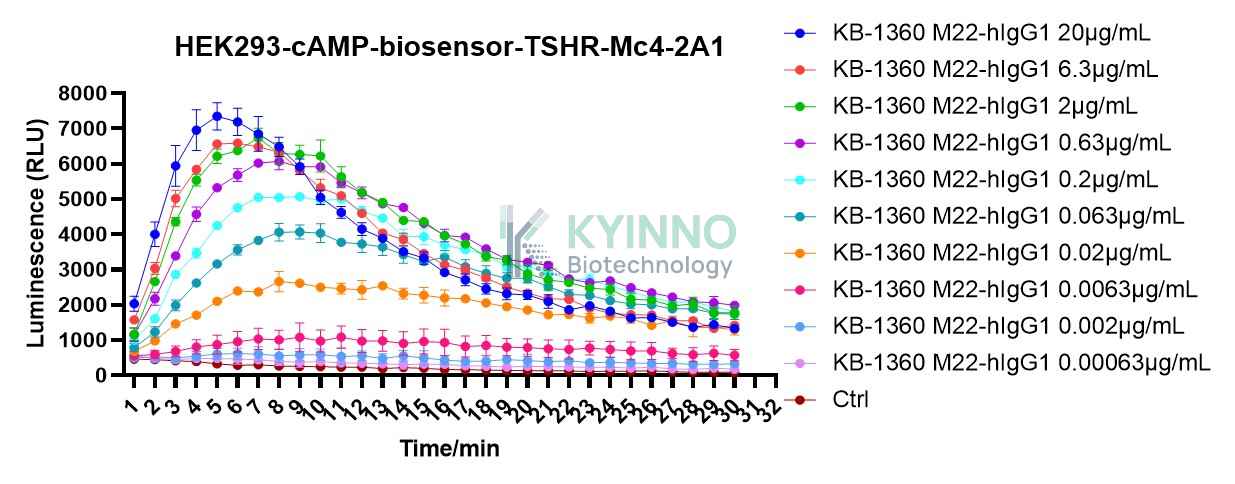
Figure 2. HEK293-cAMP-biosensor-TSHR-Mc4 cells were seeded in 96-well plates and treated with M22-hIgG1 (20 µg/mL max; 3.16-fold dilutions). After adding GloSensor cAMP Reagent, cAMP signals were continuously recorded for 30 min.
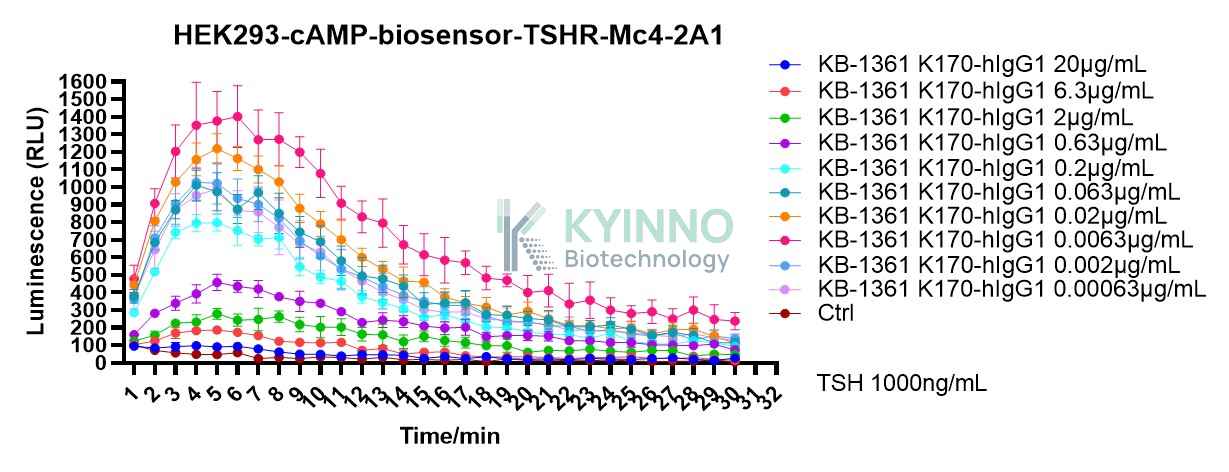
Figure 3. HEK293-cAMP-biosensor-TSHR-Mc4 cells were seeded in 96-well plates, preincubated with K170-hIgG1 (20 µg/mL max; 3.16-fold dilutions) for 1 h, then stimulated with TSH (1000 ng/mL). After adding GloSensor cAMP Reagent, cAMP signals were continuously recorded for 30 min.
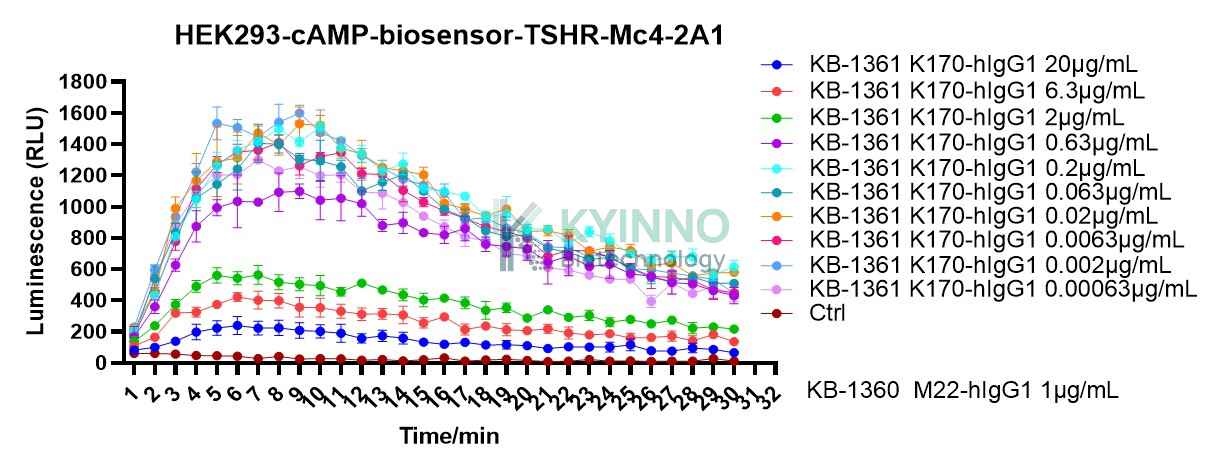
Figure 4. HEK293-cAMP-biosensor-TSHR-Mc4 cells were seeded in 96-well plates, preincubated with K170-hIgG1 (20 µg/mL max; 3.16-fold dilutions) for 1 h, then stimulated with M22-hIgG1 (1 µg/mL). After adding GloSensor cAMP Reagent, cAMP signals were continuously recorded for 30 min.
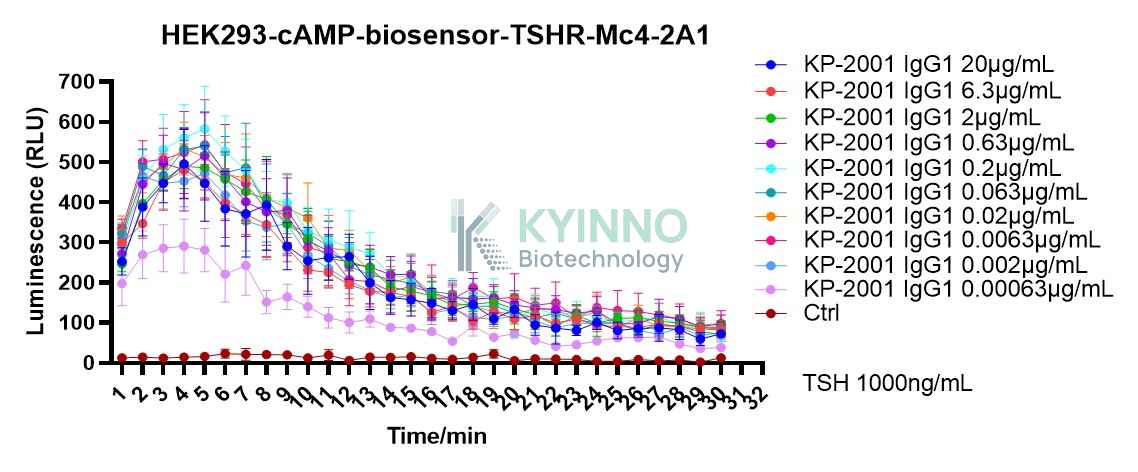
Figure 5. HEK293-cAMP-biosensor-TSHR-Mc4 cells were seeded in 96-well plates, preincubated with IgG1 (20 µg/mL max; 3.16-fold dilutions) for 1 h, then stimulated with TSH (1000 ng/mL). After adding GloSensor cAMP Reagent, cAMP signals were continuously recorded for 30 min.
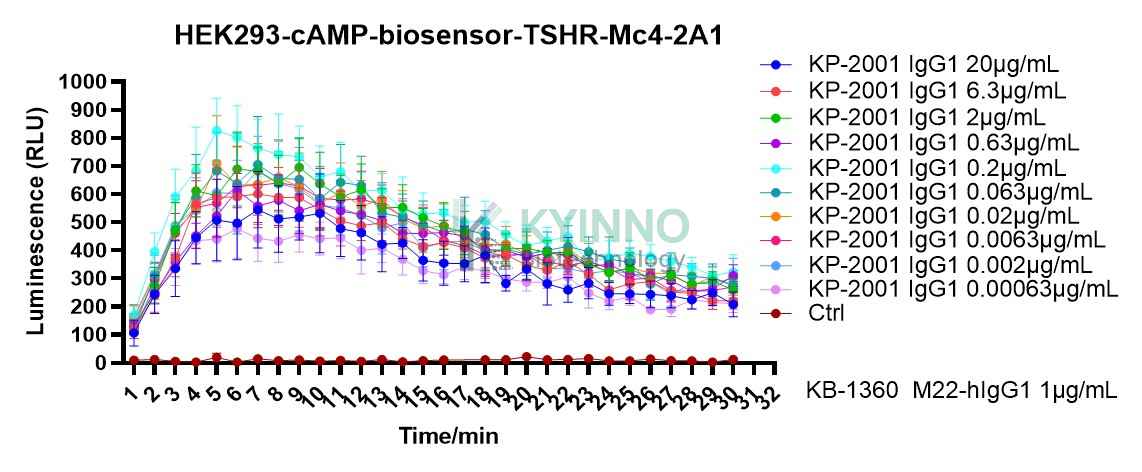
Figure 6. HEK293-cAMP-biosensor-TSHR-Mc4 cells were seeded in 96-well plates, preincubated with IgG1 (20 µg/mL max; 3.16-fold dilutions) for 1 h, then stimulated with M22-hIgG1 (1 µg/mL). After adding GloSensor cAMP Reagent, cAMP signals were continuously recorded for 30 min.

Cell Resuscitation

1. Prewarm culture medium (DMEM supplemented with 10% FBS, 150µg/mL Hygromycin B and 1µg/mL Puromycin)in a 37°C water bath.
2. Thaw the frozen vial in a 37°C water bath for 1-2 minutes.
3. Transfer the vial into biosafety cabinet, and wipe the surface with 70% ethanol.
4. Unscrew the top of the vial and transfer the cell suspension gently into a sterile centrifuge tube containing 9.0mL complete culture medium.
5. Spin at ~ 125 × g for 5-7 minutes at room temperature, and discard the supernatant without disturbing the pellet.
6. Resuspend cell pellet with the appropriate volume of complete medium and transfer the cell suspension into a T25 culture flask.
7. Incubate the flask at 37°C, 5% CO2 incubator.
8. Split saturated culture 1:4-1:5 every 2-3 days; seed out at about 1-3 × 10⁵ cells/mL.

Cell Freezing

1. Prepare the freezing medium (70% DMEM + 20% FBS + 10% DMSO) fresh immediately before use.
2. Keep the freezing medium on ice and label cryovials.
3. Transfer cells to a sterile, conical centrifuge tube, and count the cells.
4. Centrifuge the cells at 250×g for 5 minutes at room temperature and carefully aspirate off the medium.
5. Resuspend the cells at a density of at least 3×10⁶ cells/mL in chilled freezing medium.
6. Aliquot 1 mL of the cell suspension into each cryovial.
7. Freeze cells in the CoolCell freezing container overnight in a -80°C freezer.
8. Transfer vials to liquid nitrogen for long-term storage.

References

1.Jesper Mosolff Mathiesen , Line Vedel, Hans Br?uner-Osborne. cAMP biosensors applied in molecular pharmacological studies of G protein-coupled receptors. Methods Enzymol. 2013;522:191-207.
2. Namdoo Kim, Seunghan Shin, and Se Won Bae. cAMP Biosensors Based on Genetically Encoded Fluorescent/Luminescent Proteins. Cardiovascular Toxicology. Biosensors (Basel). 2021 Feb; 11(2): 39.
3. Yeste D, Baz-Redón N, Antolín M, Garcia-Arumí E, Mogas E, Campos-Martorell A, González-Llorens N, Aguilar-Riera C, Soler-Colomer L, Clemente M, Fernández-Cancio M, Camats-Tarruella N. Genetic and Functional Studies of Patients with Thyroid Dyshormonogenesis and Defects in the TSH Receptor (TSHR). Int J Mol Sci. 2024 Sep 18;25(18):10032. doi: 10.3390/ijms251810032. PMID: 39337518; PMCID: PMC11432690.
4. Costagliola S, Panneels V, Bonomi M, Koch J, Many MC, Smits G, Vassart G. Tyrosine sulfation is required for agonist recognition by glycoprotein hormone receptors. EMBO J. 2002 Feb 15;21(4):504-13. doi: 10.1093/emboj/21.4.504. PMID: 11847099; PMCID: PMC125869.

Use License Agreement

Research Use Only.
Not for use in diagnostic procedures or therapeutic applications.
Redistribution of the cell line or its derivatives is prohibited without prior written permission from Kyinno Biotechnology.
请在浏览器中启用JavaScript来完成此表单。