KC-2373

293T-GUCY2C-Cell-Line

×
Please enable JavaScript in your browser to complete this form.
23928
Home » 细胞系 » 293T-GUCY2C-Cell-Line

Background of 293T-GUCY2C-Cell-Line

GUCY2C, also known as GC-C, is a type I transmembrane protein of the guanylate cyclase (GC) family that signal by producing cGMP. Which is a key receptor for heat-stable enterotoxins that are responsible for acute secretory diarrhea. GUCY2C and its hormones guanylin and progranulin have emerged as one paracrine axis defending intestinal mucosal integrity against mutational, chemical, and inflammatory injury. GUCY2C murine CAR-T cells recognized and killed human colorectal cancer cells endogenously expressing GUCY2C. As an important member of the intestinal signaling system, GUCY2C has shown anti-tumor activity in colorectal cancer (CRC) with controllable toxicity. GUCY2C CAR-T or vaccine prevents colorectal cancer metastasis.

Specifications

Catalog NumberKC-2373
Cell Line Name293T-GUCY2C-Cell-Line
Host Cell Line293T
DescriptionStable 293T cell line expressing exogenous human GUCY2C gene
QuantityTwo vials of frozen cells (≥2-106/vial)
StabilityStable in culture over a minimum of 10 passages
ApplicationDrug screening and biological assays
Freezing Medium70% DMEM + 20% FBS + 10% DMSO
Propagation MediumDMEM + 10% FBS + 1μg/mL Puromycin
Selection MarkerPuromycin
MorphologyEpithelial
SubcultureSplit saturated culture 1:4-1:8 every 2-3 days; seed out at about 1-3 × 10⁵ cells/mL
Incubation37 °C with 5% CO2
StorageLiquid nitrogen immediately upon receiving
Doubling TimeApproximately 30 hours
Mycoplasma StatusNegative
In Vivo ValidationNA

Cell Line Generation

293T human GUCY2C cell line was generated using a lentiviral vector expressing the human GUCY2C sequence.

Characterization

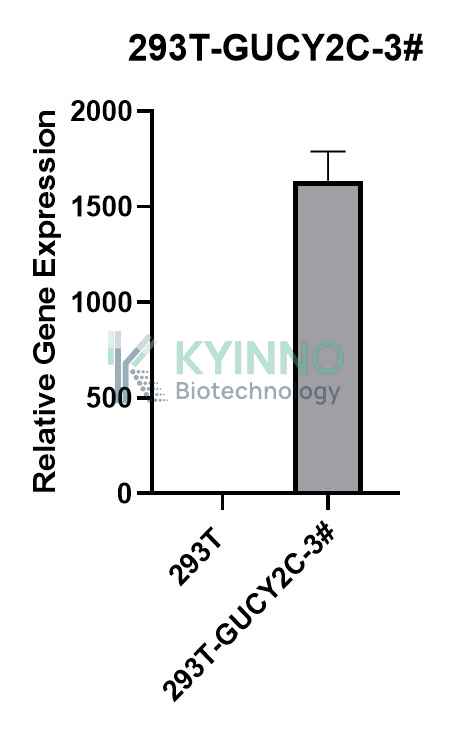
Figure 1: Characterization of GUCY2C overexpression in the 293T GUCY2C stable clone using QPCR.

Figure 2: Characterization of GUCY2C in the 293T GUCY2C stable clone using PCR sequencing.

Cell Resuscitation

  1. Prewarm culture medium (DMEM supplemented with 10% FBS and 1μg/mL puromycin)in a 37°C water bath.
  2. Thaw the frozen vial in a 37°C water bath for 1-2 minutes.
  3. Transfer the vial into biosafety cabinet, and wipe the surface with 70% ethanol.
  4. Unscrew the top of the vial and transfer the cell suspension gently into a sterile centrifuge tube containing 9.0mL complete culture medium.
  5. Spin at ~ 125 × g for 5-7 minutes at room temperature, and discard the supernatant without disturbing the pellet.
  6. Resuspend cell pellet with the appropriate volume of complete medium and transfer the cell suspension into a T25 culture flask.
  7. Incubate the flask at 37°C, 5% CO2 incubator.
  8. Split saturated culture 1:4-1:8 every 2-3 days; seed out at about 1-3 × 10⁵ cells/mL.

Cell Freezing

  1. Prepare the freezing medium (70% DMEM + 20% FBS + 10% DMSO) fresh immediately before use.
  2. Keep the freezing medium on ice and label cryovials.
  3. Transfer cells to a sterile, conical centrifuge tube, and count the cells.
  4. Centrifuge the cells at 250×g for 5 minutes at room temperature and carefully aspirate off the medium.
  5. Resuspend the cells at a density of at least 3×10⁶ cells/mL in chilled freezing medium.
  6. Aliquot 1 mL of the cell suspension into each cryovial.
  7. Freeze cells in the CoolCell freezing container overnight in a -80°C freezer.
  8. Transfer vials to liquid nitrogen for long-term storage

References

  1. Rampuria, P., Mosyak, L., Root, A.R. et al. Molecular insights into recognition of GUCY2C by T-cell engaging bispecific antibody anti-GUCY2CxCD3. Sci Rep 13, 13408 (2023). https://doi.org/10.1038/s41598-023-40467-0
  2. Snook AE, Magee MS, Waldman SA. GUCY2C-targeted cancer immunotherapy: past, present and future. Immunol Res. 2011 Dec;51(2-3):161-9. doi: 10.1007/s12026-011-8253-7. PMID: 22038530; PMCID: PMC6892460.
  3. A β-Catenin-TCF-Sensitive Locus Control Region Mediates GUCY2C Ligand Loss in Colorectal Cancer.Rappaport, Entezari, Caspi et al.Cell Mol Gastroenterol Hepatol (2021)
Please enable JavaScript in your browser to complete this form.