KC-2635-DW

HT1080-FAP Cell Line

×
Please enable JavaScript in your browser to complete this form.
55970
Home » HT1080-FAP Cell Line

Background of HT1080-FAP Cell Line

FAP, also known as FAPalpha, is a type II transmembrane glycoprotein that belongs to the serine protease family, which is selectively expressed in reactive stromal fibroblasts of epithelial cancers, granulation tissue of healing wounds, and malignant cells of bone and soft tissue sarcomas. FAP is thought to be involved in the control of fibroblast growth or epithelial-mesenchymal interactions during development, tissue repair, and epithelial carcinogenesis. Acts as a tumor suppressor in melanocytic cells through regulation of cell proliferation and survival in a serine protease activity-independent manner.

Specifications

Catalog NumberKC-2635-DW
Cell Line NameHT1080-FAP Cell Line
Clone Number1#
Host Cell LineHT-1080
DescriptionStable HT-1080 cell line expressing exogenous human FAP gene
QuantityTwo vials of frozen cells (≥2-106/vial)
StabilityStable in culture over a minimum of 10 passages
ApplicationDrug screening and biological assays
Freezing Medium70% RPMI1640 + 20% FBS + 10% DMSO
Propagation MediumRPMI1640 + 10% FBS + 1μg/mL Puromycin
Selection MarkerPuromycin
MorphologyEpithelial
SubcultureSplit saturated culture 1:4-1:5 every 2-3 days; seed out at about 1-3 × 10⁵ cells/mL
Incubation37 °C with 5% CO2
StorageLiquid nitrogen immediately upon receiving
Doubling TimeApproximately 30 hours
Mycoplasma StatusNegative

Cell Line Generation

HT-108 human FAP cell line was generated using a lentiviral vector expressing the human FAP sequence.

Characterization

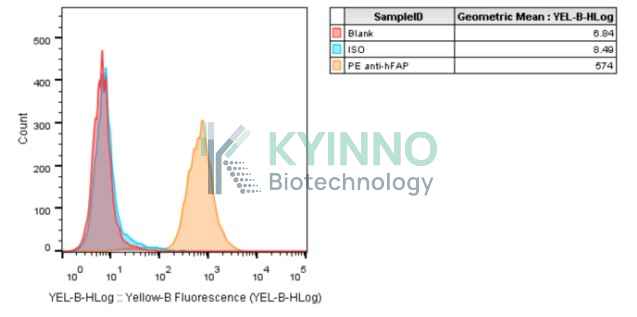
Figure 1: Characterization of human Fap overexpression HT1080 stable clone using FACS.

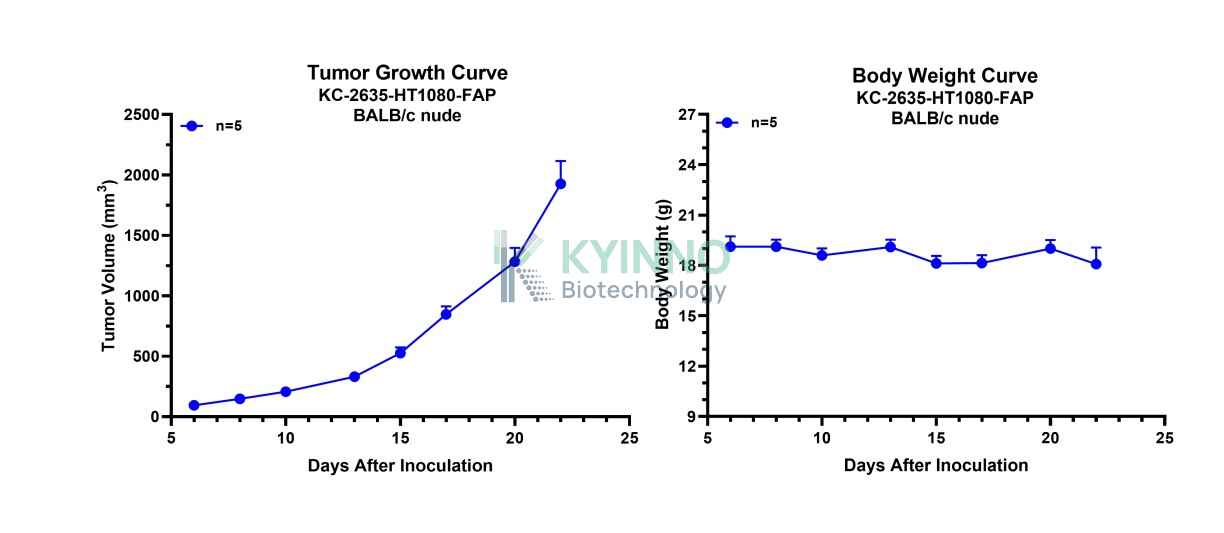
Figure 2: Characterization of human Fap overexpression HT1080 stable clone in vivo validation

Cell Resuscitation

Cell Freezing

1. Prepare the freezing medium (70% RPMI1640 + 20% FBS + 10% DMSO) fresh immediately before use.
2. Keep the freezing medium on ice and label cryovials.
3. Transfer cells to a sterile, conical centrifuge tube, and count the cells.
4. Centrifuge the cells at 250×g for 5 minutes at room temperature and carefully aspirate off the medium.
5. Resuspend the cells at a density of at least 3×10⁶ cells/mL in chilled freezing medium.
6. Aliquot 1 mL of the cell suspension into each cryovial.
7. Freeze cells in the CoolCell freezing container overnight in a -80°C freezer.
8. Transfer vials to liquid nitrogen for long-term storage.

References

1. Puré E, Blomberg R (August 2018). Pro-tumorigenic roles of fibroblast activation protein in cancer: back to the basics. Oncogene. 37 (32): 4343–4357. doi:10.1038/s41388-018-0275-3. PMC 6092565. PMID 29720723.
2. Xin L, Gao J, Zheng Z, Chen Y, Lv S, Zhao Z, Yu C, Yang X, Zhang R. Fibroblast Activation Protein-α as a Target in the Bench-to-Bedside Diagnosis and Treatment of Tumors: A Narrative Review. Front Oncol. 2021 Aug 19;11:648187. doi: 10.3389/fonc.2021.648187. PMID: 34490078; PMCID: PMC8416977.
3. Busek P, Mateu R, Zubal M, Kotackova L, Sedo A (June 2018). Targeting fibroblast activation protein in cancer - Prospects and caveats. Frontiers in Bioscience. 23: 1933–1968. doi:10.2741/4682. PMID 29772538.
4. Niedermeyer J, Garin-Chesa P, Kriz M, Hilberg F, Mueller E, Bamberger U, Rettig WJ, Schnapp A (April 2001). Expression of the fibroblast activation protein during mouse embryo development. The International Journal of Developmental Biology. 45 (2): 445–7. PMID 11330865.

Please enable JavaScript in your browser to complete this form.