KC-4199

Jurkat-HPK1-KO-1B3-Cell-Line

×
Please enable JavaScript in your browser to complete this form.
46067
Home » Jurkat-HPK1-KO-1B3-Cell-Line

Background of Jurkat-HPK1-KO-1B3-Cell-Line

Hematopoietic progenitor kinase 1 (HPK1), also described as mitogen-activated protein kinase kinase kinase kinase 1 (MAP4K1), is a member of MAP4Ks family, and belongs to mammalian STE20-like protein serine/threonine kinases, which is originally cloned from hematopoietic progenitor cells. Apart from HPK1, the MAP4Ks family also includes Germinal Center Kinase (GCK/MAP4K2), GCK-like kinase (GLK/MAP4K3), HPK1/GCK-like kinase (HGK/MAP4K4), Kinase homologous to SPS1/STE20 (KHS/MAP4K5), Misshapen/NCK-related kinase (MINK/MAP4K6) . MAP4Ks family plays an important role in the regulation of cellular signaling, cell activation, cell survival, cell apoptosis, and migration. Interestingly enough, MAP4Ks family has a wide homology in protein structure, and HPK1 displays 66% and 67% amino acid identities with GLK and HGK, respectively, but they play different roles in immune cell signal transduction and inflammatory responses. HPK1 and HGK play negative roles in T cells activation and T cell-mediated immune responses, while GLK plays a positive role in activating T cells and autoimmune responses. Extensive studies revealed that HPK1, as a negative regulator of T cells, B cells, and dendritic cells-mediated immune responses, cooperates with several signaling adaptor proteins to transmit signals to downstream cellular events, which in turn regulate stress responses, signal transduction, cell proliferation and apoptosis. Both the HPK1 gene knockout (HPK1 KO) mice and the genetically engineered mice with HPK1 catalytic inactivation site mutations had enhanced antitumor immune response and increased production of cytokines and antigen-specific antibodies, particularly when these mice were treated with anti-PD-L1 monoclonal antibody. Moreover, northern blot analysis and western blot analysis of distribution of HPK1 in human tissues and cell lines confirmed that HPK1 is mainly expressed in hematopoietic cell lines including T cells, B cells and dendritic cells (DC) . These findings suggest that HPK1 has a promising value as an antitumor immunotherapy target.

Specifications

Catalog NumberKC-4199
Cell Line NameJurkat-HPK1-KO-1B3-Cell-Line
Host Cell LineJurkat
DescriptionStable Jurkat clone with human HPK1 gene knockout, No.1B3
QuantityTwo vials of frozen cells (≥2-106/vial)
StabilityStable in culture over a minimum of 10 passages
ApplicationDrug screening and biological assays
Freezing MediumRPMI1640+20% FBS+10% DMSO
Propagation MediumRPMI1640+10% FBS
Selection MarkerN/A
MorphologyLymphoblast
SubcultureSplit saturated culture 1:4-1:6 every 2-3 days; seed out at about 1-3 × 10⁵ cells/mL
Incubation37 °C with 5% CO2
StorageLiquid nitrogen immediately upon receiving
Doubling TimeApproximately 26 hours
Mycoplasma StatusNegative
In Vivo ValidationNA

Cell Line Generation

Jurkat-HPK1-KO-1B3 cell line was generated using the CRISPR method.

Characterization

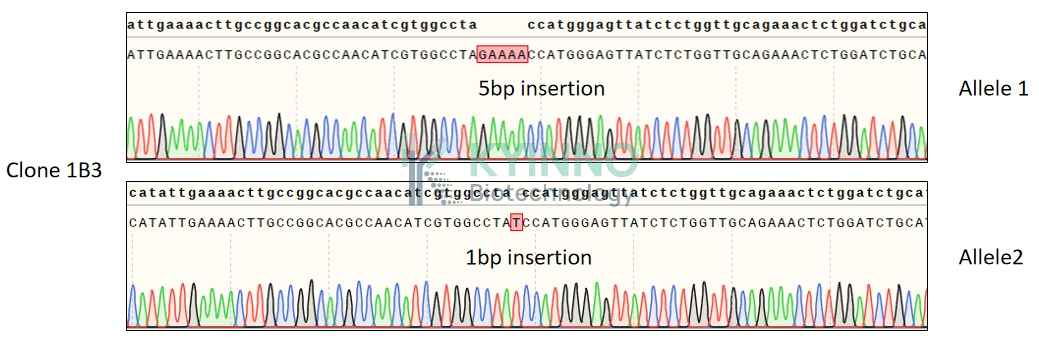
Figure 1: Characterization of Jurkat-HPK1-KO 1B3 cell line stable clone using PCR sequencing.

Figure 2: Characterization of Jurkat-HPK1-KO 1B3 cell line stable clone using RT-PCR sequencing.

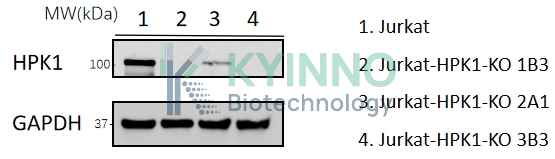
Figure 3: Characterization of Jurkat-HPK1-KO 1B3 cell line stable clone using western blot.

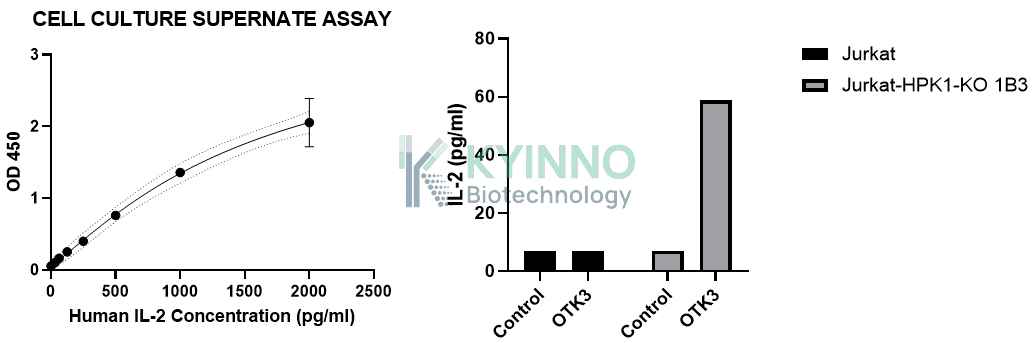
Figure 4: Characterization of Jurkat-HPK1-KO 1B3 cell line stable clone using ELISA assay.

Cell Resuscitation

  1. Prewarm culture medium (RPMI1640 + 10% FBS)in a 37°C water bath.
  2. Thaw the frozen vial in a 37°C water bath for 1-2 minutes.
  3. Transfer the vial into biosafety cabinet, and wipe the surface with 70% ethanol.
  4. Unscrew the top of the vial and transfer the cell suspension gently into a sterile centrifuge tube containing 9.0mL complete culture medium.
  5. Spin at ~ 125 × g for 5-7 minutes at room temperature, and discard the supernatant without disturbing the pellet.
  6. Resuspend cell pellet with the appropriate volume of complete medium and transfer the cell suspension into a T25 culture flask.
  7. Incubate the flask at 37°C, 5% CO2 incubator.
  8. Split saturated culture 1:4-1:6 every 2-3 days; seed out at about 1-3 × 10⁵ cells/mL.

Cell Freezing

  1. Prepare the freezing medium (70% RPMI-1640 + 20% FBS + 10% DMSO) fresh immediately before use.
  2. Keep the freezing medium on ice and label cryovials.
  3. Transfer cells to a sterile, conical centrifuge tube, and count the cells.
  4. Centrifuge the cells at 250×g for 5 minutes at room temperature and carefully aspirate off the medium.
  5. Resuspend the cells at a density of at least 3×10⁶ cells/mL in chilled freezing medium.
  6. Aliquot 1 mL of the cell suspension into each cryovial.
  7. Freeze cells in the CoolCell freezing container overnight in a -80°C freezer.
  8. Transfer vials to liquid nitrogen for long-term storage.

References

  1. Zhou L, Wang T, Zhang K, Zhang X, Jiang S. The development of small-molecule inhibitors targeting HPK1. Eur J Med Chem. 2022 Dec 15;244:114819. doi: 10.1016/j.ejmech.2022.114819. Epub 2022 Oct 4. PMID: 36209628.
Please enable JavaScript in your browser to complete this form.