KC-2842

Jurkat-IL2P-Luc2 Cell Line

Stable NIH3T3 cell line expressing exogenous FGFR3 gene bearing S249C and V555M mutations.

×
Please enable JavaScript in your browser to complete this form.
33964
Home » 细胞系 » Jurkat-IL2P-Luc2 Cell Line

Background of Jurkat-IL2P-Luc2 Cell Line

IL-2 was discovered through its function as a T cell growth factor and played a pivotal role in immune responses against pathogenic infection. Recognition and binding of the foreign antigens by the TCRs stimulate both the secretion of IL-2 and the expression of IL-2R on the T cell surface. Subsequently, the IL-2/IL-2R interaction activates the intracellular Ras/Raf/MAPK, JAK/STAT, and PI3K/AKT signal pathways, ultimately stimulating T cells' growth,differentiation, and survival. IL-2 acts on additional cell types, such as B cells, NK cells, monocytes and macrophages. It is primarily produced by activated CD4+ T cells but has also been reportedly made by CD8+ T cells, NK cells, dendritic cells, and macrophages. Interleukin-2 (IL-2) is one of the critical cytokines that has pleiotropic effects on the immune system. It has been approved for treating metastatic renal cell carcinoma and metastatic melanoma. While improved IL-2 formulations can be used as monotherapy, their combination with other anti-cancer immunotherapies such as adoptive cell transfer protocols, antigen-specific vaccination, and blocking immune checkpoint inhibitory molecules such as cytotoxic T lymphocyte associated antigen 4 (CTLA-4) and programmed death 1 (PD-1) monoclonal antibody will hold promise for the treatment of metastatic cancer. Although comprehensive studies of IL-2 on the immune system have established the use of IL-2 in cancer immunotherapy, there are still some sharp hurdles for future research.

Specifications

Catalog NumberKC-2842
Cell Line NameJurkat-IL2P-Luc2 Cell Line
Host Cell LineJurkat
DescriptionStable Jurkat cell line expressing exogenous luciferase gene under the control of IL2 promotor.
QuantityTwo vials of frozen cells (≥2-106/vial)
StabilityStable in culture over a minimum of 10 passages
ApplicationCell model for monitoring IL2 signaling pathway.
Freezing Medium70% RPMI1640+20% FBS+10% DMSO
Propagation MediumRPMI1640+10%FBS +300ug/ml Hygromycin B
Selection MarkerHygromycin B
Morphologylymphoblast
SubcultureSplit saturated culture 1:4-1:5 every 2-3 days; seed out at about 1-3 × 10⁵ cells/mL
Incubation37 °C with 5% CO2
StorageLiquid nitrogen immediately upon receiving
Doubling TimeApproximately 48 hours
Mycoplasma StatusNegative
In Vivo ValidationNA

Cell Line Generation

The Jurkat-IL2P-Luc2 cell line was generated using lentivirus methods.

Characterization

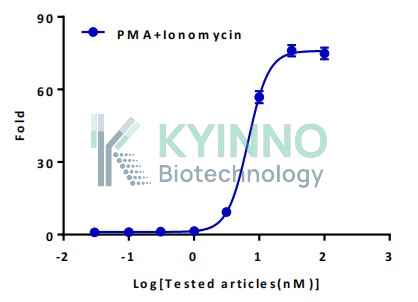
Figure 1. Jurkat-IL2P-Luc2 cell line was seed into the 96-well plate and treated with PMA at a maximum concentration of 30nM, and Ionomycin at a full concentration 100ng/ml diluted 3.16-fold for 16 hours, then readout with Bright-Glo system.

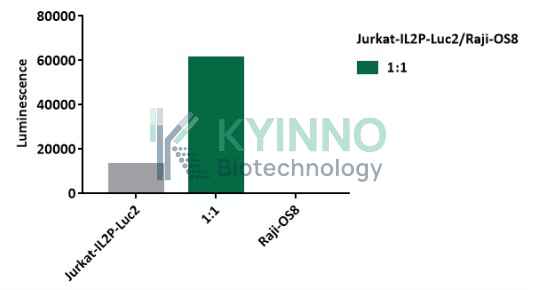
Figure 2. Jurkat-IL2P-Luc2 cell line was co-cultured with Raji OS8 in the 96-well plate for 16 hours, then readout with Bright-Glo system.

Cell Resuscitation

1. Prewarm culture medium (RPMI1640 supplemented with 10%FBS, 300ug/ml Hygromycin B)in a 37°C water bath. 2. Thaw the frozen vial in a 37°C water bath for 1-2 minutes. 3. Transfer the vial into biosafety cabinet, and wipe the surface with 70% ethanol. 4. Unscrew the top of the vial and transfer the cell suspension gently into a sterile centrifuge tube containing 9.0mL complete culture medium. 5. Spin at ~ 125 × g for 5-7 minutes at room temperature, and discard the supernatant without disturbing the pellet. 6. Resuspend cell pellet with the appropriate volume of complete medium and transfer the cell suspension into a T25 culture flask. 7. Incubate the flask at 37°C, 5% CO2 incubator. 8. Split saturated culture 1:4-1:5 every 2-3 days; seed out at about 1-3 × 10⁵ cells/mL.

Cell Freezing

1. Prepare the freezing medium (RPMI1640 + 20% FBS + 10% DMSO) fresh immediately before use. 2. Keep the freezing medium on ice and label cryovials. 3. Transfer cells to a sterile, conical centrifuge tube, and count the cells. 4. Centrifuge the cells at 250×g for 5 minutes at room temperature and carefully aspirate off the medium. 5. Resuspend the cells at a density of at least 3×10⁶ cells/mL in chilled freezing medium. 6. Aliquot 1 mL of the cell suspension into each cryovial. 7. Freeze cells in the CoolCell freezing container overnight in a -80°C freezer. 8. Transfer vials to liquid nitrogen for long-term storage

References

1.Arenas-Ramirez N, Woytschak J, Boyman O. Interleukin-2: Biology, Design and Application. Trends Immunol.2015 Dec;36(12):763-777. 2.Spolski R, Li P, Leonard WJ. Biology and regulation of IL-2: from molecular mechanisms to human therapy. Nat Rev Immunol. 2018 Oct;18(10):648-659. 3.Jiang T, Zhou C, Ren S. Role of IL-2 in cancer immunotherapy.Oncoimmunology. 2016.
Please enable JavaScript in your browser to complete this form.