
KC-2094

Jurkat-NFAT-Luc2-LILRB2-PILRB Cell Line

×
Please enable JavaScript in your browser to complete this form.
53438
Home » Jurkat-NFAT-Luc2-LILRB2-PILRB Cell Line

Background of Jurkat-NFAT-Luc2-LILRB2-PILRB Cell Line

LILRB2, also known as ILT4, is as an immunosuppressive molecule predominantly expressed in myeloid cells, including monocytes, macrophages, dendritic cells and granulocytes. LILRB2 is enriched in both tumor cells and stroma cells of certain types of cancers including leukemia, non-small cell lung cancer, breast cancer, esophageal carcinoma and pancreatic cancer, and promote the growth and progression of tumor. LILRB2 enables myeloid cells to promote tumor survival and immune escape by binding to functional ligands such as HLA-G that are highly expressed on tumor cells.

Specifications

Catalog NumberKC-2094
Cell Line NameJurkat-NFAT-Luc2-LILRB2-PILRB Cell Line
NCBI/UniProt Accession NumberNM_005874.5
Host Cell LineJurkat-NFAT-luc2
DescriptionStable Jurkat cell line expressing exogenous luciferase under the control of NFAT responsive element and LILRB2-PILRB fusion sequence.
QuantityTwo vials of frozen cells (≥2-106/vial)
StabilityStable in culture over a minimum of 10 passages
ApplicationDrug screening and biological assays
Freezing Medium70% RPMI1640 + 20% FBS + 10% DMSO
Propagation MediumRPMI1640 + 10% FBS +300μg/mL Hygromycin B + 0.75μg/mL puromycin
Selection MarkerHygromycin B and Puromycin
MorphologyLymphoblast
SubcultureSplit saturated culture 1:4-1:5 every 2-3 days; seed out at about 1 × 10⁵ cells/mL
Incubation37 °C with 5% CO2
StorageLiquid nitrogen immediately upon receiving
Doubling TimeApproximately 26 hours
Mycoplasma StatusNegative

Cell Line Generation

Jurkat-NFAT-Luc2-LILRB2-PILRB Cell Line was generated using a lentiviral vector expressing the human LILRB2-PILRB sequence.

Characterization

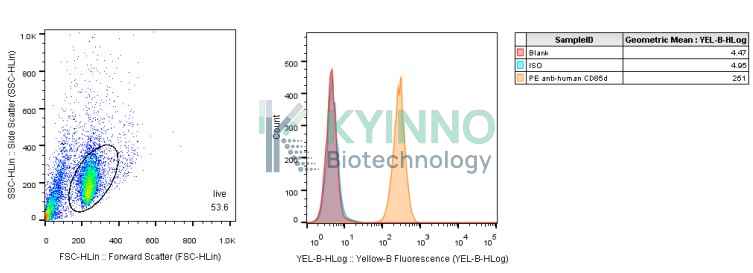
Figure1: Characterization of LILRB2 overexpression in Jurkat-NFAT-Luc2-LILRB2-PILRB stable clones using FACS.
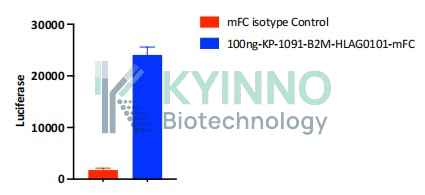
Figure2: Jurkat-NFAT-Luc2-LILRB2-PILRB cells were seeded into 96-well plates, treated with B2M-HLAG0101-mFC KP-1091 for 6 hours, and then read out using Bright-Glo Detection System.
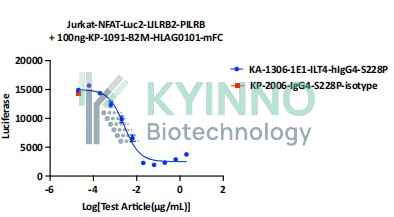
Figure3: Jurkat-NFAT-Luc2-LILRB2-PILRB cells were seeded into 96-well plates, treated with 1E1-ILT4-hIgG4-S228P(Cat# KA-1306, Kyinno) or IgG4-S228P-isotype(Cat# KP-2006, Kyinno) in different concentrations for 1 hours, treated with B2M-HLAG0101-mFC(Cat# Kp-1091, Kyinno) in 100ng/mL concentrations for 16 hours, and then read out using Bright-Glo Detection System.

Cell Resuscitation

  1. Prewarm culture medium (RPMI 1640 supplemented with 10% FBS, 300µg/mL Hygromycin B and 0.75μg/mL Puromycin) in a 37°C water bath.
  2. Thaw the frozen vial in a 37°C water bath for 1-2 minutes.
  3. Transfer the vial into biosafety cabinet, and wipe the surface with 70% ethanol.
  4. Unscrew the top of the vial and transfer the cell suspension gently into a sterile centrifuge tube containing 9.0mL complete culture medium.
  5. Spin at ~ 125 × g for 5-7 minutes at room temperature, and discard the supernatant without disturbing the pellet.
  6. Resuspend cell pellet with the appropriate volume of complete medium and transfer the cell suspension into a T25 culture flask.
  7. Incubate the flask at 37°C, 5% CO2 incubator.
  8. Split saturated culture 1:4-1:5 every 2-3 days; seed out at about 1 × 10⁵ cells/mL.

Cell Freezing

  1. Prepare the freezing medium (70% RPMI 1640 + 20% FBS + 10% DMSO) fresh immediately before use.
  2. Keep the freezing medium on ice and label cryovials.
  3. Transfer cells to a sterile, conical centrifuge tube, and count the cells.
  4. Centrifuge the cells at 250×g for 5 minutes at room temperature and carefully aspirate off the medium.
  5. Resuspend the cells at a density of at least 3×10⁶ cells/mL in chilled freezing medium.
  6. Aliquot 1 mL of the cell suspension into each cryovial.
  7. Freeze cells in the CoolCell freezing container overnight in a -80°C freezer.
  8. Transfer vials to liquid nitrogen for long-term storage.

References

  1. Gao A, Sun Y, Peng G. ILT4 functions as a potential checkpoint molecule for tumor immunotherapy. Biochim Biophys Acta Rev Cancer. 2018 Apr;1869(2):278-285. doi: 10.1016/j.bbcan.2018.04.001. Epub 2018 Apr 10. PMID: 29649510.
  2. Gao A, Liu X, Lin W, Wang J, Wang S, Si F, Huang L, Zhao Y, Sun Y, Peng G. Tumor-derived ILT4 induces T cell senescence and suppresses tumor immunity. J Immunother Cancer. 2021 Mar;9(3):e001536. doi: 10.1136/jitc-2020-001536. PMID: 33653799.
  3. Carosella ED, Gregori S, Tronik-Le Roux D. HLA-G/LILRBs: A Cancer Immunotherapy Challenge. Trends Cancer. 2021 May;7(5):389-392. doi: 10.1016/j.trecan.2021.01.004. Epub 2021 Feb 6. PMID: 33563576.
Please enable JavaScript in your browser to complete this form.