KC-2996

K562-HLA-G0101 Cell Line

×
Please enable JavaScript in your browser to complete this form.
26857
Home » K562-HLA-G0101 Cell Line

Background of K562-HLA-G0101 Cell Line

HLA-G (Major Histocompatibility Complex, Class I, G) is a Protein Coding gene. Human leucocyte antigen-G (HLA-G) is a non-classical HLA class I molecule that unlike the classical HLA, has low polymorphism. This class I molecule is a heterodimer consisting of a heavy chain and a light chain (beta-2 microglobulin). The heavy chain is anchored in the membrane. Human leukocyte antigen G (HLA-G) is a non-classical major histocompatibility complex (MHC) class I molecule that, through interaction with its receptors, exerts important tolerogenic functions. Its main physiological expression occurs in placenta where it seems to participate in the maternal tolerance toward the fetus. HLA-G has been studied as a marker of pregnancy complications such as abortion or pre-eclapmsia. Although HLA-G is not expressed in most adult tissues, its ectopic expression has been observed in some diseases such as viral infections, autoimmune disorders, and especially cancer. Diseases associated with HLA-G include Asthma and Severe Pre-Eclampsia.

Specifications

Catalog NumberKC-2996
Cell Line NameK562-HLA-G0101 Cell Line
Clone Number1#
Host Cell LineK562
DescriptionStable K562 cell line expressing exogenous human HLAG gene
QuantityTwo vials of frozen cells (≥2-106/vial)
StabilityStable in culture over a minimum of 10 passages
ApplicationDrug screening and biological assays
Freezing Medium70% RPMI1640 + 20% FBS + 10% DMSO
Propagation MediumRPMI1640 + 10% FBS + 1μg/mL Puromycin
Selection MarkerPuromycin
MorphologyLymphoblast
SubcultureSplit saturated culture 1:4-1:6 every 2-3 days; seed out at about 1-3 × 10⁵ cells/mL
Incubation37 °C with 5% CO2
StorageLiquid nitrogen immediately upon receiving
Doubling TimeApproximately 17 hours
Mycoplasma StatusNegative
In Vivo ValidationNA

Cell Line Generation

K562-HLA-G0101 Cell Line was generated using a lentiviral vector expressing the HLA G0101 sequence

Characterization

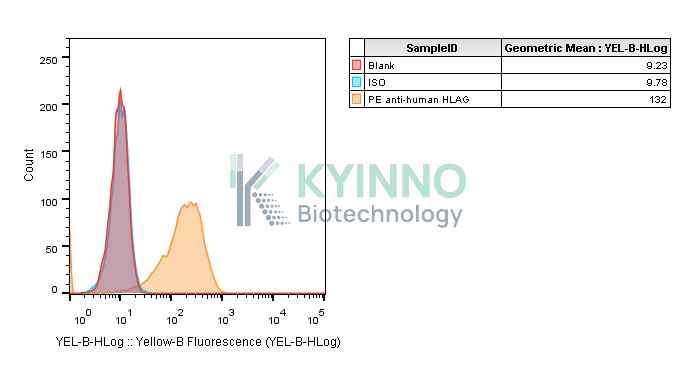
Figure 1: Characterization of HLAG overexpression in the K562-HLA-G0101 stable clone using FACS.

Cell Resuscitation

1. Prewarm culture medium (RPMI1640 supplemented with 10% FBS and 1μg/mL Puromycin)in a 37°C water bath.
2. Thaw the frozen vial in a 37°C water bath for 1-2 minutes.
3. Transfer the vial into biosafety cabinet, and wipe the surface with 70% ethanol.
4. Unscrew the top of the vial and transfer the cell suspension gently into a sterile centrifuge tube containing 9.0mL complete culture medium.
5. Spin at ~ 125 × g for 5-7 minutes at room temperature, and discard the supernatant without disturbing the pellet.
6. Resuspend cell pellet with the appropriate volume of complete medium and transfer the cell suspension into a T25 culture flask.
7. Incubate the flask at 37°C, 5% CO2 incubator.
8. Split saturated culture 1:4-1:6 every 2-3 days; seed out at about 1-3 × 10⁵ cells/mL.

Cell Freezing

1. Prepare the freezing medium (70% RPMI1640 + 20% FBS + 10% DMSO) fresh immediately before use.
2. Keep the freezing medium on ice and label cryovials.
3. Transfer cells to a sterile, conical centrifuge tube, and count the cells.
4. Centrifuge the cells at 250×g for 5 minutes at room temperature and carefully aspirate off the medium.
5. Resuspend the cells at a density of at least 3×10⁶ cells/mL in chilled freezing medium.
6. Aliquot 1 mL of the cell suspension into each cryovial.
7. Freeze cells in the CoolCell freezing container overnight in a -80°C freezer.
8. Transfer vials to liquid nitrogen for long-term storage.

References

1. Rahimi R, Hosseini AZ, Yari F. The polymorphism of human leucocyte antigen-G gene in a healthy population of Iran. Int J Immunogenet. 2010 Aug;37(4):269-72. doi: 10.1111/j.1744-313X.2010.00919.x. Epub 2010 Apr 30. PMID: 20477884.
2. Loustau M, Anna F, Dréan R, Lecomte M, Langlade-Demoyen P, Caumartin J. HLA-G Neo-Expression on Tumors. Front Immunol. 2020 Aug 14;11:1685. doi: 10.3389/fimmu.2020.01685. PMID: 32922387; PMCID: PMC7456902.
3. Krijgsman D, Roelands J, Hendrickx W, Bedognetti D, Kuppen PJK. HLA-G: A New Immune Checkpoint in Cancer? Int J Mol Sci. 2020 Jun 25;21(12):4528. doi: 10.3390/ijms21124528. PMID: 32630545; PMCID: PMC7350262.
4. González A, Rebmann V, LeMaoult J, Horn PA, Carosella ED, Alegre E. The immunosuppressive molecule HLA-G and its clinical implications. Crit Rev Clin Lab Sci. 2012 May-Jun;49(3):63-84. doi: 10.3109/10408363.2012.677947. Epub 2012 Apr 26. PMID: 22537084.

Please enable JavaScript in your browser to complete this form.