KC-1651

NUGC4-CLDN18.2-Luc2 Cell Line

×
Please enable JavaScript in your browser to complete this form.
53449
Home » NUGC4-CLDN18.2-Luc2 Cell Line

Background of NUGC4-CLDN18.2-Luc2 Cell Line

  1. CLDN18.2 is the isoform 2 of the claudin 18 gene, which belong to the lager claudin family and play the important role in cell tight junction in epithelial cells. CLND18.2 is found overexpressed on gastrointestinal adenocarcinoma and pancreatic tumors. The identification as a tumor target of CLDN18.2 has led to the repaid progress of antibody treatment of gastrointestinal adenocarcinoma and pancreatic tumors, such as IMAB362 (Claudiximab).

Specifications

Catalog NumberKC-1651
Cell Line NameNUGC4-CLDN18.2-Luc2 Cell Line
Host Cell LineNUGC4
DescriptionNUGC4 cell line stable expressing exogenous CLDN18 isoform 2 and luciferase gene.
QuantityTwo vials of frozen cells (≥2-106/vial)
StabilityStable in culture over a minimum of 10 passages
ApplicationDrug screening and biological assays
Freezing Medium70% RPMI1640 + 20% FBS + 10% DMSO
Propagation MediumRPMI1640 + 10% FBS + 75 μg/mL Hygromycin B + 1 μg/mL Puromycin
Selection MarkerPuromycin | Hygromycin B
MorphologyAdherent
SubcultureSplit saturated culture 1:4-1:5 every 2-3 days; seed out at about 1-2 × 10⁵ cells/mL
Incubation37 °C with 5% CO2
StorageLiquid nitrogen immediately upon receiving
Doubling TimeApproximately 30 hours
Mycoplasma StatusNegative

Cell Line Generation

NUGC4-CLDN18.2-Luc2 cell line was generated using lentiviral vector expressing human CLDN18.2 sequence.

Characterization

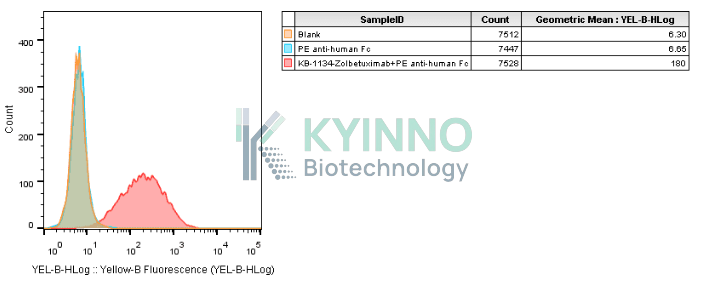
Figure 1: Characterization of CLDN18.2 overexpression in NUGC4-CLDN18.2-Luc2 stable clones using FACS.

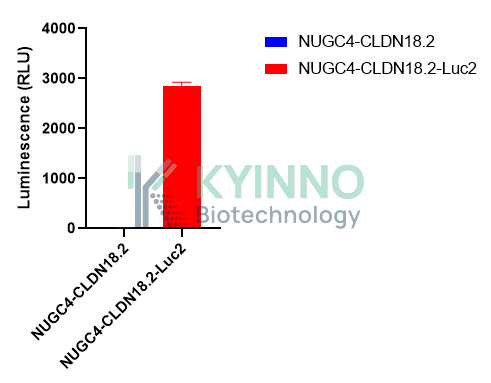
Figure 2: Characterization of CLDN18.2 overexpression in NUGC4-CLDN18.2-Luc2 stable clones using Bright-Glo readout.

Cell Resuscitation

  1. Prewarm culture medium (RPMI1640 supplemented with 10% FBS and 75 μg/mL Hygromycin B and 1 μg/mL puromycin) in a 37°C water bath.
  2. Thaw the frozen vial in a 37°C water bath for 1-2 minutes.
  3. Transfer the vial into biosafety cabinet, and wipe the surface with 70% ethanol.
  4. Unscrew the top of the vial and transfer the cell suspension gently into a sterile centrifuge tube containing 9.0 mL complete culture medium.
  5. Spin at ~ 125 × g for 5-7 minutes at room temperature, and discard the supernatant without disturbing the pellet.
  6. Resuspend cell pellet with the appropriate volume of complete medium and transfer the cell suspension into a T25 culture flask.
  7. Incubate the flask at 37°C, 5% CO2 incubator.
  8. Split saturated culture 1:4-1:5 every 2-3 days; seed out at about 1-2 × 10⁵ cells/mL.

Cell Freezing

  1. Prepare the freezing medium (70% RPMI1640 + 20% FBS + 10% DMSO) fresh immediately before use.
  2. Keep the freezing medium on ice and label cryovials.
  3. Transfer cells to a sterile, conical centrifuge tube, and count the cells.
  4. Centrifuge the cells at 250×g for 5 minutes at room temperature and carefully aspirate off the medium.
  5. Resuspend the cells at a density of at least 3×10⁶ cells/mL in chilled freezing medium.
  6. Aliquot 1 mL of the cell suspension into each cryovial.
  7. Freeze cells in the CoolCell freezing container overnight in a -80°C freezer.
  8. Transfer vials to liquid nitrogen for long-term storage.

References

  1. Micke, Patrick, Johanna Sofia Margareta Mattsson, Karolina Edlund, Miriam Lohr, Karin Jirström, Anders Berglund, Johan Botling, et al. 2014. “Aberrantly Activated Claudin 6 and 18.2 as Potential Therapy Targets in Non-Small-Cell Lung Cancer.” International Journal of Cancer 135 (9): 2206–14. doi:10.1002/ijc.28857.
  2. Singh, Prabhsimranjot, Sudhamshi Toom, and Yiwu Huang. 2017. “Anti-Claudin 18.2 Antibody as New Targeted Therapy for Advanced Gastric Cancer,” May. Journal of Hematology & Oncology, 1–5. doi:10.1186/s13045-017- 0473-4.
  3. Sahin, U, M Koslowski, K Dhaene, D Usener, G Brandenburg, G Seitz, C Huber, and O Tureci. 2008. “Claudin-18 Splice Variant 2 Is a Pan-Cancer Target Suitable for Therapeutic Antibody Development.” Clinical Cancer Research 14 (23): 7624–34. doi:10.1158/1078-0432.CCR-08-1547.
Please enable JavaScript in your browser to complete this form.