KC-3357

THP-1-NFκB-Luc2 Cell Line

×
请在浏览器中启用JavaScript来完成此表单。
26441
Home » THP-1-NFκB-Luc2 Cell Line

Background of THP-1-NFκB-Luc2 Cell Line

Nuclear factor kappa light chain enhancer of activated B cells (NF-κB) is a ubiquitous transcription factor with varied roles within the mammalian cell. NF-κB can induce the expression of a diverse set of gene targets besides inflammatory mediators, some of which are involved in addictive processes, such as opioid receptors and neuropeptides. NF-κB mediates complex behaviors including learning and memory, stress responses, anhedonia and drug reward, processes that may lie outside the role of NF-κB in the classic neuroimmune response.Reporter gene technology is widely used to monitor the cellular events associated with signal transduction and gene expression. Based upon the splicing of transcriptional control elements to a variety of reporter genes (with easily measurable phenotypes), it reports the effects of a cascade of signaling events on gene expression inside cells. Bioluminescent proteins such as luciferases are unique analytical tools with high sensitivity and wide dynamic ranges. Based on this, we constructed a luciferase reporter cell line regulated by the NF-κB transcription factor.

Specifications

Catalog NumberKC-3357
Cell Line NameTHP-1-NFκB-Luc2 Cell Line
Clone Number3#
Host Cell LineTHP-1
DescriptionStable THP-1 cell line expressing exogenous luciferase under the control of NFκB signaling pathway.
QuantityOne vial of frozen cells (≥2-106/vial)
StabilityStable in culture over a minimum of 10 passages
ApplicationDrug screening and biological assays
Freezing Medium70% RPMI1640+20% FBS+10% DMSO
Propagation MediumRPMI1640+10%FBS +300µg/mL Hygromycin B
Selection MarkerHygromycin B
MorphologyMonocyte
SubcultureSplit saturated culture 1:2-1:5 every 2-3 days; seed out at about 1-3 × 10⁵ cells/mL
Incubation37 °C with 5% CO2
StorageLiquid nitrogen immediately upon receiving
Doubling TimeApproximately 35-50 hours
Mycoplasma StatusNegative
In Vivo ValidationNA

Cell Line Generation

THP-1-NFκB-Luc2 cell line was generated using a lentiviral vector expressing luciferase under the control of NF-κB signaling pathway.

Characterization

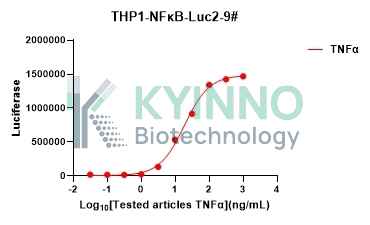
Figure 1. THP-1-NFκB-Luc2 cells were seeded into the 96-well plate, and treated with TNFα for 6h. TNFα is diluted to 10 concentrations with the highest concentration of 1μg/ml and 3.16-fold dilution. then readout with Bright-lite™ Luciferase Assay system.

Cell Resuscitation

1. Prewarm culture medium (RPMI1640 supplemented with 10% FBS, 500µg/mL Hygromycin B)in a 37°C water bath.
2. Thaw the frozen vial in a 37°C water bath for 1-2 minutes.
3. Transfer the vial into biosafety cabinet, and wipe the surface with 70% ethanol.
4. Unscrew the top of the vial and transfer the cell suspension gently into a sterile centrifuge tube containing 9.0mL complete culture medium.
5. Spin at ~ 125 × g for 5-7 minutes at room temperature, and discard the supernatant without disturbing the pellet.
6. Resuspend cell pellet with the appropriate volume of complete medium and transfer the cell suspension into a T25 culture flask.
7. Incubate the flask at 37°C, 5% CO2 incubator.
8. Split saturated culture 1:2-1:5 every 2-3 days; seed out at about 1-3 × 10⁵ cells/mL.

Cell Freezing

1. Prepare the freezing medium (70% RPMI1640 + 20% FBS + 10% DMSO) fresh immediately before use.
2. Keep the freezing medium on ice and label cryovials.
3. Transfer cells to a sterile, conical centrifuge tube, and count the cells.
4. Centrifuge the cells at 250×g for 5 minutes at room temperature and carefully aspirate off the medium.
5. Resuspend the cells at a density of at least 3×10⁶ cells/mL in chilled freezing medium.
6. Aliquot 1 mL of the cell suspension into each cryovial.
7. Freeze cells in the CoolCell freezing container overnight in a -80°C freezer.
8. Transfer vials to liquid nitrogen for long-term storage.

References

1.WS.E. Nennig, J.R. Schank, The Role of NFkB in Drug Addiction: Beyond Inflammation, Alcohol and Alcoholism, Volume 52, Issue 2, March 2017, Pages 172–179.
2.Naylor LH. Reporter gene technology: the future looks bright. Biochem Pharmacol. 1999 Sep 1;58(5):749-57. doi: 10.1016/s0006-2952(99)00096-9. PMID: 10449183.

Use License Agreement

Research Use Only.
Not for use in diagnostic procedures or therapeutic applications.
Redistribution of the cell line or its derivatives is prohibited without prior written permission from Kyinno Biotechnology.
请在浏览器中启用JavaScript来完成此表单。