KC-3878

293T-CD38-Cell-Line

×
Please enable JavaScript in your browser to complete this form.
34952
Home » 293T-CD38-Cell-Line

Background of 293T-CD38-Cell-Line

The protein encoded by CD38 is a non lineage restricted type II transmembrane glycoprotein, expressed in B cells, T cells, NK cells, myeloid cells, etc., regulating cell activation, migration, and inflammatory response. It has dual activities of ADP ribosyl cyclase and cyclic ADP ribosyl hydrolase, catalyzing NAD+metabolism. Interacting with CD31, mediating leukocyte adhesion and migration, affecting the progression of inflammation or autoimmune diseases. The CD38 gene plays a central role in the immune, metabolic, and cellular signaling networks, and its multifunctionality makes it a therapeutic target for various diseases, particularly in the fields of tumor immunity and aging. Future research may further reveal its potential in metabolic and neurodegenerative diseases.

Specifications

Catalog NumberKC-3878
Cell Line Name293T-CD38-Cell-Line
Host Cell Line293T
DescriptionStable 293T clone expressing exogenous CD38 gene
QuantityTwo vials of frozen cells (≥2-106/vial)
StabilityStable in culture over a minimum of 10 passages
ApplicationDrug screening and biological assays
Freezing Medium70% DMEM + 20% FBS + 10% DMSO
Propagation MediumDMEM + 10% FBS + 1μg/mL Puromycin
Selection MarkerPuromycin
MorphologyEpithelial
SubcultureSplit saturated culture 1:4-1:8 every 2-3 days; seed out at about 1-3 × 10⁵ cells/mL
Incubation37 °C with 5% CO2
StorageLiquid nitrogen immediately upon receiving
Doubling TimeApproximately 30 hours
Mycoplasma StatusNegative
In Vivo ValidationNA

Cell Line Generation

293T-CD38-cell-line was generated using a lentiviral vector expressing the CD38 sequence.

Characterization

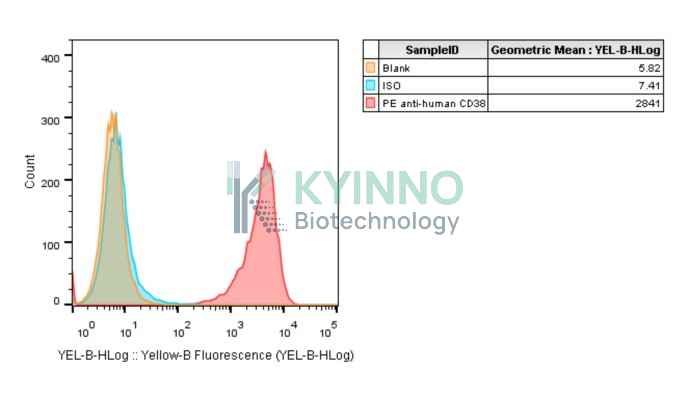
Figure 1: Characterization of CD38 overexpression in the 293T-CD38 stable clone using FACS.

Figure 2: Characterization of CD38 overexpression in the 293T-CD38 stable clone using qPCR.

Cell Resuscitation

1. Prewarm culture medium (DMEM supplemented with 10% FBS and 1μg/mL puromycin)in a 37°C water bath.
2. Thaw the frozen vial in a 37°C water bath for 1-2 minutes.
3. Transfer the vial into biosafety cabinet, and wipe the surface with 70% ethanol.
4. Unscrew the top of the vial and transfer the cell suspension gently into a sterile centrifuge tube containing 9.0mL complete culture medium.
5. Spin at ~ 125 × g for 5-7 minutes at room temperature, and discard the supernatant without disturbing the pellet.
6. Resuspend cell pellet with the appropriate volume of complete medium and transfer the cell suspension into a T25 culture flask.
7. Incubate the flask at 37°C, 5% CO2 incubator.
8. Split saturated culture 1:4-1:8 every 2-3 days; seed out at about 1-3 × 10⁵ cells/mL.

Cell Freezing

1. Prepare the freezing medium (70% DMEM + 20% FBS + 10% DMSO) fresh immediately before use.
2. Keep the freezing medium on ice and label cryovials.
3. Transfer cells to a sterile, conical centrifuge tube, and count the cells.
4. Centrifuge the cells at 250×g for 5 minutes at room temperature and carefully aspirate off the medium.
5. Resuspend the cells at a density of at least 3×10⁶ cells/mL in chilled freezing medium.
6. Aliquot 1 mL of the cell suspension into each cryovial.
7. Freeze cells in the CoolCell freezing container overnight in a -80°C freezer.
8. Transfer vials to liquid nitrogen for long-term storage.

References

1.Wang X, Li L, Song X, Fang K, Chang X. A high proportion of CD38 (high) CD16 (low) NK cells in colorectal cancer can interrupt immune surveillance and favor tumor growth. Cancer Immunol Immunother. 2025 Jul 12;74(8):263. doi: 10.1007/s00262-025-04044-w. PMID: 40650701; PMCID: PMC12255634.
2.Dwyer LR, DeRogatis AM, Clancy S, Gouirand V, Chien C, Rogers EE, Oltman SP, Jelliffe-Pawlowski LL, Lynch SV, Rutishauser RL, Wagner A, Combes AJ, Scharschmidt TC. CD38 expression by neonatal human naïve CD4 + T cells shapes their distinct metabolic state and tolerogenic potential. bioRxiv [Preprint]. 2025 Jun 28:2025.01.02.631038. doi: 10.1101/2025.01.02.631038. PMID: 40667020; PMCID: PMC12262530.
3.Nabi-Afjadi M, Dabirmanesh B, Asghari SM, Ramezanpour S, Fathollahi Y, Khajeh K. Design, synthesis, and evaluation of the effect of potential peptides against CD38: An in silico and in vitro study. Biomed Pharmacother. 2025 Jul 12;189:118347. doi: 10.1016/j.biopha.2025.118347. Epub ahead of print. PMID: 40652724.

Please enable JavaScript in your browser to complete this form.